



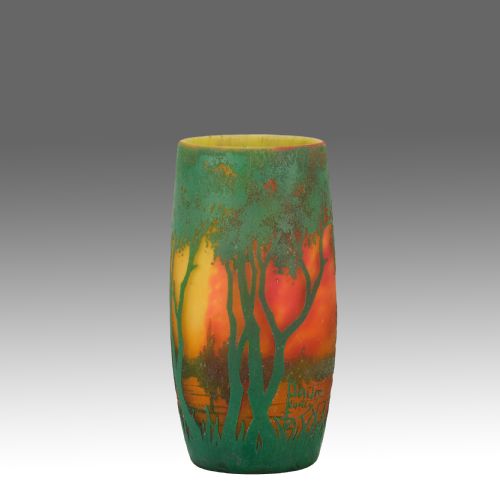


Red Art Glass Vase
These red art glass vase examples bring rich colour and varied historical forms into a room, spanning periods from Victorian to Art Deco.
Red Art Glass Vase
A red art glass vase brings together intense coloured glass and distinct period forms, frequently appearing in Victorian, Art Nouveau, and Art Deco designs. Buyers searching for a red art glass vase will encounter various interpretations, from tall geometric vessels to organic, flora-inspired shapes.
The objects recorded here include pieces made across multiple decades, showing how makers utilised different shades of red, ruby, and cranberry glass. Alongside standard vases, the selection encompasses related items like vanity ensembles and bowls sharing the same palette and materiality.
Materials and techniques
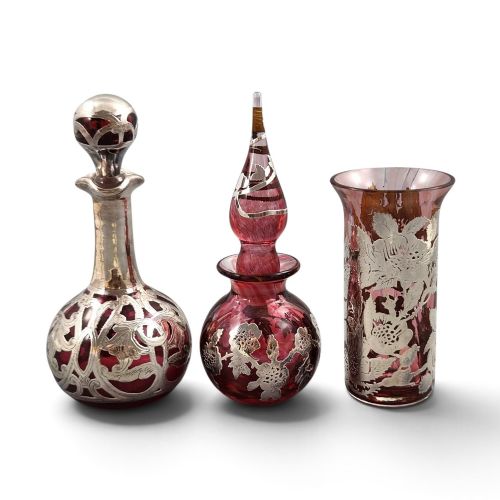
Makers utilised cameo glass, acid-etched glass, and clear glass overlaid with ruby or cranberry layers to achieve depth of colour. Techniques such as enamel decoration and the application of gold leaf frequently accent the red body.
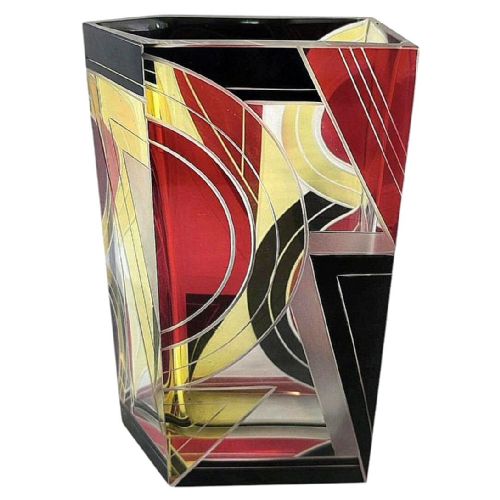
Pieces often incorporate specific methods like the souffle or blow-out technique in cameo glass production. Geometric enamel decoration and silver overlays further define the surface treatment of these vessels.
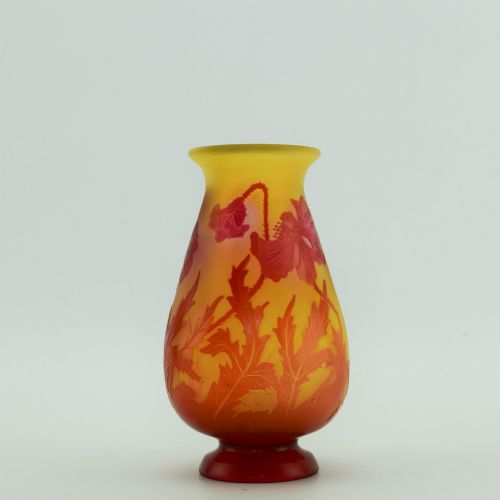
Aquatic themes and poppy blossoms rub shoulders with strict geometric enamel lines in this vibrant red glass lineup.
Assessing quality
Quality rests in the precision of the cameo carving, the clarity of the acid-etched details, and the skill behind enamel or gold leaf application. Finer pieces demonstrate control over multiple glass layers and depth within the red coloration.
The reputation of the maker and the sophistication of the design, whether Art Nouveau floral motifs or Art Deco geometric patterns, influence the standing of an individual piece within the range.
Gorham·Thomas Webb and Sons·Val St Lambert·Baccarat·Daum Freres·Paul Nicolas
The Red Art Glass Vase Glossary
- Cameo Glass
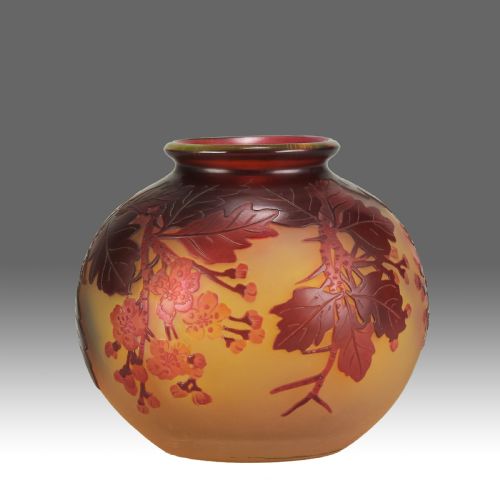
- Glass vessels created by fusing layers of different colours and then carving away parts of the outer layer to reveal the contrasting colour beneath. This technique allows for intricate relief designs of flowers and foliage.
- Acid-Etched Glass
- Glass decorated by applying acid to eat away at exposed surfaces, creating textured patterns and designs. It provides a precise method for surface ornamentation.
- Cranberry Glass
- A type of glass coloured with gold chloride, producing a distinct pinkish-red hue. It appears frequently in Victorian trumpet vases.
- Enamel Decorated
- Glass painted with vitrescents that are fired in a kiln to bond permanently with the surface. This adds colourful geometric or floral details.
Red Art Glass Vase: Frequently Asked Questions
What periods do these red art glass vase pieces come from?
The pieces span several decades, ranging from late Victorian examples through Edwardian times to the height of Art Nouveau and Art Deco production.
Maker output reflects stylistic shifts across these eras, moving from ornate floral motifs to geometric lines.
How do I distinguish between Art Nouveau and Art Deco designs?
Art Nouveau examples favour organic forms, fluid lines, and floral subjects such as poppies, lotus, or clematis. These often utilise cameo carving and naturalistic colour gradients.
Art Deco pieces turn towards strict geometry, opaque surfaces, and structured enamel decoration that reflect a later design vocabulary.
What is cameo glass?
Cameo glass involves layering different colours of glass, usually with a red or ruby body underneath a contrasting outer layer. Artisans carve away the top layer to leave raised motifs in relief.
This method requires immense skill to control the depth and reveal the underlying red glass evenly.
Where were these glass pieces manufactured?
Production centres include France, Belgium, and Bohemia, alongside contributions from British glasshouses. Each region brought distinct techniques to the handling of ruby and cranberry glass.
French workshops particularly excelled in multi-layered cameo vessels and enamel-painted forms.