
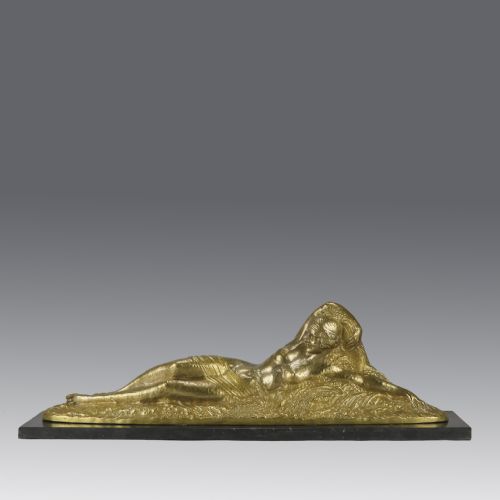


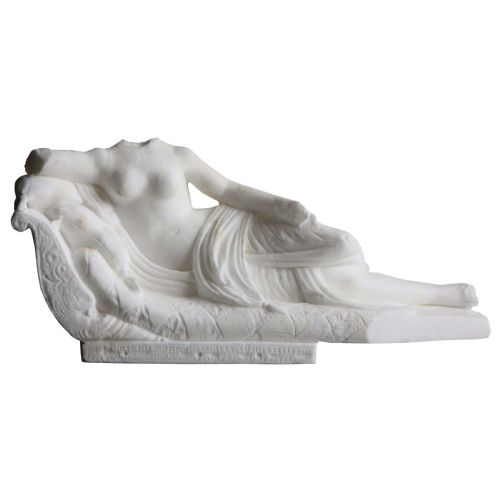



Reclining Female Statue
These pieces of reclining female statue capture the human form in repose, offering a classical or modernist centrepiece for any room.
Reclining Female Statue
A reclining female statue brings sculptural presence into a room through depictions of classical heroines, mythological figures and modernist nudes. You encounter these works most frequently as freestanding bronze sculptures, carved alabaster figures and spelter figurines from the nineteenth and early twentieth centuries.
The physical forms span several distinct aesthetic movements, moving from nineteenth century French and Neoclassical subjects to Belle Epoque carvings and stylised Art Deco creations. Many examples take the shape of single reclining figures, while others function as decorative bookends or part of larger bronze groups.
Materials and construction
Foundry techniques shape the metal pieces, utilising traditional bronze casting alongside patinated and gilt finishes to define surface texture and tone. Spelter appears as a more economical alternative metal used for figures during the early twentieth century.
Carved stone works rely on the direct manipulation of natural materials such as Carrara marble, alabaster and onyx. Artisans shape these minerals to highlight the translucent qualities of the stone and the smooth contours of the draped or nude form.
Listings span periods from the mid nineteenth century through the 1930s, uniting bronze, marble, onyx and alabaster.
What separates the grades
The finesse of the chisel work and the crispness of the casting define the fidelity of the human form. Subtle modulation in the musculature and drapery separates masterworks from routine commercial output.
The selection of materials and the integrity of the original surface patination dictate the visual weight of the piece. Integrated bases of contrasting marble or onyx provide structural stability while framing the sculpture.
Demetre Chiparus·Josef Lorenzl·Sibylle May·Antonio Canova·Edmond Leveque·James Pradier·Susse Freres·Ugo Cipriani·Gugielmo Pugi
The Reclining Female Statue Glossary
- Patinated bronze
- Metal sculpture treated with chemical solutions to produce a specific surface colour or aged finish. This process protects the bronze while enhancing anatomical detail.
- Spelter
- A zinc alloy frequently utilised as a substitute for bronze in decorative figures. It often receives a painted or bronze-toned coating to mimic heavier metal.
- Alabaster
- A soft, fine-grained stone prized for its translucency and responsiveness to detailed carving. It requires careful handling to preserve its delicate surface.
- Art Deco
- A design style dominant in the 1920s and 1930s characterised by stylised geometry and streamlined forms. Figures from this period often emphasise long lines and modern silhouettes.
- Neoclassical
- An artistic movement drawing inspiration from the classical art and culture of ancient Greece and Rome. Sculptures in this vein focus on idealized proportions and mythological subjects.
Reclining Female Statue: Frequently Asked Questions
How do I clean an alabaster statue?
Dust the surface gently with a soft, dry cloth without applying water or chemical cleaners. Alabaster is a porous and soft stone that absorbs liquids easily.
Keep the sculpture away from direct sunlight and damp environments to protect the integrity of the carved mineral.
Are these bronze figures solid?
Most traditional bronze sculptures are hollow castings produced through the lost wax method. This technique allows for controlled metal thickness and lighter overall weight.
Heavier bases often incorporate solid marble or onyx to anchor the lighter metal figure above.
What is spelter?
Spelter is a zinc-based alloy commonly used for decorative figurines during the late nineteenth and early twentieth centuries. It is softer and lighter than bronze.
Pieces made from spelter often feature an applied surface coating designed to simulate the appearance of genuine bronze.
How do I date an Art Deco figure?
Examine the stylisation of the hair, clothing and geometric proportions typical of the 1920s and 1930s. Signatures or foundry marks stamped into the base also help pinpoint the era.
The choice of materials, such as patinated metal paired with marble, often points directly to this period.