

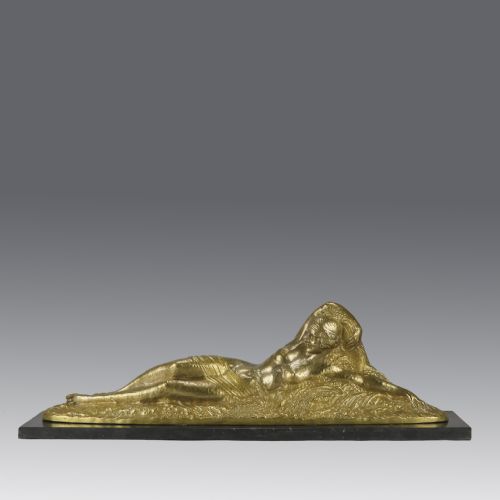


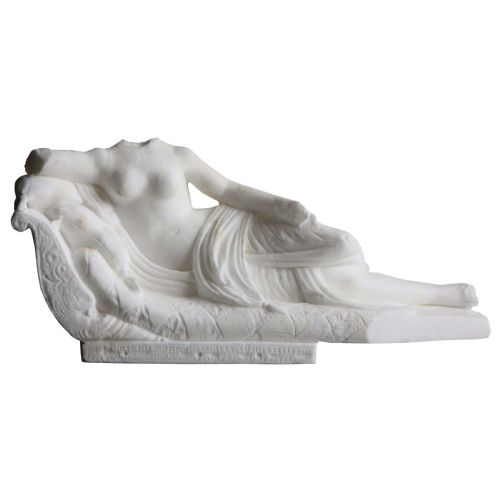

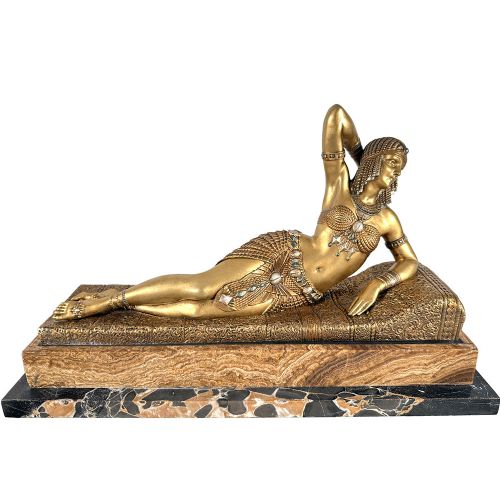


Reclining Female Figurine
A reclining female figurine brings classical grace and striking metalwork into a room, capturing the human form at rest.
Reclining Female Figurine
A reclining female figurine is a sculptural depiction of a woman lying down, spanning periods from the eighteenth century through to the art deco era. These pieces draw on classical motifs, mythological subjects, and modern stylisation to portray the human figure in repose.
The selections available here range from eighteenth century hard-paste porcelain sweetmeat dishes and marble neoclassical carvings to twentieth century bronze, spelter, and alabaster sculptures. Buyers frequently encounter art deco depictions of women produced in France during the nineteen-twenties and thirties.
Makers and sculptors utilised materials such as gilt bronze, onyx, gold leaf, and enamel to render these figures with distinct textures and finishes. The objects function as table sculptures, decorative figures, and centrepieces reflecting neoclassical, rococo, and belle epoque aesthetics.
Materials and Construction
Foundry workers and sculptors shaped these works using traditional casting and carving techniques across bronze, spelter, marble, and alabaster. Metal figures often combined patinated or gilt bronze elements mounted upon heavy stone bases of marble or onyx.
Pioneering porcelain works employed hard-paste ceramic methods with hand-painted enamel and gilt detailing to form elaborate figural compositions. Carved staghorn and stone pieces relied on meticulous hand-chiselling to achieve smooth drapery and anatomical definition.
Reclining Female Figurine Retail Price Guide 2026
Typical asking prices for reclining female figurine among the pieces listed under this phrase on Sellingantiques today, from the lower quarter to the upper quarter. They describe what is for sale here now, not the wider market.
Empresses, mythical Venuses, and reclining Cleopatras all share shelf space with eighteenth-century porcelain maidens holding sweetmeat baskets.
Assessing Quality and Execution
In stone and marble pieces, the purity of the material and the smoothness of the polish without mechanical tool marks indicate superior craftsmanship. The integration between the reclining figure and its base, whether carved from a single block or securely mounted, completes the structural integrity of the piece.
Demetre Chiparus·Josef Lorenzl·Sibylle May·Antonio Canova·Edmond Leveque·James Pradier·Susse Freres·Ugo Cipriani
The Reclining Female Figurine Glossary
- Spelter
- A zinc alloy commonly utilised as a less costly alternative to bronze for figural sculptures, particularly during the art deco period. It was often given a bronze-like finish or patination.
- Patination
- The surface coloration or sheen developed naturally over time or applied chemically to metal sculptures. It accentuates the contours of the cast figure.
- Hard-paste Porcelain
- A durable ceramic composition fired at high temperatures, allowing for fine detail and luminous glaze in figural dishes and ornaments. It forms the basis of many eighteenth-century European pieces.
- Sweetmeat Dish
- A small decorative bowl or tray intended for confectionery, frequently incorporated into figural porcelain table ornaments. These items combined functional utility with elaborate sculptural design.
- Alabaster
- A soft, fine-grained stone used for carving smooth neoclassical and turn-of-the-century figures. Its translucent quality absorbs light to mimic the texture of skin.
Reclining Female Figurine: Frequently Asked Questions
What periods do these figures come from?
The pieces span from the mid eighteenth century up through the art deco era of the nineteen-thirties. Earlier examples tend towards porcelain and classical marble, while later works favour bronze and spelter.
Stylistic shifts trace a path from rococo and neoclassical designs to the streamlined forms of the belle epoque and art deco movements.
How were bronze figures mounted?
Sculptors frequently secured metal figures onto heavy bases made of marble or onyx to provide stability and visual contrast. These stone mounts often complement the patination of the bronze or spelter above.
Some compositions integrate the figure directly into a carved stone or staghorn base as a single harmonious object.
Where should I display a reclining figurine?
These sculptures suit tabletops, mantels, and display cabinets where viewers can observe the reclining posture from multiple angles. Their horizontal orientation allows them to command low-profile spaces effectively.
Placing them away from direct sunlight protects vulnerable patinas, enamels, and delicate stone surfaces from gradual fading.
How do I identify a spelter cast from a bronze?
Spelter is a softer zinc alloy that feels lighter than bronze and often exhibits a painted or patinated surface layer that can show wear underneath. Bronze possesses greater weight, durability, and a richer metallic grain when examined closely.
Markings from foundries or signatures from sculptors frequently appear near the base on both metal types to aid identification.