


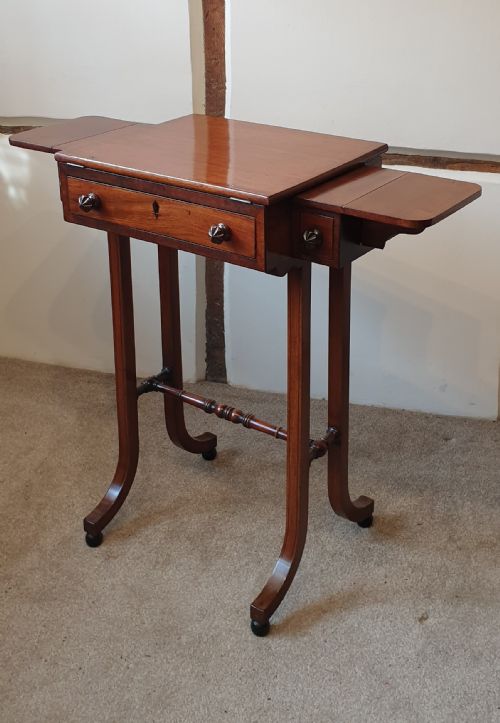


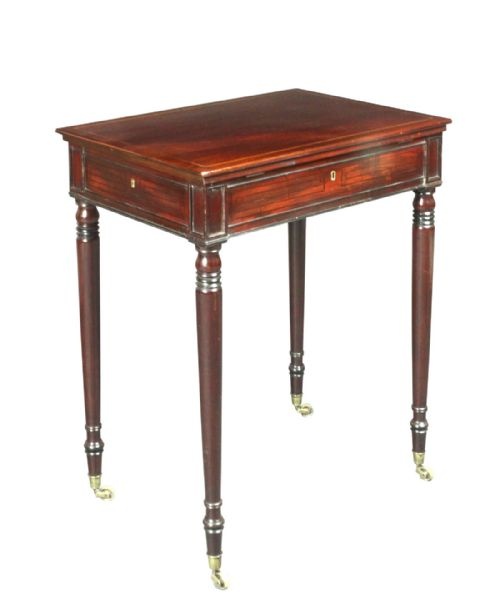
Ratcheted Writing Desk
A ratcheted writing desk is an adjustable piece of furniture designed for drafting and reading, offering mechanical versatility for the study.
Ratcheted Writing Desk
A ratcheted writing desk provides a sloping or adjustable surface via an internal ratchet mechanism, serving draftsmen, readers and writers alike. When exploring a ratcheted writing desk on this page, buyers encounter forms that double as reading tables, architect desks, and occasional tables from Georgian, Regency, and nineteenth-century periods.
The pieces appearing here span specific historical eras including the eighteenth century, the Regency epoch, and the mid nineteenth century. Most examples utilise mahogany, Cuban mahogany, or rosewood, often paired with leather writing surfaces and brass hardware.
Formations range from tall riser desks and library secretaires to estate rent tables and military campaign pieces. The selection reflects diverse utilitarian purposes from artists, architects, and cartographers who required adjustable angles for their work.
How they were made
Cabinetmakers constructed these desks primarily using solid and veneered timbers such as mahogany, walnut, fruitwood, and rosewood, sometimes incorporating boxwood and ebony stringing. Marquetry inlay appears on Dutch Baroque examples, demonstrating intricate woodworking skills of the period.
Functional adaptability relies on concealed brass ratchets and mechanical risers that support adjustable reading and writing slopes. Leather inserts provide a durable writing surface, while integrated locks by makers like Bramah secure compartments within library secretaires.
Materials across these listings span mahogany, Cuban mahogany, rosewood, walnut, fruitwood, boxwood, ebony, brass, and leather.
What varies in quality
The calibre of a ratcheted writing desk depends upon the selection of timber, such as figured Cuban mahogany or rich rosewood, and the precision of its mechanical supports. Smooth operation of the brass ratchets and the integrity of inlaid details distinguish finer workshops from standard production.
Proportion and execution of secondary woods also separate examples, alongside the presence of original brass fittings and functioning locks. Pieces bearing attribution to known makers or distinctive architectural forms command greater attention from collectors.
Gillows·Marsh & Tatham·Bramah
The Ratcheted Writing Desk Glossary
- Ratchet
- A mechanical device consisting of a notched wheel or bar and a pawl that restricts movement to a single direction. This mechanism allows the writing or reading surface to be held securely at various inclined angles.
- Secretaire
- A piece of furniture containing a built-in writing drawer or fold-down writing flap concealing pigeonholes and small drawers. These often feature complex internal locking systems.
- Marquetry
- Decorative veneer work consisting of thin pieces of wood, shell, or ivory arranged in pictorial or geometric patterns on a solid ground. It appears frequently on Dutch Baroque and eighteenth-century pieces.
- Campaign
- Furniture designed to be easily dismantled and transported for military use. These pieces often feature recessed brass handles and robust construction.
- Riser
- An adjustable mechanical component that elevates a desktop or reading slope to various heights. It provides the core functionality for draftsman and architect tables.
Ratcheted Writing Desk: Frequently Asked Questions
What is a ratcheted writing desk used for?
A ratcheted writing desk serves as a versatile workstation for reading, drafting, and correspondence. The adjustable slope allows users to position documents or books at an optimal ergonomic angle.
Historically, these pieces catered to professionals such as architects, cartographers, and writers who required adaptable surfaces for detailed work. Today, they function effectively as specialised writing tables or decorative library furniture.
How do you operate the ratchet mechanism?
The mechanism relies on a hinged support arm that engages with a notched rack mounted beneath the writing surface. Lifting the slope allows the arm to fall into successive teeth until the desired angle is reached.
To lower the surface, the slope must typically be lifted to its maximum extent to disengage the pawl before guiding it back down flat. Careful handling ensures the brass components remain aligned and functional.
What timbers were used for these desks?
Cabinetmakers primarily utilised mahogany, including dense Cuban mahogany, alongside rosewood, walnut, and various fruitwoods. Secondary timbers often included oak or pine for internal drawer construction.
Decorative elements frequently incorporated boxwood, ebony, and intricate marquetry inlays. These materials reflect the prevailing tastes of the Georgian and Regency periods.
How do I distinguish Regency from Georgian examples?
Georgian pieces, particularly from the George III era, often feature heavier proportions, classical mahogany framing, and restrained decorative carving. The focus centres on solid joinery and functional elegance.
Regency designs tend toward lighter, more classically inspired forms influenced by Grecian and Roman antiquity. They frequently incorporate brass inlay, ebony stringing, and more refined mechanical apparatuses.
Can these desks be used for daily work today?
These desks accommodate modern reading and writing tasks quite well, provided the surface dimensions suit your materials. The adjustable slopes remain useful for laptops, sketching, and reading oversized volumes.
Careful placement away from direct heat sources and sunlight protects the antique timbers and leather surfaces from drying or cracking over time.