

Queen Anne Style Dressing Table
These pieces unite the flowing lines of eighteenth-century design with early twentieth-century cabinet-making, bringing warmth and refined function into a bedroom or dressing space.
Queen Anne Style Dressing Table
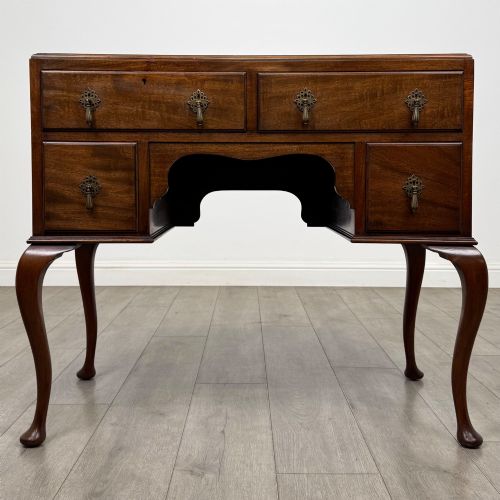
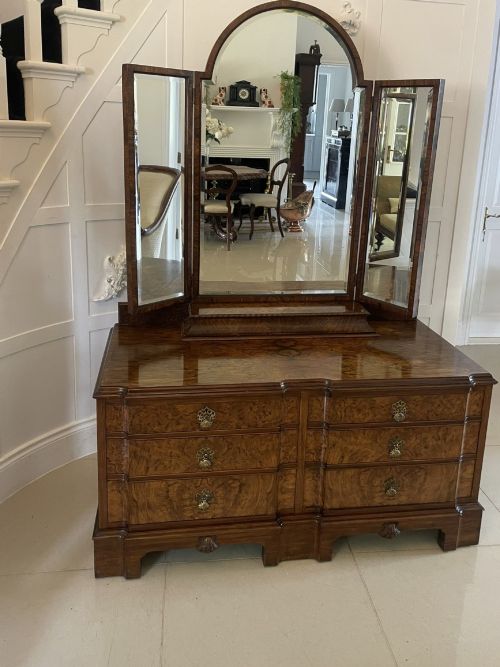
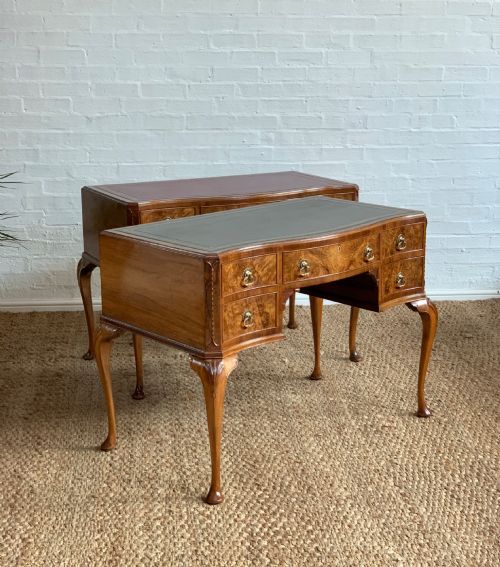
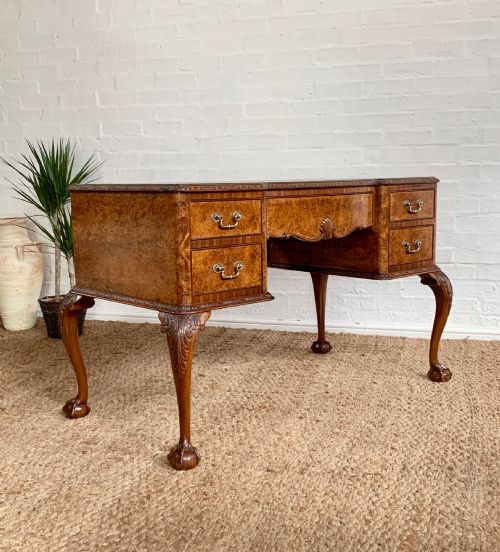
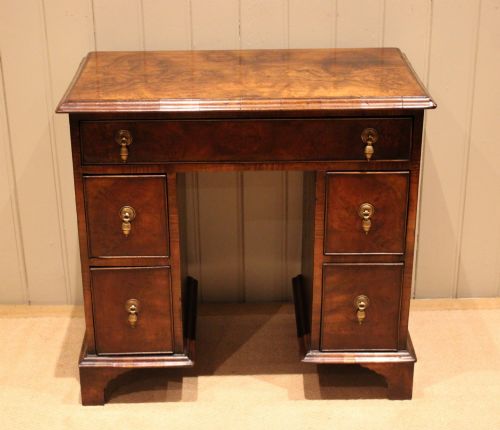
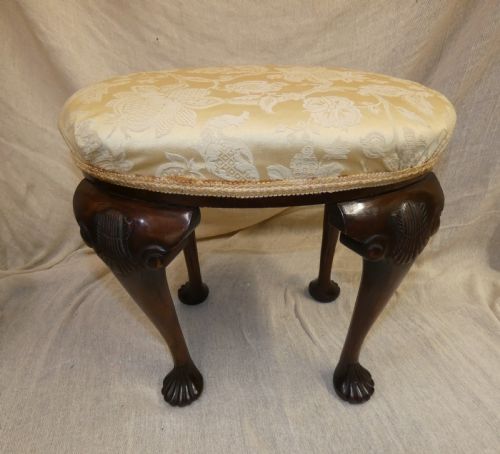
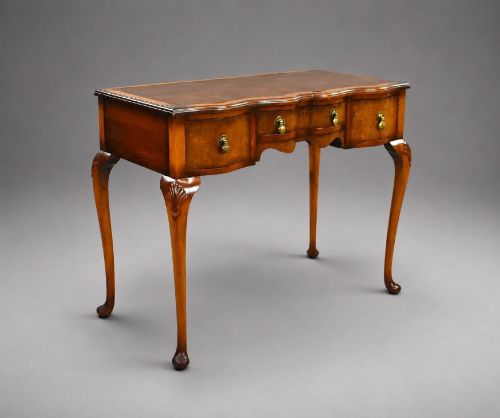
The form often includes multi-drawer layouts or serpentine fronts, sometimes accompanied by matching triple mirrors or pivot mirrors. Alongside dedicated dressing tables, the selection incorporates lowboys, kneehole desks, and upholstered stools designed to complete a coordinated suite.
How they were made
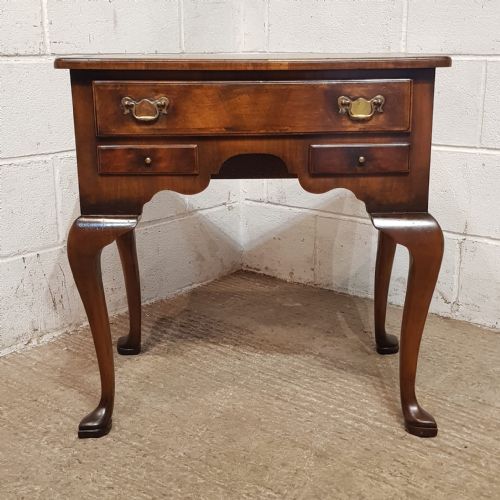
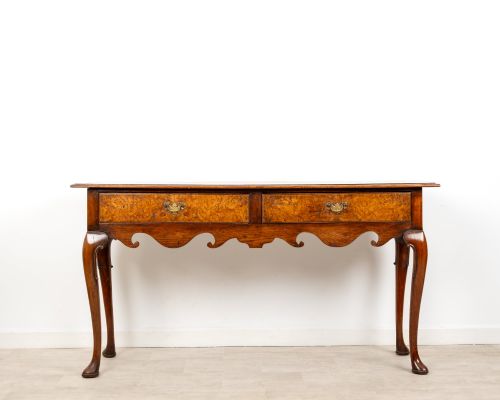
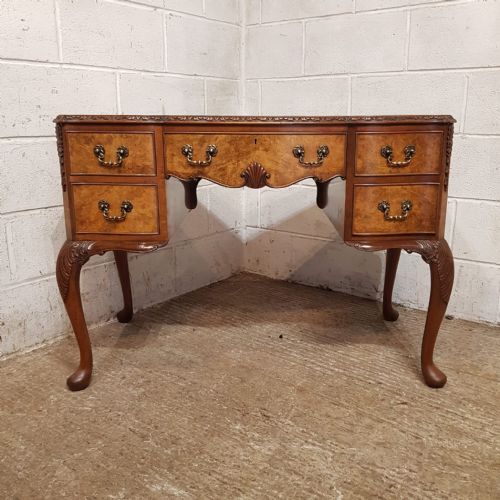
Cabinet-makers relied on figured walnut and burr walnut veneers applied over solid secondary timbers, creating rich swirling grain patterns across tabletops and drawer fronts. Details such as crossbanding, feather-banding, and fine brass hardware accentuate the curved profiles.
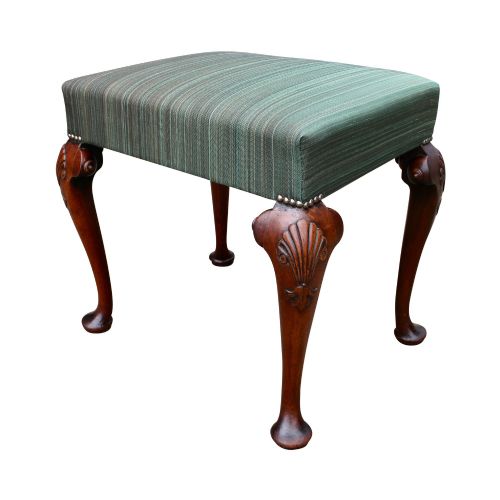
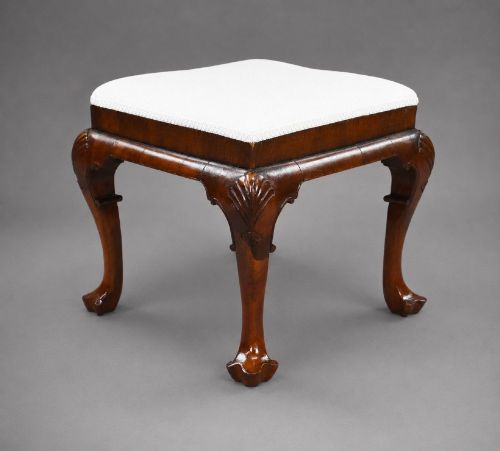
Seating and mirrors integrate traditional upholstery techniques, utilising textiles, needlepoint, and leather inserts for writing surfaces. Frames are shaped with scrollwork, carved shell motifs, and slender cabriole supports characteristic of the revival styles.
Some dressing tables hide secret compartments behind their kneehole drawers for stashing midnight correspondence.
What varies in quality
The selection of timber grain largely dictates visual impact, with tightly figured burr walnut commanding greater presence than plain walnut or mahogany. Precision in matching veneer panels across drawer fronts and tabletops separates standard production from finer cabinet work.
Wylie and Lochhead Glasgow·Maples of London·Shoolbred and Co
The Queen Anne Style Dressing Table Glossary
- Cabriole leg
- A furniture leg that curves out and then in, mimicking the natural shape of an animal's leg. This distinctive form is a defining feature of Queen Anne design.
- Burr walnut
- A veneer sliced from walnut tree growths, producing swirling and mottled grain patterns. It was heavily utilised during the early twentieth-century revival periods.
- Lowboy
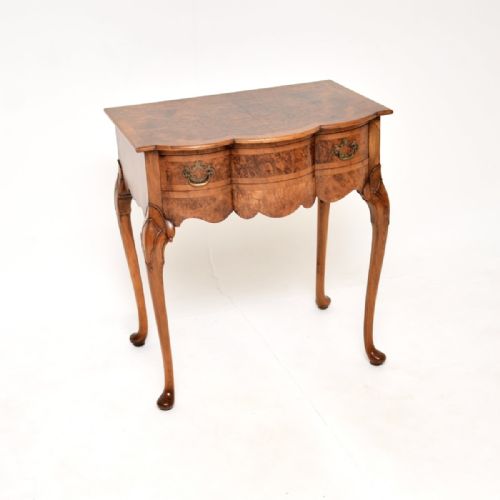
- A small table with drawers, resembling a low chest or dressing table base. These pieces often double as compact writing desks or side tables.
- Kneehole desk
- A compact desk or dressing table featuring a central recess for the sitter's legs, flanked by pedestals of small drawers. They frequently incorporate leather-lined writing surfaces.
- Chinoiserie
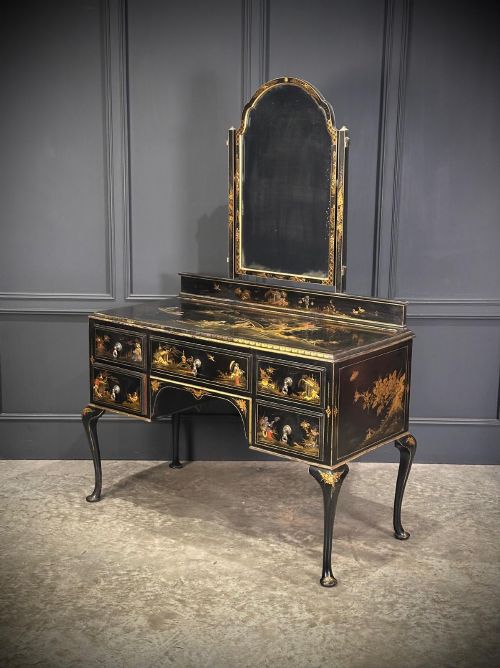
- European decorative art imitating Chinese and East Asian styles, often featuring hand-painted or lacquered motifs on a dark background.
Queen Anne Style Dressing Table: Frequently Asked Questions
What periods do these dressing tables come from?
Most pieces originate from the early twentieth century, particularly the 1920s and the Edwardian era, when a major revival of eighteenth-century aesthetics took place.
You will also encounter occasional pieces drawing on nineteenth-century Georgian revival styles, alongside eighteenth-century elements like antique dressing table mirrors.
Are matching stools typically included?
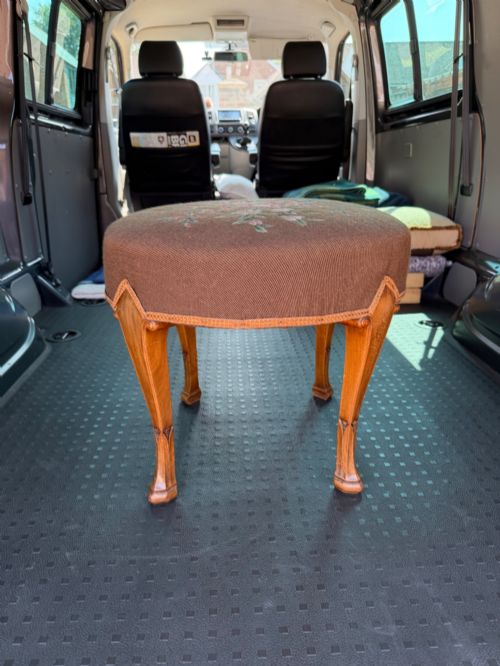
Many listings pair the dressing table with a corresponding stool, often upholstered in needlepoint, fabric, or leather to match the seat height and design.
These stools frequently share the cabriole legs and walnut framing of the main table, forming a cohesive dressing set.
How do lowboys differ from dressing tables?
Lowboys are compact side tables featuring drawers beneath the surface, historically used for storage or as small writing surfaces before dedicated dressing furniture evolved.
While dressing tables incorporate mirrors and kneehole spaces for seating, lowboys offer a simpler multi-purpose table form.
What wood types should I expect to find?
Walnut is the predominant timber, especially figured walnut and burr walnut with decorative grain patterns. Mahogany and oak also appear across various Edwardian and nineteenth-century examples.
Surfaces are occasionally enhanced with brass hardware, leather writing inserts, and Chinoiserie lacquer finishes.