




Queen Anne Style Dresser
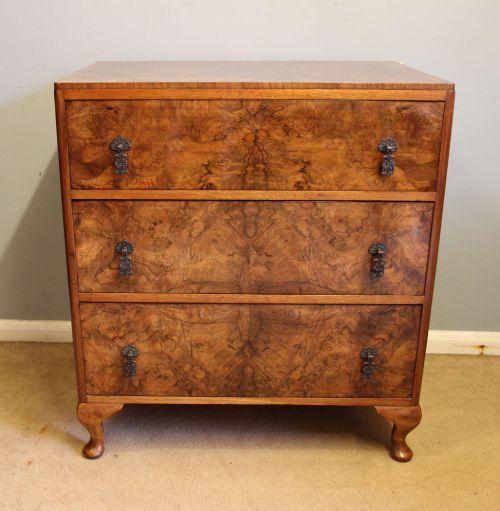
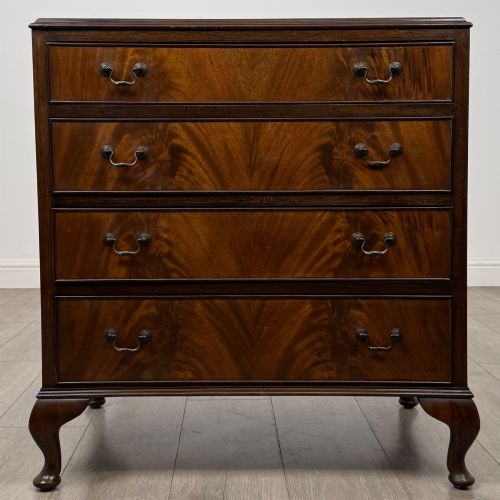
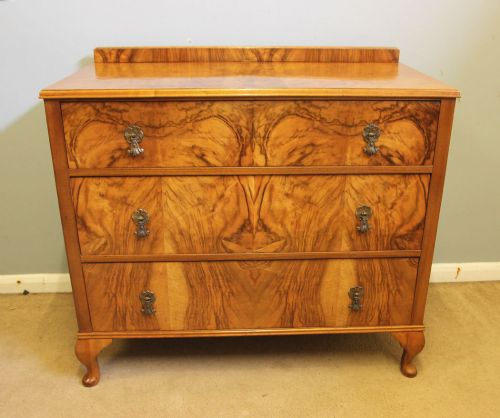
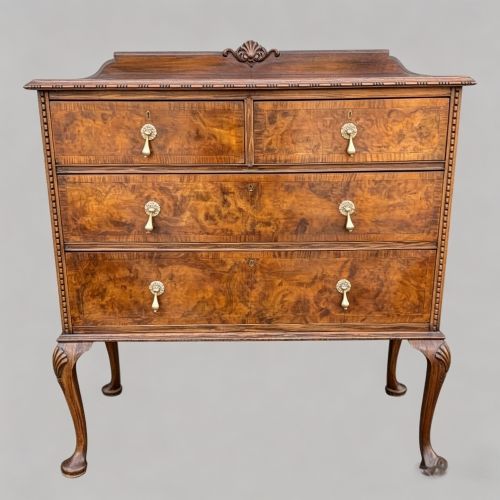
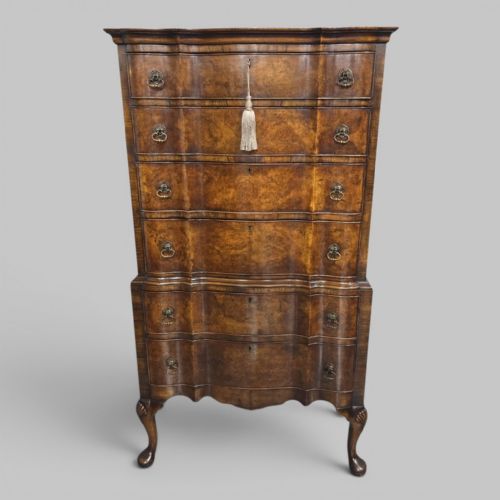
A queen anne style dresser brings sculptural cabriole legs and rich walnut veneers into a room, offering practical storage with timeless grace.
Queen Anne Style Dresser
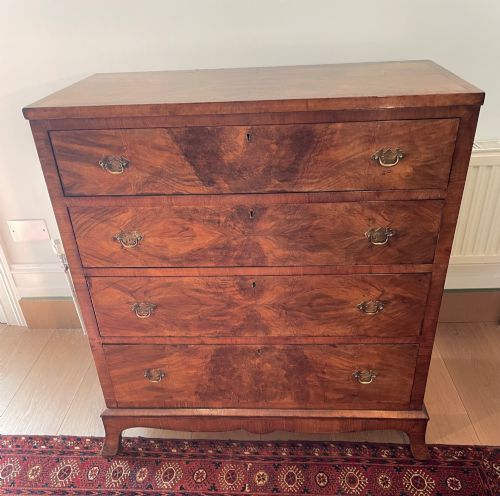
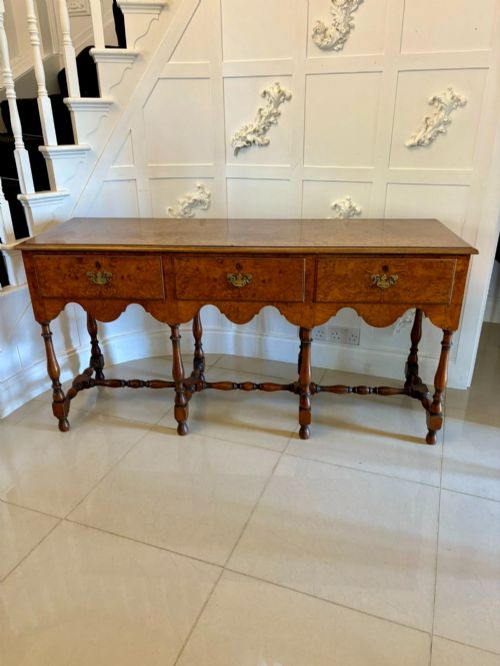
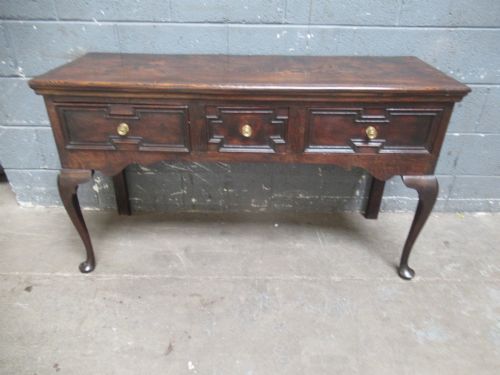
When you search for a queen anne style dresser, you encounter a variety of forms including dresser bases, sideboards, and chests of drawers. These pieces date predominantly from the Edwardian era and the early twentieth century, alongside nineteenth-century examples and revivals.
Assessing Quality and Craftsmanship
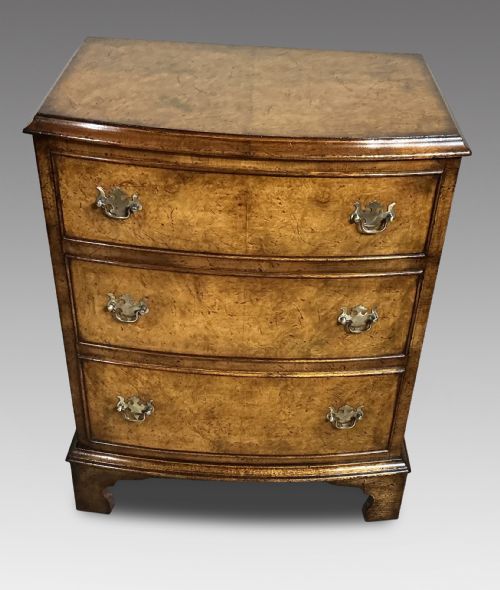
Quality rests in the selection of the wood veneers and the crispness of the carving on the cabriole legs and knees. Finer examples display carefully matched burr walnut grain across the full width of the drawer fronts rather than disjointed patches.
Structural integrity also separates the output of standard workshops from distinguished firms. Smooth drawer runners, intact secondary timbers, and well-fitted brasses indicate a higher standard of cabinetmaking.
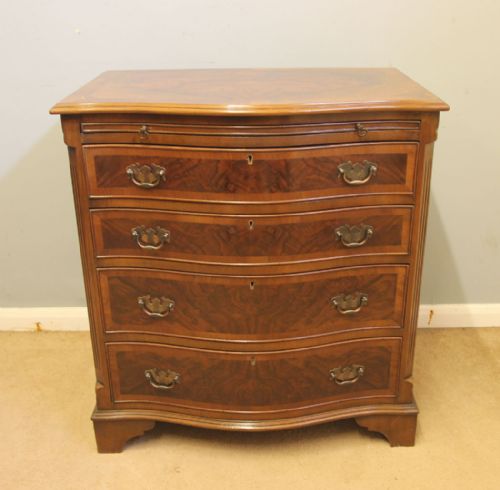
Some Edwardian walnut chests hide secret shallow drawers tucked just beneath the top moulding.
Hille of London·Whytock & Reid·Maple & Co
The Queen Anne Style Dresser Glossary
- Cabriole leg
- A furniture leg that curves out and then in, resembling an animal's leg. This form is typical of eighteenth-century design and later revivals.
- Burr walnut
- A veneer sliced from walnut tree growths, producing an intricate swirling pattern. Cabinetmakers prized this material for decorative surfaces.
- Crossbanding
- A narrow strip of veneer laid around the border of a drawer or tabletop with the grain running perpendicular to the centre. This technique frames the primary wood.
- Dresser base
- A low sideboard or cabinet with drawers, designed for storage and serving. These pieces often lack the upper plate rack of a traditional kitchen dresser.
Queen Anne Style Dresser: Frequently Asked Questions
What is a dresser base?
A dresser base is a low wooden cabinet featuring multiple drawers and sometimes cupboards, built for domestic storage and serving purposes.
Unlike traditional tall storage units, these pieces sit lower to the ground and often double as sideboards in dining rooms or hallways.
How do I spot walnut veneer?
Walnut veneer appears as a thin decorative layer of wood applied over a secondary timber carcase. You can identify it by examining the edges where the surface meets the side panels.
Figured and burr walnut varieties show repeating, swirling grain patterns that would be structurally unstable if carved from a single solid block of wood.
Where do cabriole legs originate?
Cabriole legs draw inspiration from ancient Chinese furniture designs that travelled through European trade routes. British cabinetmakers adopted the shape during the early eighteenth century.
The profile mimics animal limbs with an outward knee and an inward ankle, terminating in pad or claw feet.
How do I care for walnut furniture?
Walnut furniture requires protection from direct sunlight and extreme temperature fluctuations to prevent the wood veneers from drying out or splitting. Dust the surfaces regularly with a soft dry cloth.
Applying a traditional beeswax polish occasionally helps nourish the timber and maintains the natural sheen of the vintage finish.