



Queen Anne Side Cabinet
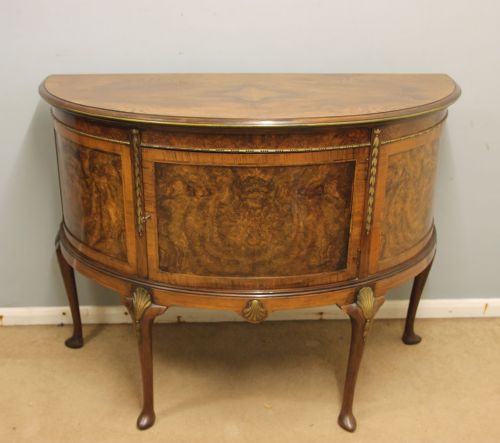
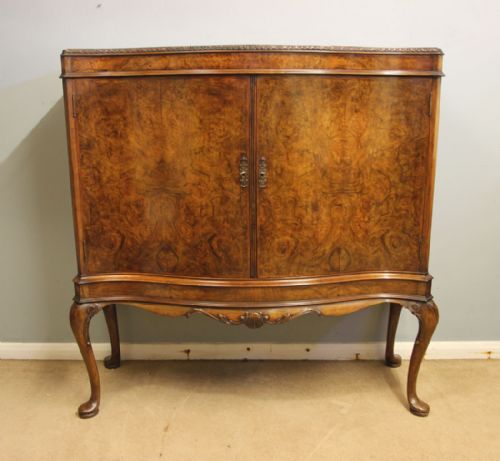
A queen anne side cabinet brings rich walnut grain and restrained proportion to an interior, offering compact storage with characteristic cabriole lines.
Queen Anne Side Cabinet
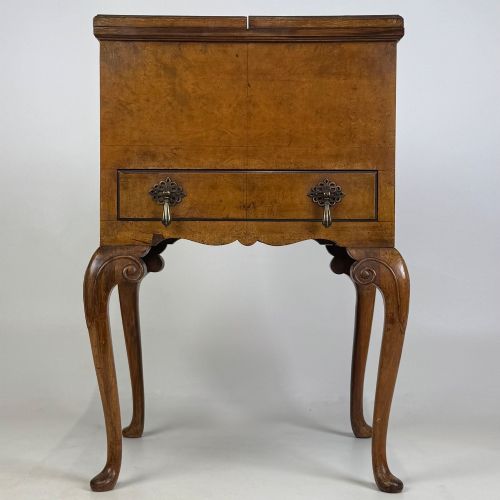
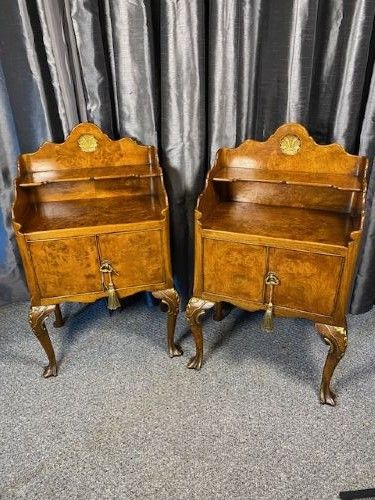
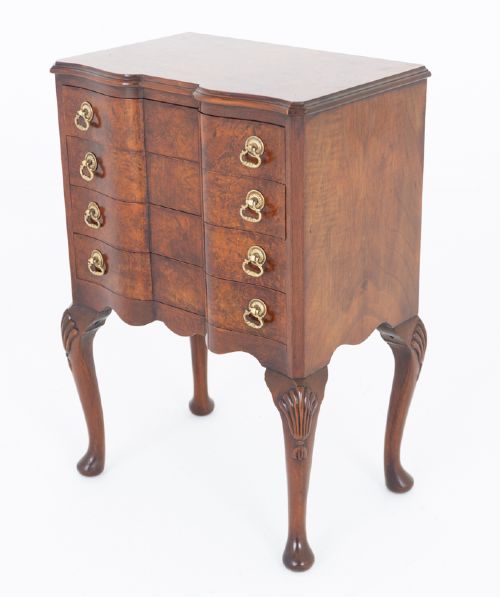
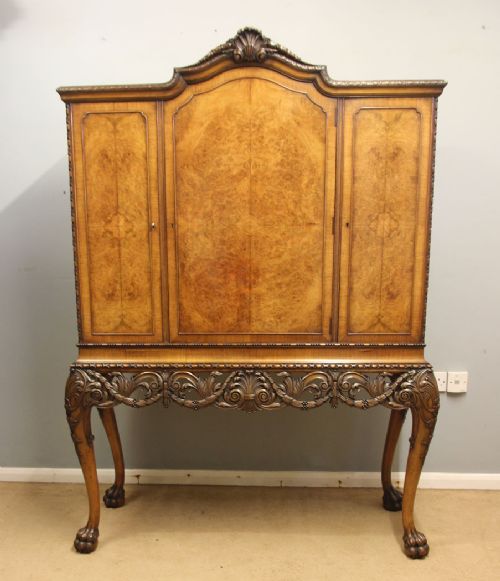
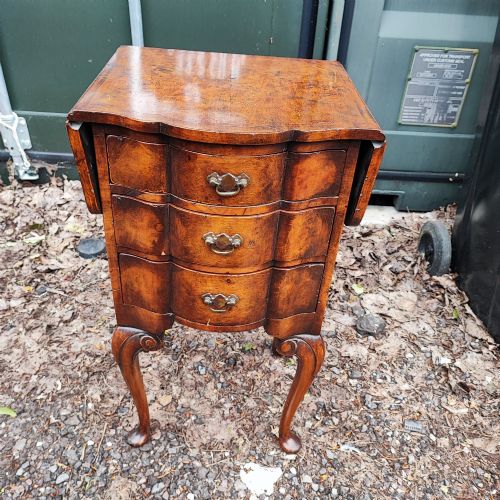
A queen anne side cabinet is primarily encountered through twentieth-century revivals dating from the nineteen-twenties and nineteen-thirties, alongside earlier nineteenth-century and eighteenth-century examples. The selection spans bedside tables, cocktail units, lowboys, and larger cupboards, reflecting diverse domestic storage needs across several periods.
Most items on this page adopt the Queen Anne style or its revival forms, translated into bedside chests, lamp tables, and bow-fronted display pieces. Walnut and burr walnut dominate the current forms, joined by occasional mahogany and oak interpretations.
How they were made
Cabinet makers utilised solid timbers alongside decorative burr walnut and figured walnut veneers applied to primary carcases of oak or pine. Brass hardware, including handles and key escutcheons, provides functional contrast to the dark polished wood surfaces.
Construction techniques combine traditional joinery with shaped fronts, demi-lune curves, and break-front profiles. Glass panels appear on display variants, while tables and lowboys rest on characteristic curved uprights.
Listings span multiple eras from the eighteenth century through to nineteen-thirty revival pieces, dominated by walnut and burr walnut materials.
What varies in quality
Quality rests heavily on the selection and matching of burr walnut veneer across curved doors and drawer fronts. Superior examples demonstrate continuous grain patterns and careful timber preparation that highlight natural figuring without distortion.
Proportion and the execution of shaped cabriole supports dictate the visual balance of each piece. Finer workshops maintain crisp detailing in the carved elements and smooth operation in drawers and cupboards.
Maple and Co.
The Queen Anne Side Cabinet Glossary
- Burr Walnut
- A specialised wood veneer taken from the wart-like growths on walnut trees, prized for its swirling, highly figured grain patterns. It forms the decorative surface on many revival cabinets.
- Cabriole Leg
- A furniture support that curves outward at the knee and tapers inward toward the ankle, typical of the style. This profile derives from animal limbs and ends in various foot types.
- Demi-Lune
- A half-moon shape applied to the plan of side cabinets and tabletops. This profile allows furniture to sit flush against walls while maintaining a curved front.
- Lowboy
- A small table with drawers, commonly standing on four tall legs and functioning as a dressing or side table. Early examples originate in the eighteenth century.
- Break-Front
- A cabinet design where the central section projects forward from the flanking outer sections. This architectural arrangement creates depth and shadow across the storage facade.
Queen Anne Side Cabinet: Frequently Asked Questions
What rooms suit a queen anne side cabinet?
These compact cupboards and chests fit easily beside a bed, in a hallway, or acting as lamp tables in a living space. Their enclosed storage keeps small items out of sight.
The distinct wood grain and curved lines also allow them to function as cocktail units or display surfaces in reception rooms.
How do I date a walnut cabinet?
Dating relies on examining construction methods, secondary timbers, and hardware style. Pieces from the nineteen-twenties often use twentieth-century manufacturing alongside revival aesthetic markers.
Original eighteenth-century or nineteenth-century items reveal hand-cut joints, patinated timber surfaces, and construction details consistent with earlier cabinet-making traditions.
Are pairs common in these listings?
Matched pairs appear frequently among bedside cabinets and smaller lamp tables. These sets were often produced during the revival periods to furnish twin bedrooms.
Single larger side cabinets and bookcases appear more often as standalone focal points within a room scheme.
What is burr walnut veneer?
Burr walnut is a thin decorative slice of timber cut from irregular tree growths, displaying complex patterns of knots and swirls. Craftsmen applied these veneers to the primary carcase of side cabinets to create striking visual textures.
This technique allows the natural beauty of the wood grain to cover larger surfaces than solid burr timber permits.