



Figured Walnut Server
A figured walnut server brings rich grain patterns and dependable surface space to a dining room or hallway.
Figured Walnut Server
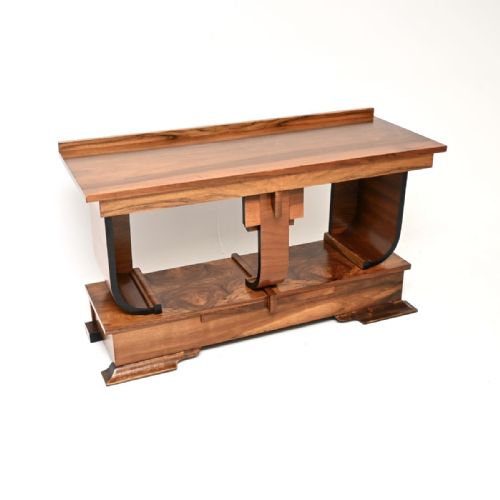
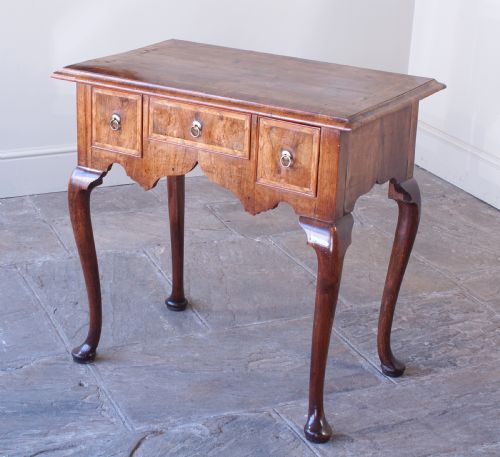
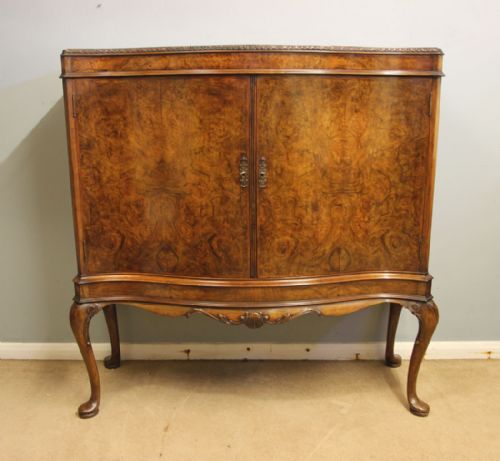
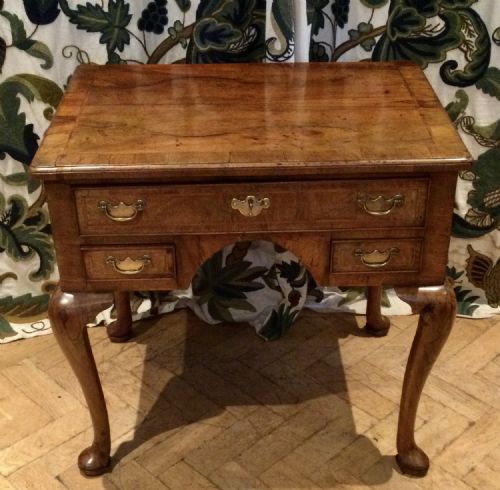
A figured walnut server takes several structural forms across the periods represented here, ranging from 18th century lowboys to early 20th century Art Deco sideboards and console tables. These pieces serve primarily as dining room servers or side cabinets, offering functional storage alongside decorative presence.
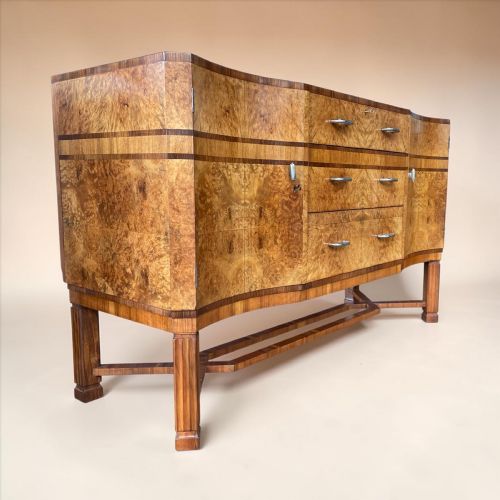
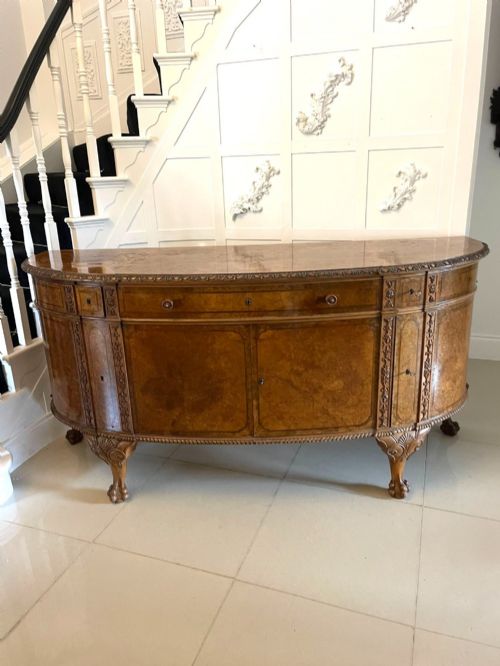
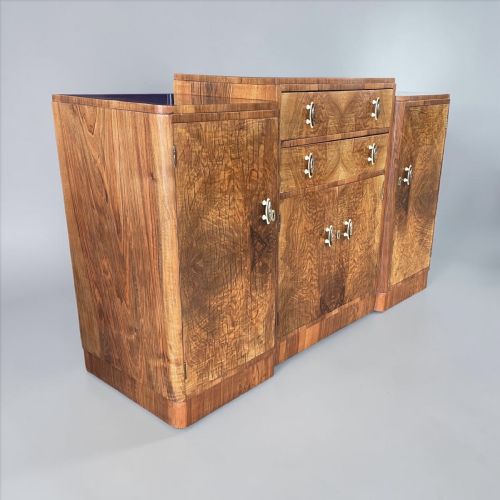
The version most commonly encountered on this page combines the sweeping geometric lines of the 1930s with rich veneer work. Buyers also find earlier Queen Anne revival sideboards and lowboys featuring traditional cabriole legs and brass hardware.
The designation server encompasses related forms such as sideboards, side tables, and credenzas. Each shares the characteristic timber grain that defines the group.
Materials and construction
Makers utilised solid walnut and decorative veneers such as burr walnut and figured walnut to cover structural carcasses. These veneers were carefully matched and laid to create symmetrical patterns across drawer fronts and cabinet doors.
Hardware details such as brass handles and chrome fittings finish the construction, alongside specialised elements like Bakelite accents on Art Deco examples. Crossbanding frequently frames the primary grain panels on 18th century and revival pieces.
The listings span the 18th century, 1900, 1910, 1920, and 1930 periods, incorporating both solid walnut and burr walnut veneer.
Distinguishing quality in timber and design
Quality rests principally in the selection and application of the timber veneer. The most accomplished pieces display symmetrical, highly figured grain patterns that wrap fluidly around corners and drawer fronts without interruption.
The integration of design and hardware also separates standard production from finer work. London firms and named makers utilised superior timber selections, precise crossbanding, and substantial brass or chrome hardware that complements the overall form.
Hille of London·Harry and Lou Epstein·Hamptons of Pall Mall London·Maples and Co
The Figured Walnut Server Glossary
- Figured walnut
- Timber exhibiting wavy, swirling or mottled patterns within the grain. This appearance occurs naturally in certain sections of the tree, such as where branches join the trunk.
- Burr walnut
- A specialised veneer taken from the wart-like growth on a walnut tree. It produces a dense cluster of intricate circular patterns.
- Lowboy
- A small table with drawers, typically raised on four tall legs. These date back to the eighteenth century and function as compact serving tables.
- Crossbanding
- A narrow strip of veneer laid around the border of a panel in a direction running perpendicular to the central grain. This technique frames the primary timber surface.
- Cabriole leg
- A furniture leg that curves out in a convex arc and then bends inward in a concave arc, ending in a pad or claw foot. This form is common on Queen Anne style pieces.
Figured Walnut Server: Frequently Asked Questions
What is the difference between a server and a sideboard?
A server generally tends to be slightly smaller and lower in height than a traditional dining sideboard. Both pieces provide surface space for food presentation and storage for dining accessories.
Historical examples on this page show servers taking the form of lowboys or compact console tables, whereas sideboards often incorporate larger cupboards and drawers.
How do I care for figured walnut furniture?
Walnut benefits from consistent indoor humidity levels and protection from direct sunlight, which can alter the colour of the timber over time. Regular dusting with a soft, dry cloth preserves the finish.
Avoid applying silicone-based polishes or placing hot items directly onto the veneered surface. Occasional gentle waxing maintains the sheen of the grain.
How do I date a walnut server?
Dating relies on observing structural characteristics, hardware styles, and the overarching design movement. Pieces from the eighteenth century display hand-cut joinery and proportions distinct from later revivals.
Twentieth century examples often incorporate Art Deco geometric geometry, Bakelite details, or chrome hardware alongside distinctive veneer matching techniques.
Where should I place a server in my home?
These pieces suit dining rooms as serving surfaces, but their compact proportions also allow them to function well in hallways or living rooms. Console tables and lowboys fit narrow spaces while providing useful surface area.
Matching the period of the server to your interior creates a cohesive scheme, though individual pieces also mix effectively with modern furnishings.