
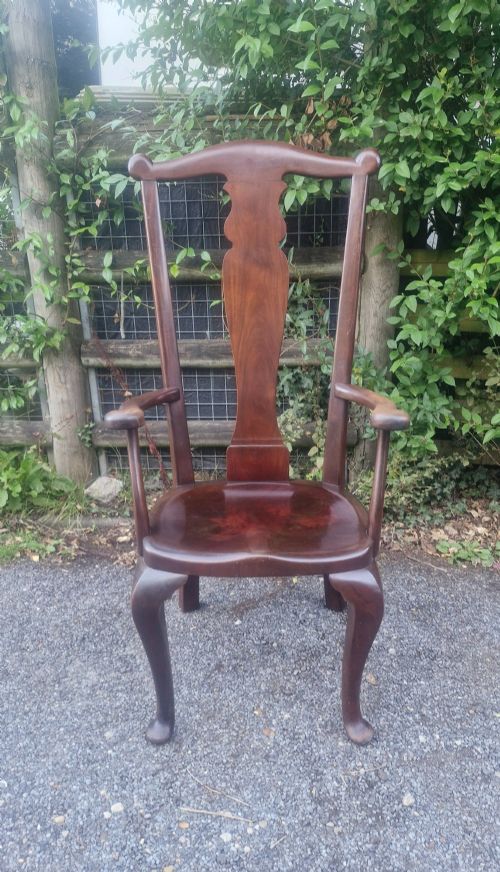
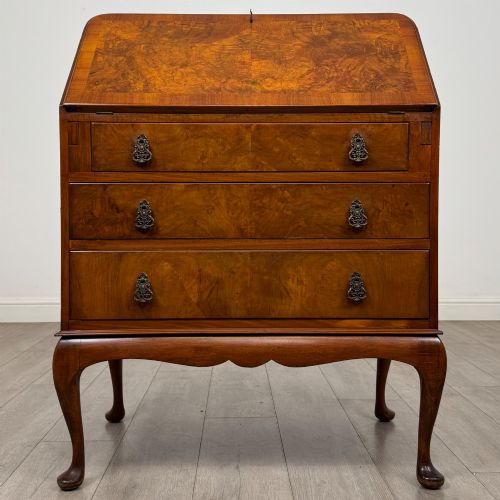
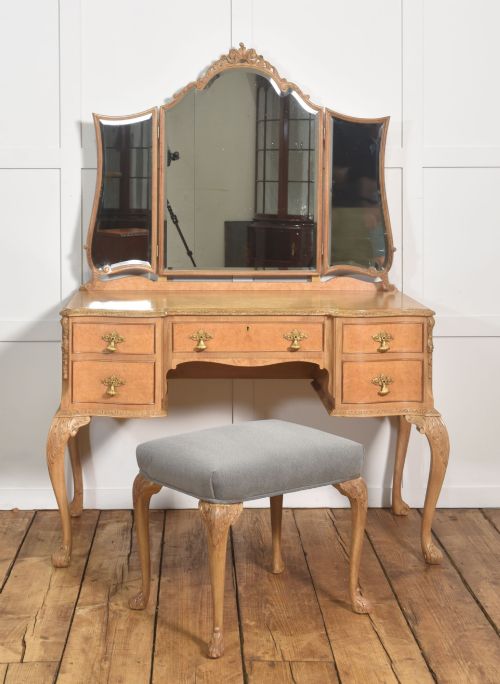
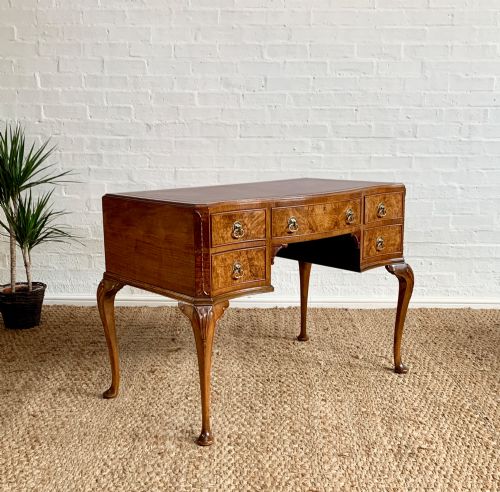
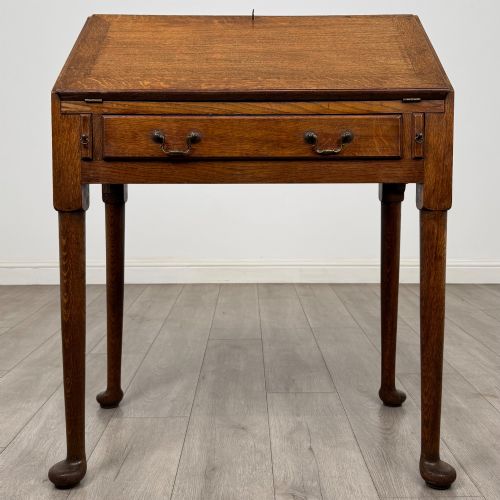


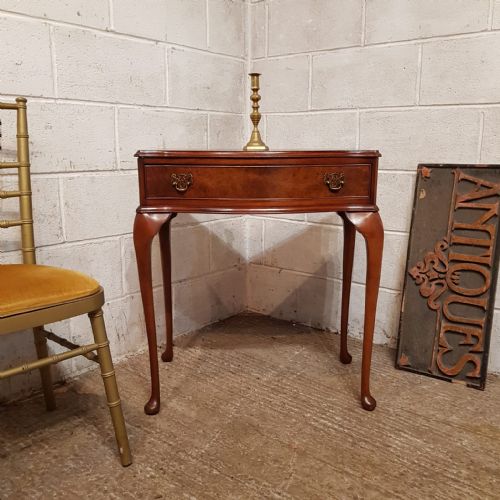


Queen Anne Revival Desk
A queen anne revival desk brings together walnut veneers and graceful cabriole lines to anchor a study with period character.
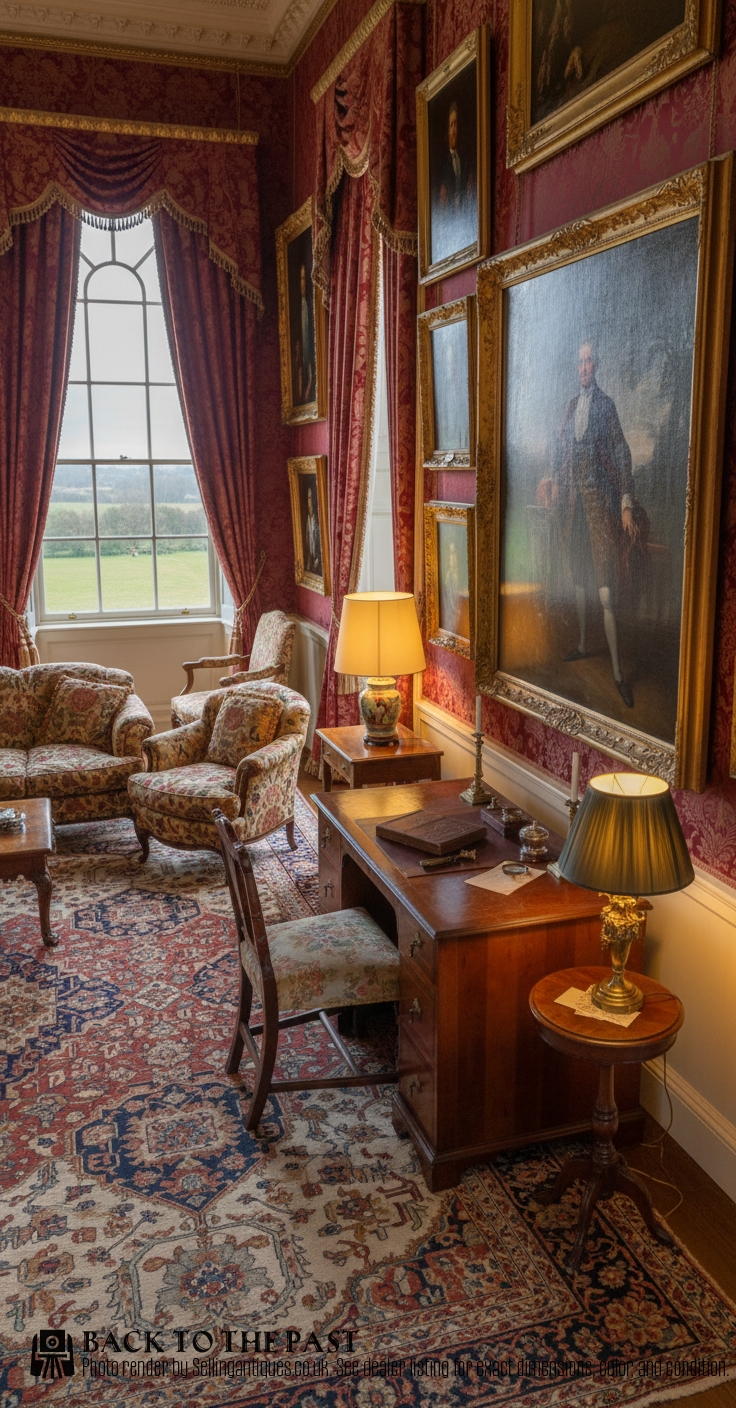
Queen Anne Revival Desk
When you search for a queen anne revival desk, you encounter writing tables, writing bureaus, and lowboys produced across the late nineteenth and early twentieth centuries.
The version you are most likely to meet on this page is a walnut or burr walnut writing table or bureau dating from the Edwardian era up to the 1930s.
These pieces lean heavily on earlier eighteenth-century forms, reinterpreting traditional walnut construction, pad feet, and slender proportions for modern homes of the period.
Materials and construction
Cabinet makers relied primarily on walnut and burr walnut veneers applied to secondary timbers, often complemented by finely figured mahogany or golden oak.
Surfaces frequently incorporate inset leather writing panels and detailed brass hardware, while seating and auxiliary items employ supportive fabric upholstery.
Construction techniques combine traditional joinery with period machinery, utilising oyster veneers and carved cabriole supports to emulate authentic earlier styles.
Queen Anne Revival Desk Retail Price Guide 2026
Typical asking prices for queen anne revival desk among the pieces listed under this phrase on Sellingantiques today, from the lower quarter to the upper quarter. They describe what is for sale here now, not the wider market.
Listings span from the 1880s Victorian revival period through Edwardian production to the 1930s, using walnut, mahogany, oak, and brass.
Evaluating quality and execution
The standard of timber selection divides simpler utility pieces from high-end cabinet work, particularly in the richness and symmetry of burr walnut or oyster veneer patterns.
Execution of carved details such as shell motifs on knees and crispness of cabriole legs reflect the skill invested by the workshop.
Provenance and maker attribution elevate certain items significantly, distinguishing branded pieces from anonymous workshop production.
Wylie and Lochhead Glasgow·Maples of London·Shoolbred and Co·Gill and Reigate·Whytock and Reid of Edinburgh
The Queen Anne Revival Desk Glossary
- Cabriole leg
- A furniture leg that bends outward and then tapers inward, mimicking the shape of an animal limb. This form terminates typically in a pad or claw and ball foot.
- Burr walnut
- A highly prized wood veneer obtained from growths on walnut trees. It displays swirling, irregular grain patterns full of character.
- Lowboy
- A small oak, walnut, or mahogany table with drawers, resembling the lower section of a highboy. It functions traditionally as a dressing or writing table.
- Oyster veneer
- Slices cut transversely from small branches or roots to produce circular rings resembling oysters. It creates a distinctive patterned surface across tabletops.
- Writing bureau
- A desk featuring a sloping fall-front that opens to reveal a fitted interior of small drawers and pigeonholes. It provides a concealed workspace for correspondence.
Queen Anne Revival Desk: Frequently Asked Questions
How do I date a queen anne revival desk?
Dating relies on timber characteristics, construction methods, and secondary materials visible inside drawers. Edwardian and 1930s interpretations often mix machine-cut elements with traditional hand-finishing.
Examining locks, handles, and timber backing helps separate late Victorian revivals from pieces produced between the wars.
Are these desks practical for daily work?
Many examples provide suitable writing surfaces and functional drawer space for contemporary laptops and paperwork. Compact proportions make them particularly adaptable for smaller home studies.
Leather writing inserts offer durable surfaces, though antique leather requires careful handling to preserve its original character.
How do I maintain burr walnut surfaces?
Walnut benefits from occasional application of quality furniture wax to nourish the timber and protect delicate veneers. Direct sunlight and sudden temperature changes should be avoided to prevent fading or splitting.
Using soft cloths for dusting prevents micro-scratches on polished veneer finishes.
What is the difference between a lowboy and a writing desk?
A lowboy is a compact table featuring one or more rows of drawers beneath the flat top, historically used for grooming or writing. A dedicated writing desk or bureau often includes superstructure pigeonholes or a sloping lid.
Both forms share similar cabriole leg styling within the revival period.