


20th Century Bureau
A 20th century bureau brings fold-down writing surfaces and fitted interior compartments into domestic studies, offering practical enclosed storage for correspondence.
20th Century Bureau
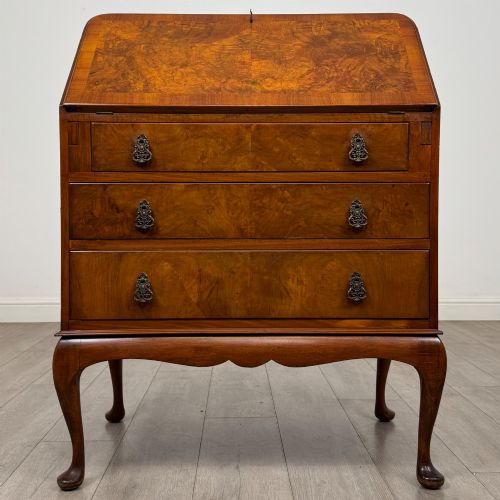
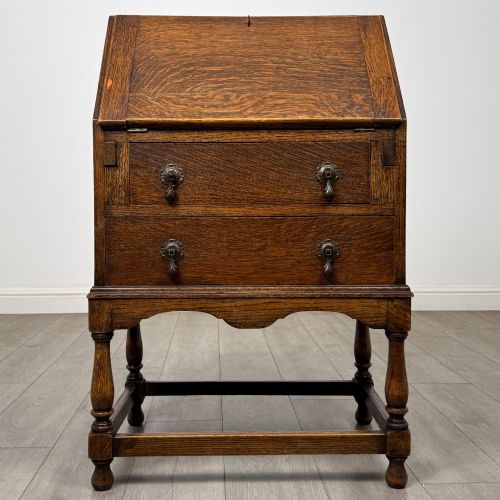
When you examine a 20th century bureau, you find a writing surface that drops down on hinges to reveal pigeonholes, small drawers, and central compartments. The form combines a chest of drawers below with a sloping desk lid above, evolving from earlier cabinetmaking traditions to suit Edwardian and later domestic interiors.
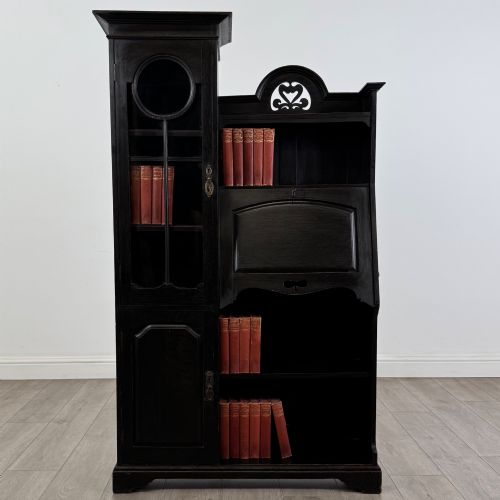
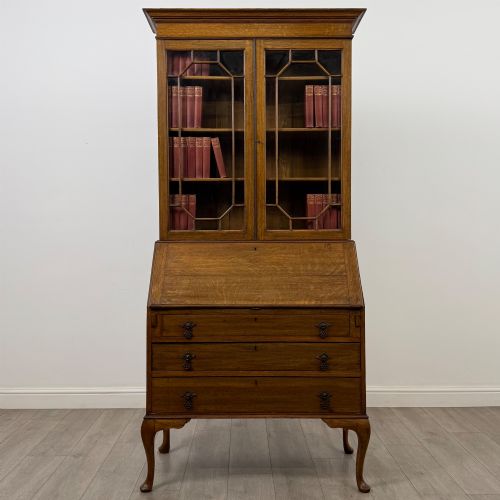
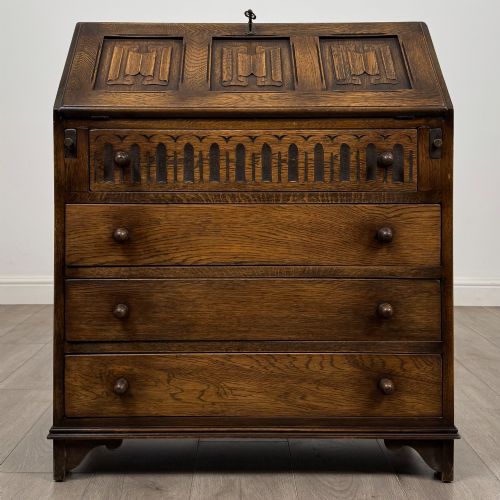
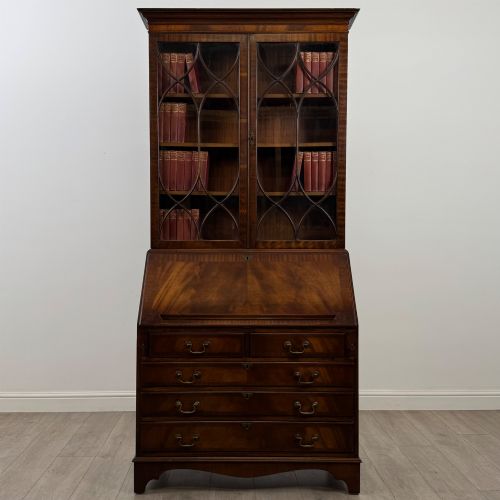
The version you most frequently meet on this page is constructed from oak, often displaying Edwardian proportions or Jacobean and Queen Anne revival styles. Alongside standard fall-front bureaux, the selection includes bureau bookcases that mount glazed or panelled shelving above the writing section.
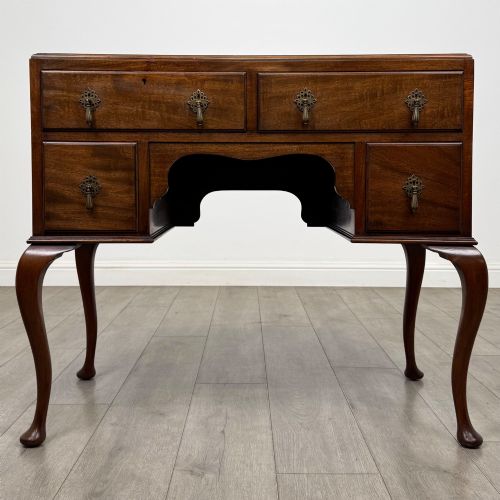
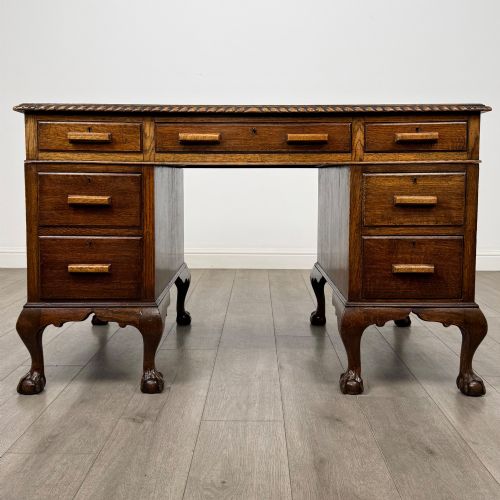
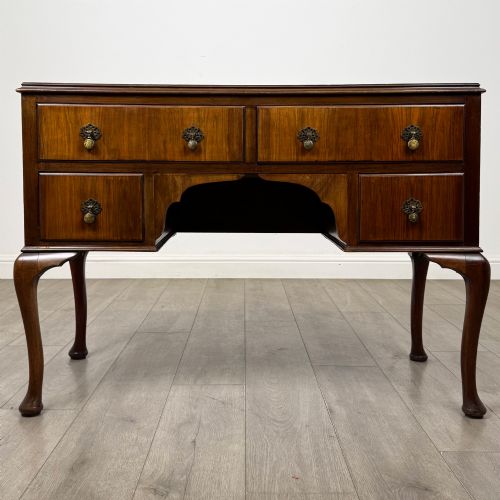
Makers also produced related writing forms during this period, such as ladies writing tables, bureau plat desks, and pedestal desks with leather inserts. These pieces share the characteristic commitment to domestic organisation and compact workspace solutions.
Materials and construction methods
Cabinetmakers relied heavily on solid oak, walnut, and mahogany, frequently selecting burr walnut and figured timber veneers for the fall fronts and primary display surfaces. Secondary timbers were utilised for interior drawer linings, while brass handles, key escutcheons, and occasional ormolu mounts provided functional hardware.
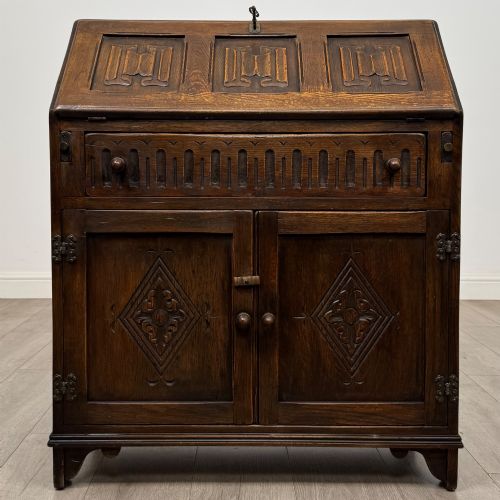
Construction techniques combined traditional dovetailed drawer boxes with frame and panel doors on bookcase sections. Decorative elements such as carved linenfold panels, barley twist legs, and delicate marquetry inlay reflected the prevailing revivals of Jacobean, Georgian, and Arts and Crafts styles.
Secret compartments inside these writing desks remain ready to hide love letters or forgotten postage stamps.
Distinguishing quality across pieces
The hierarchy of quality rests on the selection of timber veneers, the precision of internal pigeonhole joinery, and the integrity of the fall-front hinges. Superior examples display carefully matched burr walnut or figured oak grains across the writing flap, whereas standard production relies on plain timber boards.
Internal execution separates workshops further, distinguishing pieces with secret compartments and finely dovetailed stationery drawers from simpler domestic models. The crispness of carved details, such as linenfold panels or applied mouldings, indicates the level of labour invested by the maker.
ARTHUR BASIL REYNOLDS·WYLIE & LOCHHEAD GLASGOW
The 20th Century Bureau Glossary
- Bureau
- A writing cabinet featuring a sloping hinged lid that opens to reveal a fitted interior of small drawers and pigeonholes.
- Bureau bookcase
- A taller cabinet combining a fall-front desk base with an upper section enclosed by glass or wooden doors for book storage.
- Linenfold
- A carved wooden panel motif popular in revival furniture designed to imitate folded medieval fabric.
- Burr walnut
- A highly figured wood veneer obtained from walnut tree growths, prized for its swirling grain patterns.
- Pigeonhole
- A small, open compartment within a desk interior used for sorting letters and stationery.
- Ormolu
- Gilt bronze mounts applied as decorative enrichment to the corners and frames of select high-end writing furniture.
20th Century Bureau: Frequently Asked Questions
What is a 20th century bureau?
A 20th century bureau is a compact writing cabinet featuring a hinged sloping flap that drops down to form a desk surface. Behind this flap lie small drawers and compartments designed for organising stationery and letters.
Below the writing area, these pieces typically incorporate a chest of drawers for general storage. They bridge the gap between decorative cabinetry and functional workspace.
How do I identify an Edwardian bureau?
Edwardian examples often feature light oak or mahogany construction, frequently ornamented with subtle inlay or brass handles. They tend to reflect revival movements such as Jacobean or Sheraton styles.
Examining the interior drawer construction and secondary timbers helps confirm the early twentieth-century timeline. The proportions are generally lighter than those of heavy Victorian precedents.
Where should I place a bureau in my home?
Bureaux function well in studies, living rooms, or hallways where floor space is limited. Their enclosed design allows you to conceal paperwork and laptop computers simply by closing the front flap.
Keep them away from direct sunlight and strong heat sources to protect timber veneers from drying out or warping over time.
What is the difference between a bureau and a bureau bookcase?
A standard bureau consists solely of a desk base with drawers beneath the writing flap. A bureau bookcase adds a substantial upper cabinet fitted with shelves behind doors.
This taller superstructure transforms the piece into a dual-purpose item for both document storage and book display.