


Qing Style Coffee Table
A qing style coffee table brings low, sculptural timber lines into a modern room, offering a quiet focal point rooted in Chinese traditions.
Qing Style Coffee Table
When you search for a qing style coffee table, you encounter low tables, opium tables, and occasional forms originating from the nineteenth and early twentieth centuries. These works span Chinese export pieces, traditional Chinese designs, and low circular or octagonal tables.
The most common versions met on this page include nests of tables and low hardwood coffee tables dating from around eighteen-eighty to nineteen-twenty. Makers constructed these items as low surfaces, nesting sets, and occasional tables suited to domestic sitting spaces.
How they were made
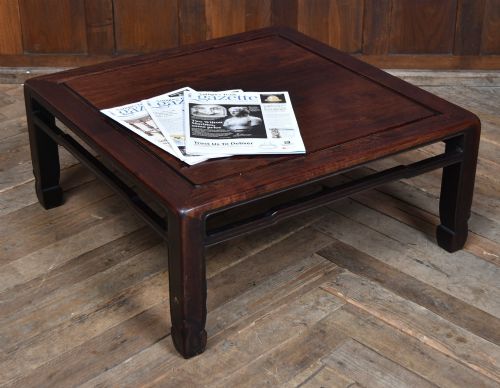
Artisans built these tables using dense timbers such as padouk, rosewood, huanghuali, hongmu, and elm. These hardwoods provided the structural strength needed for slender legs and low frames.
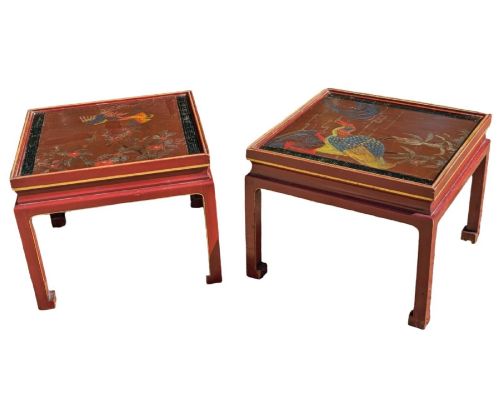
Makers finished select surfaces with lacquer and pigment, whilst others relied on carved details, burrwood panels, and inlaid elements to accentuate the timber grain.
Listings feature items dated from eighteen-eighty to nineteen-twenty, constructed in rosewood, elm, padouk, and huanghuali.
What varies in quality
The distinction between standard examples and finer pieces lies in the choice of timber and the precision of the joinery. Dense woods like huanghuali and padouk demonstrate superior natural figuring compared to general hardwood or basic timber.
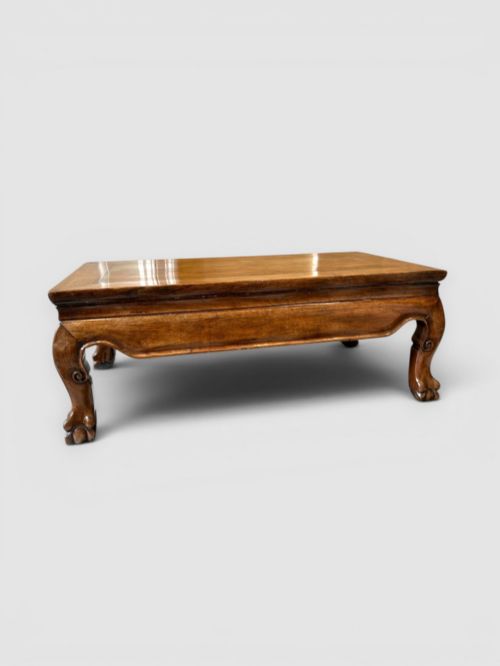
Carved ornament and inlaid work reveal the hand of the maker, where crisp edges and balanced proportions separate utilitarian furniture from refined decorative arts.
The Qing Style Coffee Table Glossary
- Huanghuali
- A prized dense hardwood featuring rich grain patterns and warm tones, utilised in traditional Chinese furniture making.
- Padouk
- A heavy, durable reddish-brown timber favoured for its strength and polished finish in nineteenth-century pieces.
- Nest of tables
- A set of graduated tables designed to slide neatly beneath one another to save space when not in use.
- Opium table
- A low Chinese table traditionally used for serving tea or smoking, characterised by short legs and sturdy construction.
- Hongmu
- A category of dense red hardwoods valued for heavy structural work and refined cabinetmaking.
Qing Style Coffee Table: Frequently Asked Questions
What is a qing style coffee table?
A qing style coffee table is a low wooden surface inspired by nineteenth or early twentieth-century Chinese furniture forms. These pieces often feature traditional joinery and low profiles.
They serve as functional coffee tables or occasional surfaces in contemporary living spaces.
How were opium tables used?
Opium tables served as low utilitarian surfaces for resting objects, serving tea, or social gathering within domestic interiors. Their low height accommodated seating on cushions or platforms.
Today, buyers repurpose these historical low tables as compact coffee tables.
What woods were used?
Cabinetmakers utilised dense Asian hardwoods including padouk, rosewood, huanghuali, hongmu, and elm. These timbers provided durability and attractive natural grain.
Secondary materials included lacquer, pigment, and burrwood for decorative surface highlights.
How do nesting tables work?
Nesting tables consist of a graduated set of three or four smaller tables that fit beneath the largest surface. This design saves floor space while offering multiple surfaces when needed.
Sets appear in hardwood and rosewood from the late nineteenth and early twentieth centuries.