



Qashqai Kilim Rug
A qashqai kilim rug brings the bold geometric artistry of South-West Persia straight to your floor.
Qashqai Kilim Rug
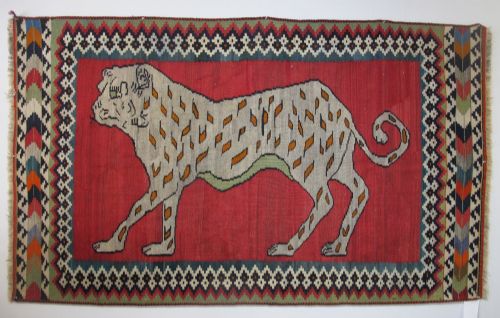
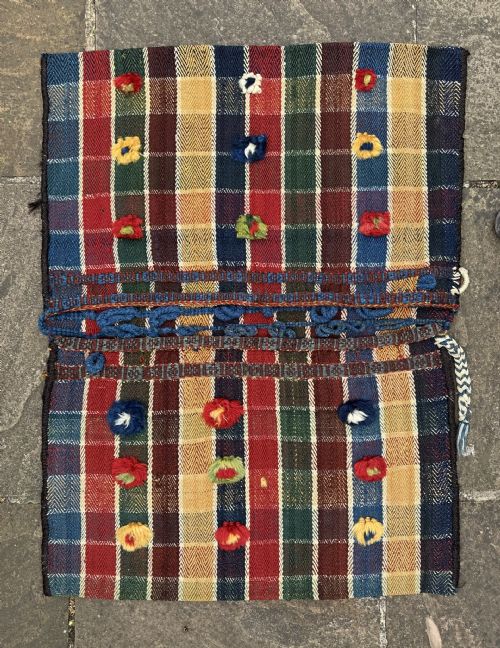
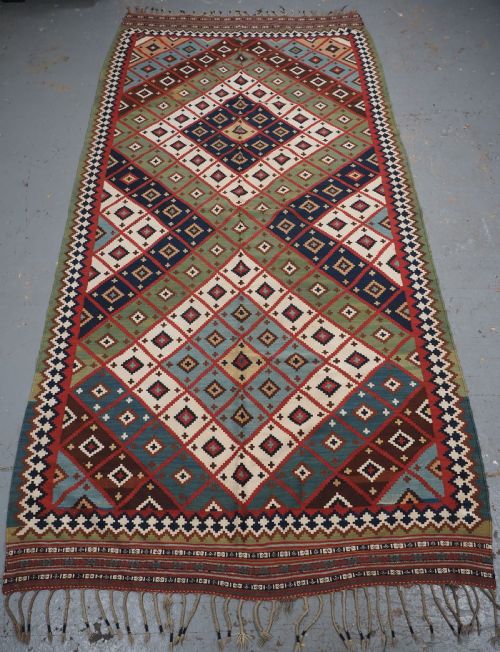
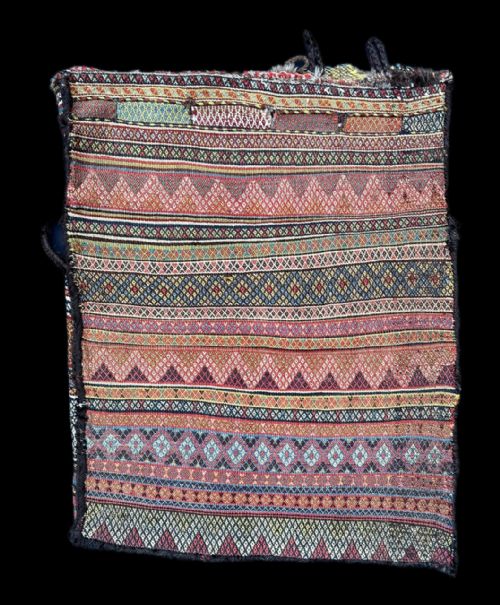
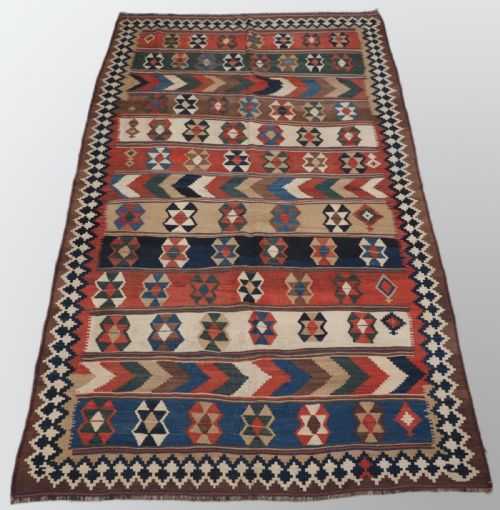
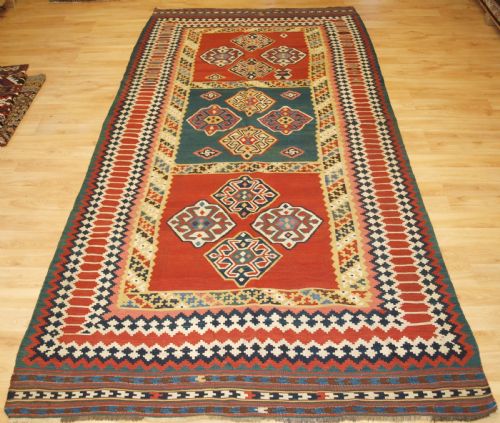
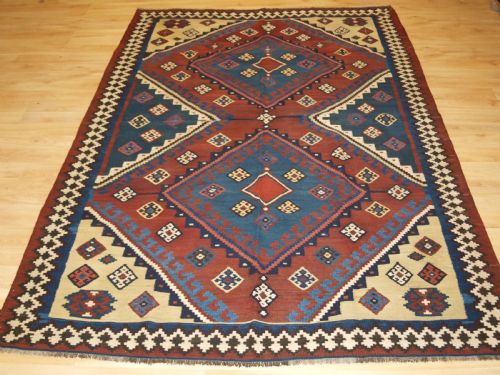
A qashqai kilim rug is a flatwoven textile originating from the nomadic tribes of the Fars Province in South Persia. These pieces include utilitarian items such as salt-bags, saddle-bags, storage-bags, and moj blankets alongside standard floor coverings. You will most frequently encounter flatwoven tribal kilims featuring banded, compartment, diamond medallion, or eye-dazzler designs.
The pieces available span from the late nineteenth century into the early twentieth century, specifically between 1870 and 1920. Tribal textiles from the Qashqa'i Confederacy and specific sub-groups like the Shekarlu and Darrehshuri tayefeh represent the core of these offerings. Each flatweave reflects the nomadic heritage of South-West Persia through distinct geometric motifs.
How they were made
These flatweaves utilise hand-spun wool for the primary textile structure, combined with cotton in selected pieces. Artisans employed traditional slit-weave techniques to create sharp geometric colour transitions without pile. Natural dyes provide the rich palette seen across the tribal and nomadic outputs.
The construction relies entirely on interlacings of warp and weft threads, resulting in a durable, reversible fabric designed for practical nomadic transport and daily use. Artisans sourced local materials from the Fars Province to spin wool by hand before dyeing.
Some salt-bags still retain their original hanging loops, designed for easy mounting inside a nomadic tent.
What varies in quality
The refinement of the geometric drawing and the precision of the slit-weave construction separate exceptional weaving from standard production. Tighter tension in the hand-spun wool creates a firmer, more resilient structure that endures for generations. Finer grade pieces display complex compartment or eye-dazzler compositions with superior chromatic balance.
The depth and variation of natural dyes influence the visual hierarchy of these textiles. Master weavers achieved harmonious palettes using local dye stuffs, whereas lesser examples show less nuanced colour interaction. The integrity of the original wool yarn foundation dictates the long-term stability of the textile.
The Qashqai Kilim Rug Glossary
- Kilim
- A flatwoven textile produced without a pile by tightly interweaving warp and weft strands. This technique creates a lightweight, reversible rug suitable for both floor placement and wall hanging.
- Moj
- A traditional patterned tribal blanket or coverlet woven by nomadic groups in South-West Persia. These textiles share the flatweave construction methods of standard kilims.
- Tayefeh
- A sub-tribe, clan, or lineage group within a larger nomadic confederacy such as the Qashqa'i. Identifying a specific tayefeh points to the particular regional aesthetic of the Fars Province.
- Slit-weave
- A flatweaving technique where the weft threads are looped back at the boundary of each colour area, creating a small vertical slit. This method allows weavers to produce sharp, graphic geometric patterns.
Qashqai Kilim Rug: Frequently Asked Questions
How do I clean a kilim rug?
Surface dust can be removed gently using a suction-only vacuum without a rotating brush bar. Professional textile cleaners who specialise in antique tribal flatweaves should handle deeper washing.
Water and harsh chemical detergents must be avoided to protect the hand-spun wool and natural dyes. Prompt attention to spills prevents moisture from settling into the fibre foundation.
Are these rugs reversible?
Traditional flatweaves are fully reversible because the construction technique exposes an identical pattern on both sides. Displaying either face depends entirely on personal preference and surface wear.
Rotating the textile periodically ensures even foot traffic distribution across both faces. This practice preserves the structural integrity of the hand-spun wool over time.
Where were these textiles made?
Nomadic weavers produced these pieces within the Fars Province of South-West Persia. The Qashqa'i Confederacy and related groups moved across this region seasonally.
Local materials and traditional tribal motifs were passed down through generations within specific clans. Each piece reflects the distinct visual vocabulary of its originating group.
Can I place furniture on a flatweave?
Light furniture items can sit safely on these textiles provided the weight is distributed evenly. Heavy pieces risk compressing the delicate hand-spun wool structure over prolonged periods.
Using a quality underlay prevents slipping and cushions the fabric against hard flooring. This simple addition reduces friction between the flatweave and the floor beneath.