


Putto Mantel Clock
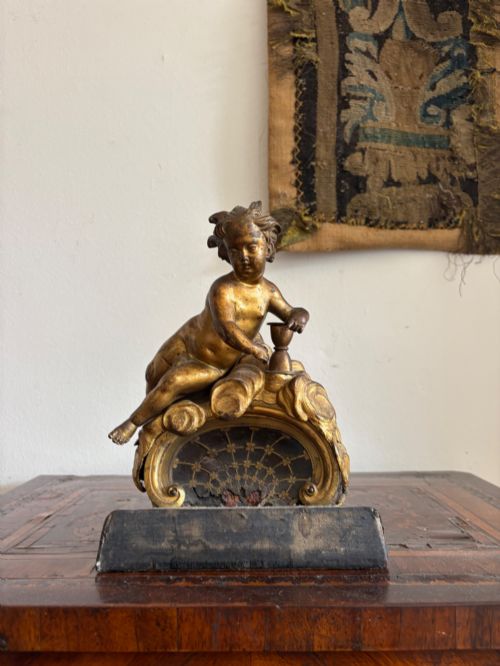
A putto mantel clock brings together heavy cast metal or marble and sculpted figures of cherubs, perfect for an ornate desktop or a formal drawing room mantelpiece.
Putto Mantel Clock
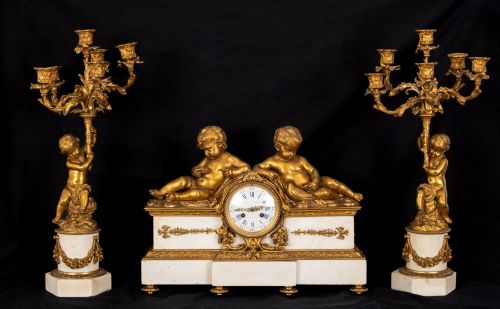
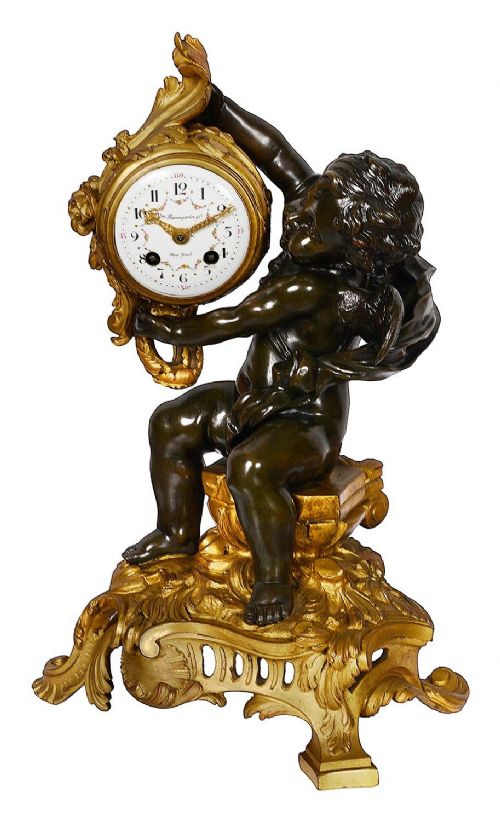
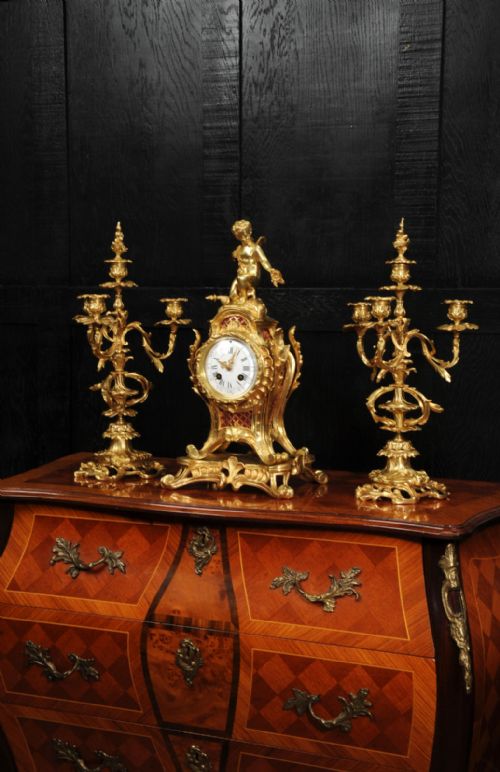
A putto mantel clock places sculpted figures of cherubs, cupids or putti alongside a functional clock movement, often accompanied by matching candelabras in a complete set. These pieces originate predominantly from nineteenth-century French workshops, spanning styles from Rococo Revival and Louis XVI to classical neoclassical designs.
The objects serve simultaneously as horological instruments and decorative works of art, reflecting the opulent interior tastes of the eighteen-fifties through to nineteen-hundreds.
How they were made
Craftsmen cast the metal components in bronze or brass before applying an ormolu mercury gilding or a rich gilt finish to achieve a bright, reflective surface. White and red marble bases provide a heavy, contrasting plinth that grounds the intricate metallic ornamentation.
Clockmakers fitted mechanical movements into these cased structures, often incorporating hand-painted enamel dials with detailed numeric markers. Sculptors modelled the cherub figures separately before mounting them securely onto the bronze or marble chassis.
Several cherubs quietly hold back the passage of time from atop their marble plinths, apparently unconcerned by the ticking of the clock.
What varies in quality
The depth and crispness of the chasing on the ormolu define the upper tier of these pieces, separating sharp, hand-finished foliage and cherub wings from softer, flat castings. Superior examples integrate the clock case and the figural putti into a single cohesive composition rather than placing figures as an afterthought.
The quality of the marble base, the presence of matching candelabras in a garniture set, and the inclusion of a signed movement by a known maker elevate certain pieces far above standard decorative clocks.
Le Roy Paris·Leon Message·Jollet et Cie·Phillipe H Mourey·John Bennett Cheapside London·Henry Berkeley Square London·Bellenot Paris
The Putto Mantel Clock Glossary
- Putto
- A plump, naked male child figure, commonly winged, used extensively in classical and Renaissance-revival decorative arts. They represent cupids or cherubs in nineteenth-century French and English clock cases.
- Ormolu
- Finely ground high-carat gold applied to a bronze base using a mercury amalgamation technique. This historic process creates a distinctively warm, lasting golden lustre.
- Garniture
- A set of matching ornamental objects for a mantelpiece, typically consisting of a central clock flanked by two matching candelabras or vases.
- Finial
- A decorative ornament that terminates the top of a clock case or architectural feature. In these pieces, a small putto often serves this crowning role.
- Fusee
- A conical pulley used in clock movements to maintain equal power as the mainspring unwinds. It represents a mark of traditional horological precision.
Putto Mantel Clock: Frequently Asked Questions
What is a putto mantel clock?
A putto mantel clock is a nineteenth-century timekeeper featuring sculpted cherub or cupid figures integrated into the case design. These decorative objects combine mechanical timekeeping with ornate metalwork.
Most examples utilise gilt bronze, ormolu, and marble, originating from French workshops during the Victorian era.
How do I style a clock garniture?
A clock garniture is best displayed centrally on a fireplace mantelpiece, flanked by its matching candelabras or side vases to create a balanced arrangement. The symmetry suits formal nineteenth-century interior aesthetics.
Ensure the surface is stable and level, as the combination of marble and cast bronze makes these sets exceptionally heavy.
How do I tell periods apart?
Periods are identified through a combination of stylistic cues, materials, and mechanical signatures. Rococo Revival pieces display asymmetrical scrollwork and exuberant curves, while Louis XVI styles favour strict symmetry and classical proportions.
Maker signatures on the dial or movement and specific cast-metal patination further help date the piece accurately to the nineteenth century.
How do I care for ormolu?
Ormolu surfaces require gentle dusting with a soft, dry brush to prevent the accumulation of dirt in intricate recesses. Avoid using chemical metal polishes, which strip away the historic gold layer.
Keeping the clock away from direct sunlight and moisture preserves both the mercury gilding and the underlying bronze structure.