

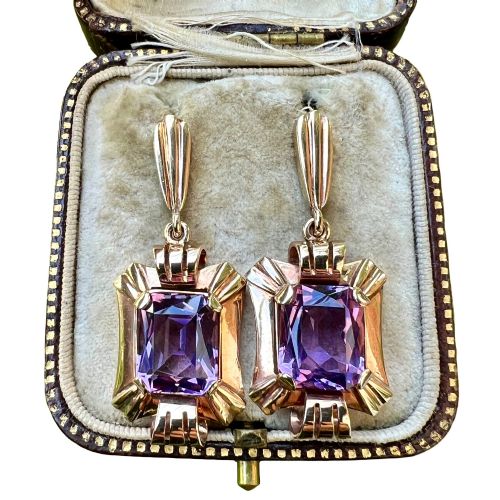
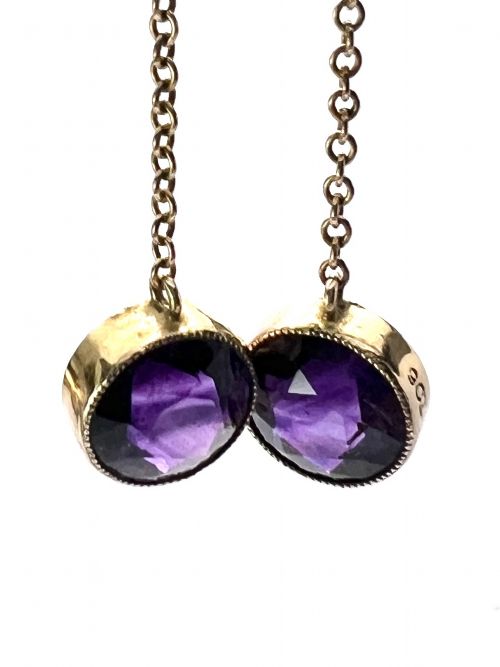


Purple Amethyst Earrings
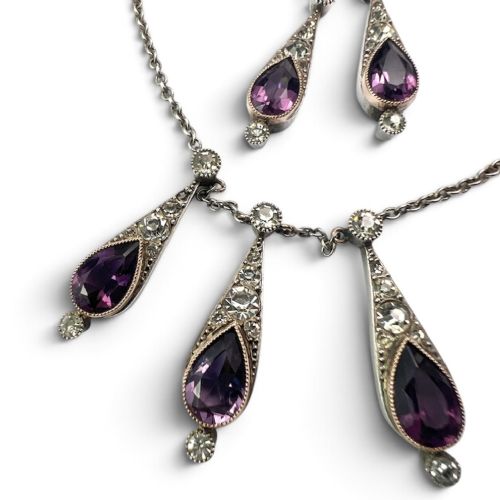
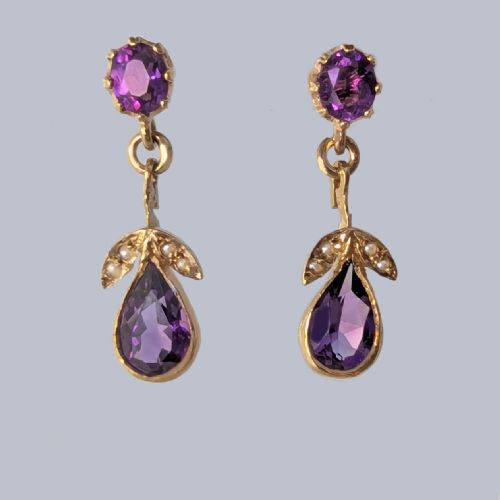
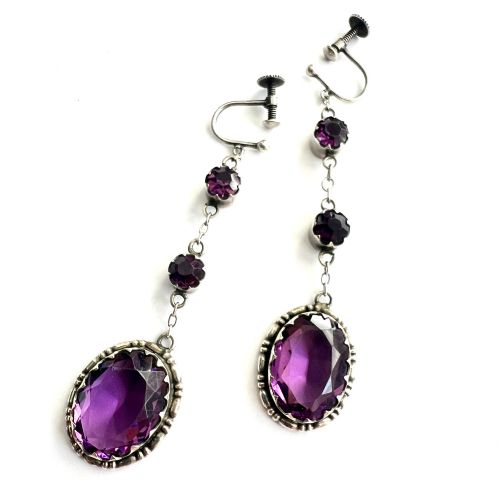
These purple amethyst earrings range from delicate Edwardian drops to bold Art Deco paste designs set in gold and silver.
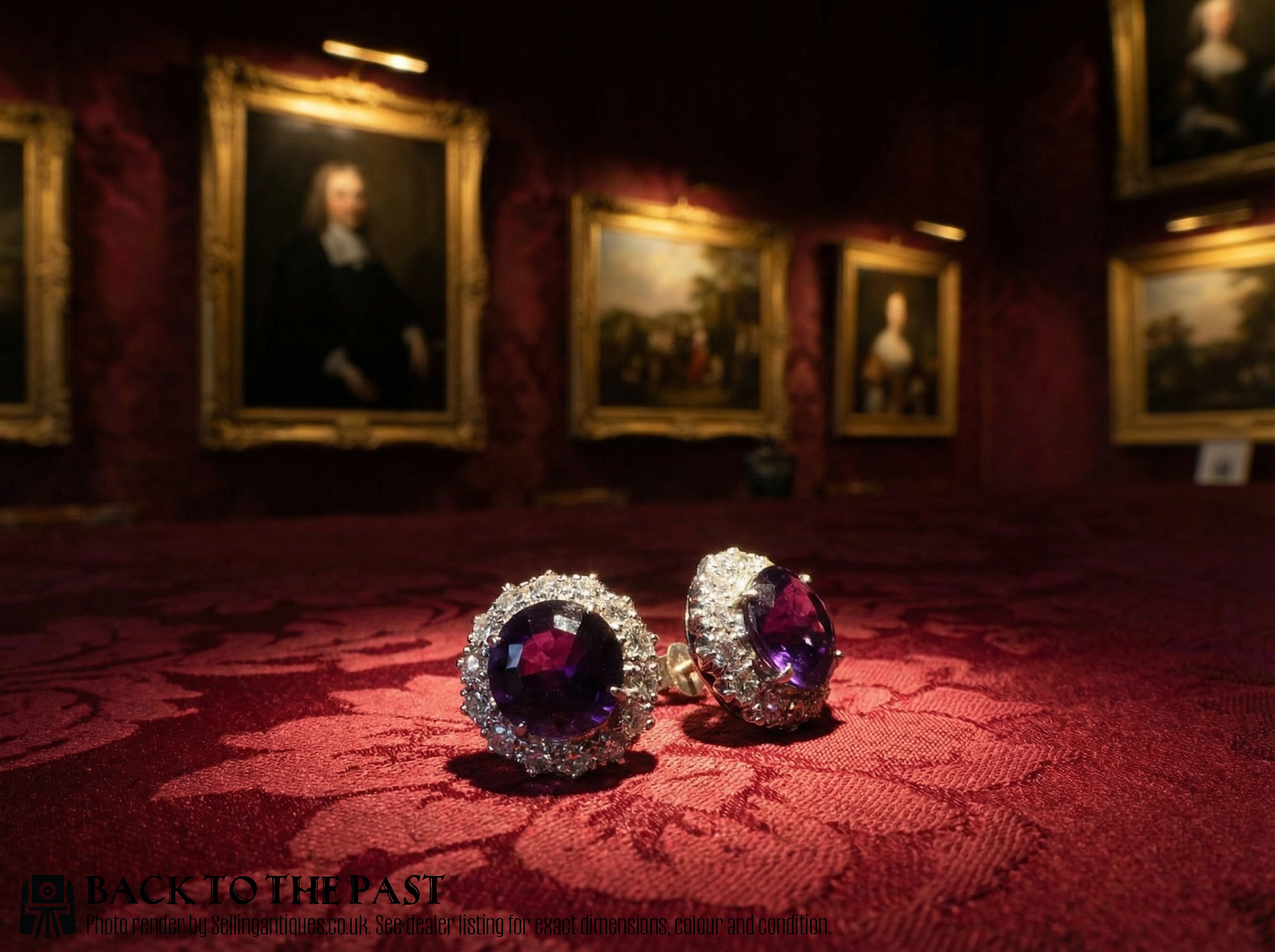
Purple Amethyst Earrings
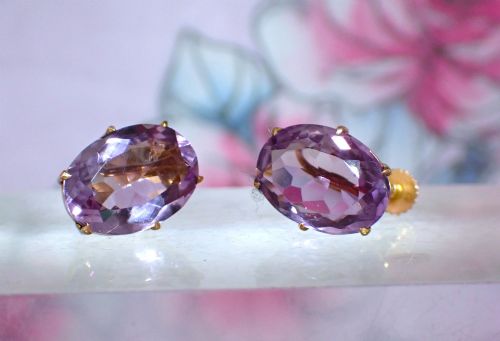
Purple amethyst earrings span several distinct periods, including Victorian, Edwardian, and Art Deco eras, alongside mid-century vintage pieces. When exploring purple amethyst earrings, buyers encounter forms ranging from simple studs and screw-back fasteners to elaborate drop and cluster designs.
The selections on this page predominantly feature gold, white gold, and silver settings, frequently incorporating seed pearls or paste glass alongside the central stones. Drop earrings and stud configurations dominate the available inventory, reflecting the popular jewellery styles of the twentieth century.
Materials and construction
Artisans set amethysts into precious metals such as nine-carat yellow gold, white gold, and silver, often securing the stones with claw or bezel settings. Many pieces incorporate secondary elements like seed pearls or paste glass to enhance the overall design.
Earring mechanics include screw-back fittings, standard posts, and hanging chains designed for drop configurations. Metalwork techniques span traditional casting, hallmarked gold fabrication, and detailed silver wirework.
Variations in quality and design
Quality in these pieces depends upon the clarity and cut of the amethyst stones, whether emerald, oval, cabochon, or flat cut. Superior examples display deep, uniform colour saturation and precise gemstone faceting.
The refinement of the metalwork and the integration of supporting gems like seed pearls distinguish finer items from simpler production pieces. Maker execution in secure stone settings and balanced drop proportions elevates the finished article.
The Purple Amethyst Earrings Glossary
- Amethyst
- A purple variety of quartz prized for centuries in fine jewellery. Its rich colour makes it a primary gemstone in Victorian and Edwardian designs.
- Screw-back
- A mechanical earring fastening utilising a threaded post and a small rotating nut. This mechanism allowed non-pierced ears to wear heavier drop earrings securely.
- Seed pearl
- A very small, naturally occurring or cultured pearl often used in Victorian and Edwardian clusters. These tiny pearls provide a luminous contrast to purple gemstones.
- Paste glass
- A heavy, highly transparent flint glass hand-cut and polished to imitate gemstones. In vintage paste jewellery, stones are frequently foil-backed to increase brilliance.
Purple Amethyst Earrings: Frequently Asked Questions
How do I clean antique amethyst earrings?
Clean your earrings gently using warm soapy water and a soft brush to remove dust from the settings. Avoid harsh chemical cleaners or ultrasonic machines, which can damage delicate seed pearls or alter softer metals.
Dry the pieces thoroughly with a soft cloth before storing them in a lined jewellery box. Regular gentle maintenance preserves the lustre of both the gold settings and the purple stones.
Are screw-back earrings easy to convert?
Screw-back mechanisms can often be converted to modern post or clip fittings by a skilled jeweller. However, altering antique mountings may affect the originality and historical integrity of the piece.
Many collectors prefer to keep Edwardian and Victorian screw-backs intact as they represent period manufacturing techniques. Consider wearing them as intended if the screw mechanism functions comfortably on your earlobes.
How can I date my amethyst earrings?
Dating relies on examining the metal hallmarks, fastening types, and gemstone cuts characteristic of specific eras. Victorian pieces often feature closed-back settings or elaborate gold granulation, while Edwardian examples favour delicate white gold or yellow gold drop chains.
Mid-century and later vintage pieces from the nineteen-fifties and sixties typically display standardised stud configurations and modern claw settings. Comparing these stylistic details against known historical periods provides an accurate timeframe.
Can I wear antique earrings daily?
Antique earrings made with nine-carat gold or silver withstand regular wear quite well when handled with care. However, fragile elements like seed pearls require more cautious handling during daily routines.
Remove your jewellery before swimming, exercising, or sleeping to protect delicate prongs and fasteners. Storing each pair separately prevents the stones from scratching against other metal items.