


Fine Gemstone Stud Earrings
Fine gemstone stud earrings bring together precious metals and coloured stones in compact forms designed for daily wear across multiple twentieth-century decades.
Fine Gemstone Stud Earrings
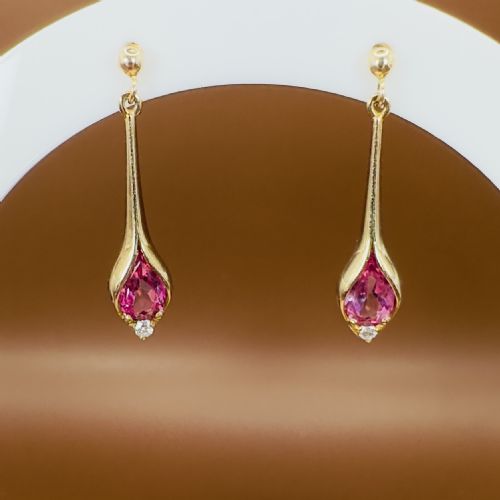
Fine gemstone stud earrings comprise close-fitting ear ornaments set with precious and semi-precious stones, frequently encountered in mid-century and earlier twentieth-century designs. Buyers examining this category find solitaire stones, cluster formations, and drop variations secured firmly to the earlobe.
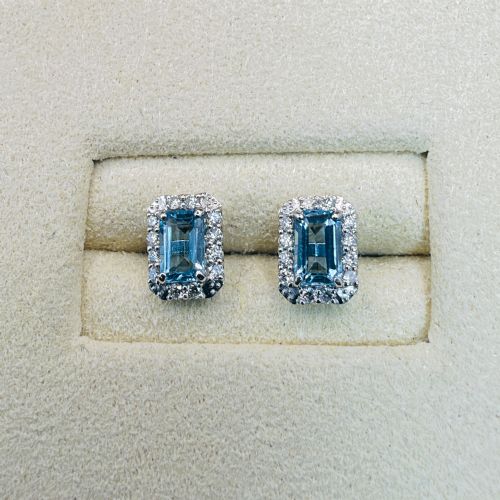
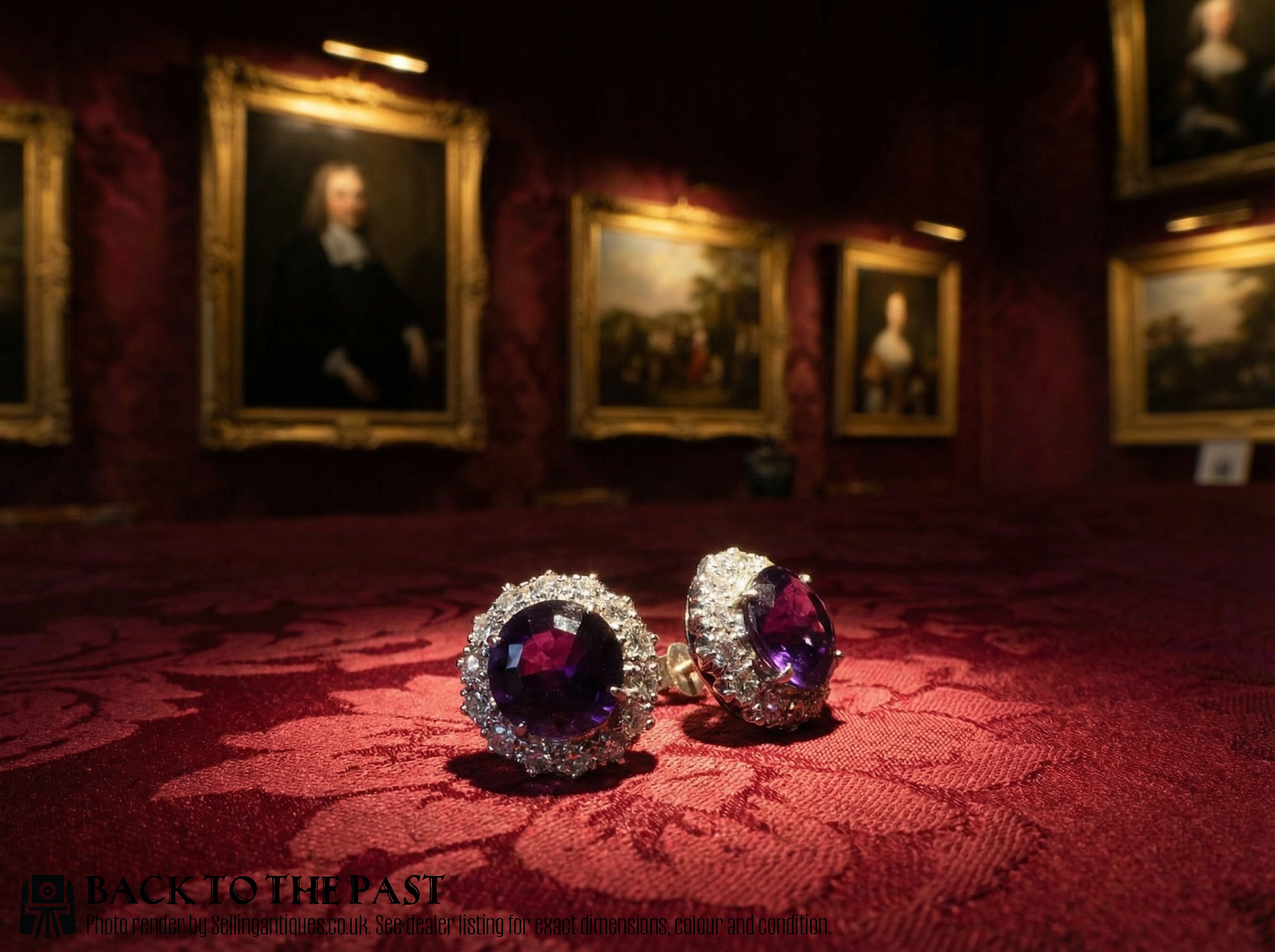
The selection ranges from simple gold mounts holding single amethysts or emeralds to complex platinum and white gold cluster settings framing aquamarines, sapphires, and diamonds. Pieces from the 1950s and 1960s dominate the selection, alongside items from the 1920s and 1930s reflecting Art Deco and modernist sensibilities.
Materials and construction methods
Goldsmiths utilised varied purities of yellow and white gold, alongside platinum, to provide secure structural foundations for precious stones. Metalwork techniques combined traditional casting and hand fabrication with intricate filigree work and precise claw or bezel settings.
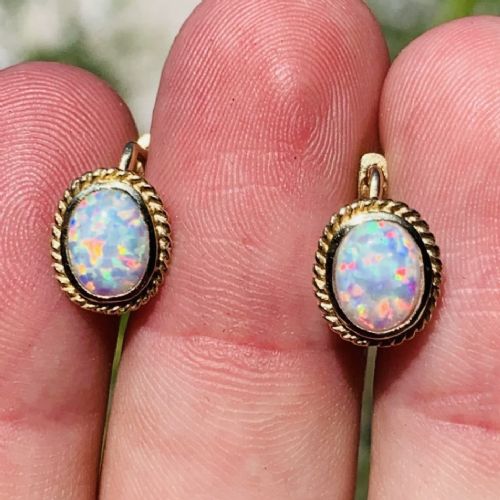
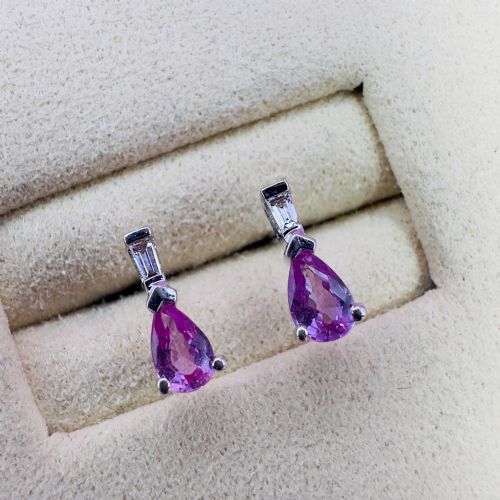
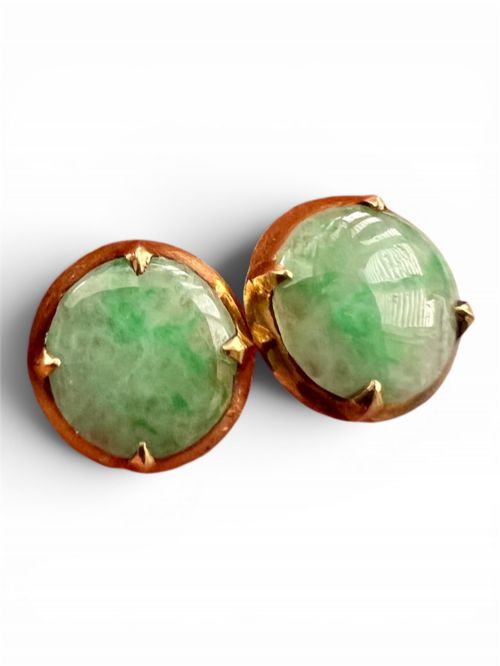
Gemstones underwent specific cuts including oval, emerald, pear, and marquis faceting, alongside smooth cabochon shaping for opals, jadeite, and rose quartz. Stones were matched for colour consistency and integrated with supporting melee diamonds in cluster arrangements.
Distinctions in standard and execution
The standard of a pair rests upon the natural quality, colour saturation, and clarity of the primary gemstones, alongside the precision of the stone cutting. Superior examples exhibit well-matched stones with vibrant hues and minimal inclusions, whereas lesser pieces display mismatched colour tones or cloudy material.
Execution of the metalwork defines the upper tier of production, visible in crisp gallery wire, secure settings, and substantial metal weights. Finer pieces demonstrate thoughtful integration between the central stone and surrounding diamond clusters, maintaining structural integrity without unnecessary bulk.
Andrew Grima
The Fine Gemstone Stud Earrings Glossary
- Cluster
- A setting style featuring a central gemstone encircled by a border of smaller stones, typically diamonds. This arrangement maximises visual presence and light reflection on the earlobe.
- Cabochon
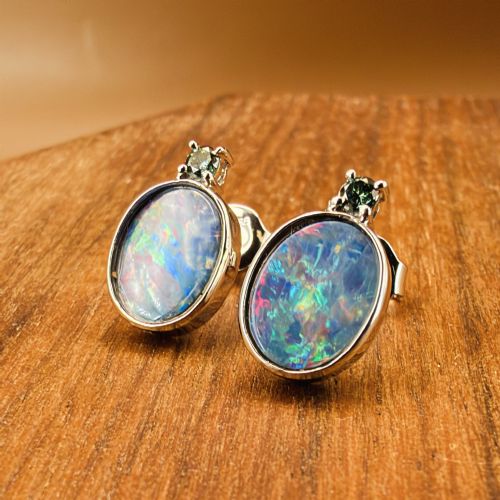
- A gemstone shaped with a smooth, convex polished surface rather than faceted planes. This technique suits translucent or opaque materials like opals, jadeite, and star stones.
- Filigree
- Delicate openwork ornamentation formed from twisted fine threads of gold or silver soldered together. This technique creates lace-like patterns often found in vintage mountings.
- Doublet
- A composite gemstone comprising two distinct layers, commonly a thin slice of natural opal bonded to a supportive base material. This method enhances durability and deepens perceived colour.
- Melee
- Small-cut diamonds or coloured stones used as secondary accents surrounding a larger centre stone. These tiny gems require precise grading to maintain uniform brilliance across the setting.
Fine Gemstone Stud Earrings: Frequently Asked Questions
What periods do these earrings represent?
The pieces span several decades of twentieth-century design, with significant representation from the 1920s, 1930s, 1950s, and 1960s. Styles range from geometric Art Deco and mid-century modernist forms to Victorian revival and contemporary classic interpretations.
Specific manufacturing details align with the prevailing aesthetics of each era, utilising platinum in earlier decades and expanding into varied gold purities during the mid-century period.
How do cluster studs differ from single stone studs?
Cluster studs incorporate a prominent centre gemstone surrounded by a border of smaller accent stones, usually diamonds, which increases overall visual dimension. Single stone or solitaire studs rely entirely on the presence and optical qualities of one individual gem.
Both configurations appear frequently across the mid-century selections, offering distinct choices in scale and brilliance when worn.
What metals support these gemstones?
Goldsmiths employed 9ct and 14ct yellow gold, 18ct yellow gold, 14ct and 18ct white gold, and platinum. White precious metals frequently pair with cool-toned stones like aquamarines and sapphires.
Yellow gold often provides a warm contrast for emeralds, amethysts, garnets, and opals, reflecting the material preferences of the specific decade of production.
How should vintage gemstone earrings be worn?
These pieces suit both daily wear and formal occasions, provided the settings receive appropriate care and regular security checks. Their compact stud format sits close to the earlobe, making them practical for everyday integration.
Owners should store them individually in soft compartments to prevent stone contact and avoid exposure to harsh chemical ultrasonic cleaners.