



Pub Metal Pitcher
A pub metal pitcher brings heavy copper, pewter and brass straight from the tavern counter into the home, offering solid utility and honest period weight.
Pub Metal Pitcher
A pub metal pitcher encompasses heavy utilitarian vessels used in taverns and public houses for measuring and serving ale, spirits and other liquids. When searching for a pub metal pitcher, buyers encounter sturdy forms designed for daily hospitality rather than delicate display.
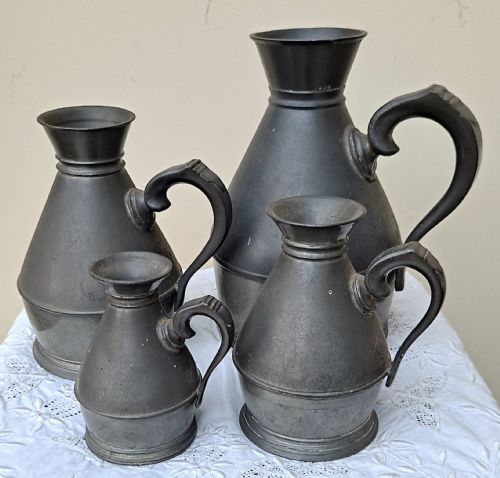
The listings point mostly to nineteenth-century and Victorian examples, alongside eighteenth-century Georgian pieces. These take the shape of harvest jugs, spire flagons, tavern measures and haystack sets.
Origins span English and Irish workshops, featuring substantial capacities ranging from single pints up to two-gallon flagons. Such vessels reflect the robust metalware production traditions of British taverns.
Materials and construction
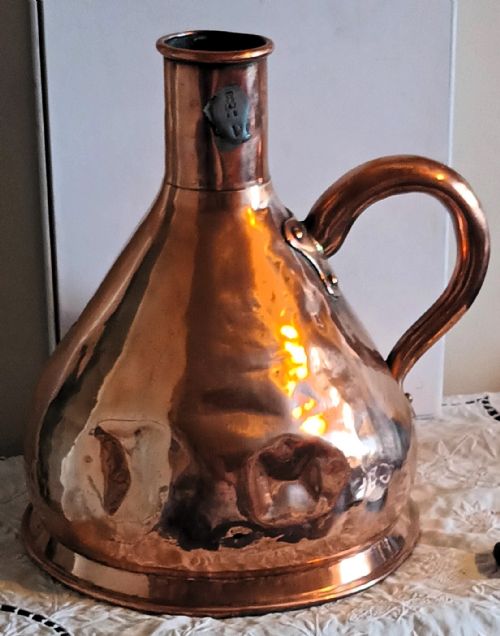
Makers shaped these vessels primarily from copper, pewter and brass, utilising the distinct working properties of each metal. Pewter allowed for smooth cast bodies suited to liquid measures, whilst copper and brass provided the tensile strength needed for large harvest jugs and flagons.
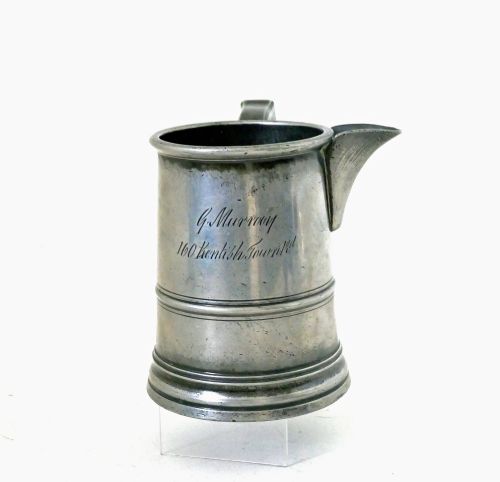
Construction methods involved heavy sheet metal fabrication and casting, often finished with engraved inscriptions denoting tavern names, capacities or maker details like G. Murrouy or J. Bower.
Pub Metal Pitcher Retail Price Guide 2026
Typical asking prices for pub metal pitcher among the pieces listed under this phrase on Sellingantiques today, from the lower quarter to the upper quarter. They describe what is for sale here now, not the wider market.
Some measures spent their youth keeping thirsty field workers happy during harvest time before retiring to the mantelpiece.
Assessing quality and character
Quality in these vessels rests upon the crispness of form, the integrity of the metal gauge and the retention of original capacity marks. Substantial weight and balanced proportions separate utilitarian workhorses from lesser pieces.
Legible contemporary engraving, clear touchmarks and untouched patination elevate certain examples. The distinction lies in how honestly the metal has aged through decades of service.
G.Murrouy·J. Bower
The Pub Metal Pitcher Glossary
- Haystack measure
- An Irish or English liquid measure featuring a distinctive bulbous body tapering toward the top, reminiscent of a hayrick. These sets were calibrated for accurate tavern dispensing.
- Spire flagon
- A tall, tapered vessel with a lid, often associated with eighteenth-century capacity standards. Such pieces served formal pouring roles in large establishments.
- Tavern measure
- A standardised metal vessel utilised in public houses for verifying and serving ale or spirits. They bear government verification stamps or ownership inscriptions.
- Harvest jug
- A large container used to carry liquid out to workers in the fields during harvest time. These jugs typically possess generous capacities and sturdy handles.
Pub Metal Pitcher: Frequently Asked Questions
What is a pub metal pitcher used for?
These pitchers served as functional tavern equipment for measuring, storing and pouring ales and spirits during busy service hours.
Their robust construction ensured they could withstand the daily demands of historic public houses.
How do I clean a copper or pewter pitcher?
Maintenance depends entirely on the metal, though most collectors prefer to preserve the accumulated dark patination rather than polish it away.
Gentle dusting with a dry cloth keeps the surface safe without removing historical character.
How can I tell a Georgian piece from a Victorian one?
Georgian pieces often display simpler, heavier utilitarian lines and earlier capacity stamp styles, whilst Victorian examples frequently include graduated sets and haystack profiles.
Maker marks and engraved inscriptions also help anchor pieces within specific decades.
Can I use these vintage pitchers for serving drinks today?
Whilst many remain physically robust, historical pewter and older metal alloys may contain lead or other elements unsuited for modern consumption.
Most buyers choose to display them as decorative historical objects rather than functional kitchenware.