



Prunt Stem Wine Glass
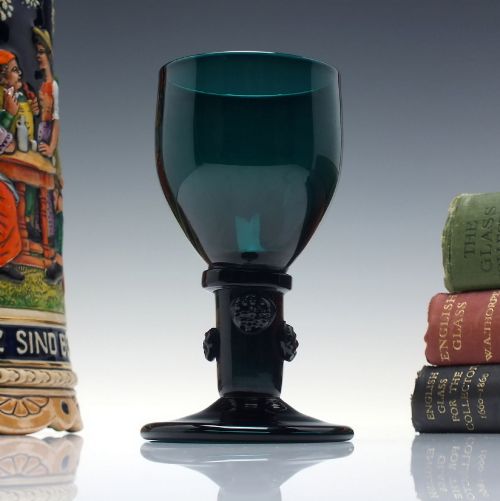
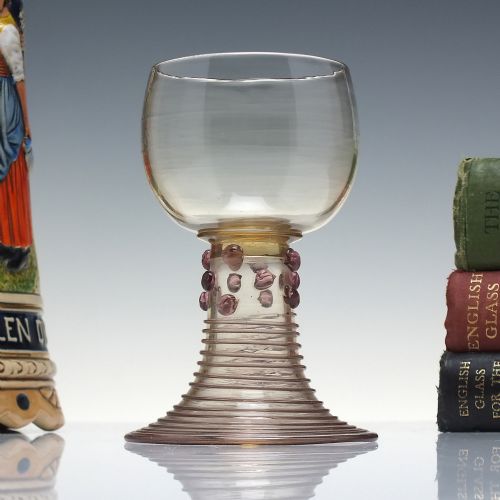
These prunt stem wine glass examples bring tactile historical depth to a table, combining centuries of glassmaking tradition with striking coloured bowls and hollow stems.
Prunt Stem Wine Glass
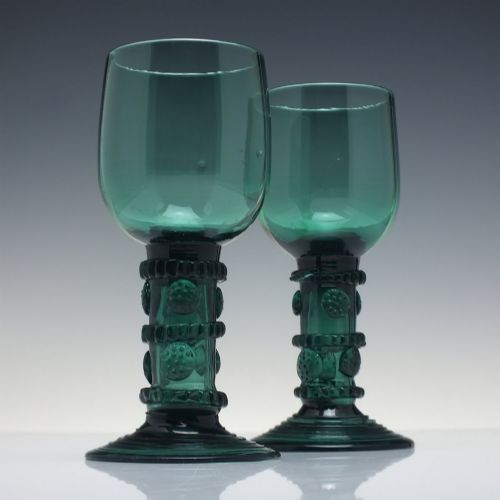
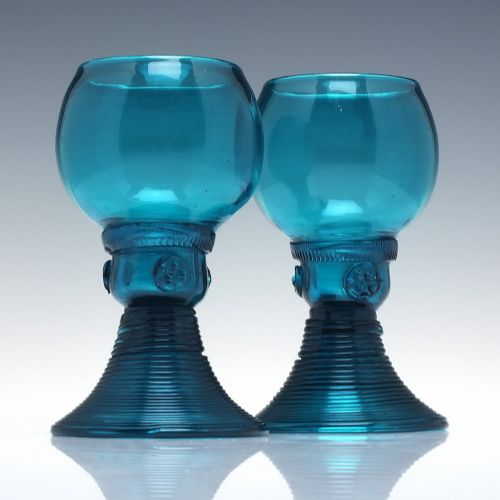
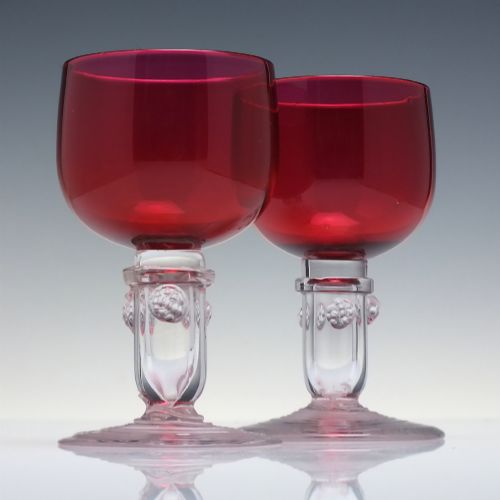
A prunt stem wine glass is a drinking vessel defined by applied glass blobs, known as prunts, which adorn the stem to provide a secure grip during use. The pieces found here span the Georgian and Victorian eras up to nineteen hundred and ten, encompassing styles from German Historicism to Bohemian production.
Most examples appearing here take the form of roemers, featuring distinctive hollow stems and rounded bowls. Collectors encounter vibrant shades including Bristol green, cranberry, peacock blue, and amber, often decorated with polychrome enamel or heraldic motifs.
The origins of these vessels trace across English export workshops, German furnaces, and Bohemian glasshouses. Such geographical diversity ensures that buyers can select from both small drinking sets and individual cabinet pieces.
How they were made
Makers utilised hand-blown glass and lead glass techniques to shape each vessel while the material remained molten. The hollow stem construction required considerable skill from the blower to maintain structural integrity while keeping the walls thin.
Applied prunts were individually manipulated onto the stem by hand, creating the characteristic textured grip seen on roemers. Surface enrichment was frequently achieved through wheel engraving or polychrome enamel decoration fired onto the glass body.
Prunt Stem Wine Glass Retail Price Guide 2026
Typical asking prices for prunt stem wine glass among the pieces listed under this phrase on Sellingantiques today, from the lower quarter to the upper quarter. They describe what is for sale here now, not the wider market.
Listings feature periods spanning Georgian, Victorian, nineteen hundred, nineteen ten, and eighteen eighty.
What varies in quality
The refinement of the applied prunts distinguishes finer examples, where each blob is evenly spaced and firmly integrated into the stem rather than crudely attached. Balance and proportion between the bowl and the hollow stem also indicate the skill of the original workshop.
Decoration represents another major distinction, separating plain coloured glass from pieces featuring detailed heraldic enamel work or precise wheel engraving. Uniformity across matched sets demonstrates greater control during the manufacturing process.
Frits Hechert
The Prunt Stem Wine Glass Glossary
- Prunt
- An applied blob or lump of molten glass fused to the stem of a vessel. It provides a decorative texture that originally helped prevent slipping from greasy hands.
- Roemer
- A traditional form of continental European drinking glass featuring a large bowl atop a cylindrical hollow stem. The design derives from sixteenth-century Rhenish originals.
- Historismus
- A nineteenth-century artistic movement reviving historical styles and historicism motifs. Pieces in this style often imitate Renaissance and medieval glassware.
- Enamel
- Opaque or translucent coloured glass fused to the surface of a vessel through firing. It allows for detailed heraldic motifs and polychrome decoration.
Prunt Stem Wine Glass: Frequently Asked Questions
What is a prunt stem wine glass?
A prunt stem wine glass is a historical drinking vessel featuring raised glass blobs along the stem for gripping. These pieces are typically roemers with hollow stems designed for serving wine.
The form developed across European glasshouses, with surviving examples stretching from the eighteenth century into the twentieth century. They remain valued for their vibrant coloured glass and decorative enamel work.
How were these glasses used historically?
Historically, these glasses served at dining tables for pouring and drinking wine during formal meals. The textured prunts on the stem were particularly practical during feasts when diners ate with their hands.
Over time, the form transitioned from a purely functional dining vessel into a decorative object displayed in cabinets. Export pieces also moved between German, Bohemian, and English markets to satisfy demand.
How should I care for antique glassware?
Antique glassware requires gentle hand washing in lukewarm water using mild detergent to protect the fragile material. Sudden temperature changes should be avoided to prevent thermal shock.
Displaying the pieces away from direct sunlight preserves the coloured glass and any delicate enamel decoration. Storing them securely on stable surfaces protects the hollow stems and applied prunts from impact.