


Provincial Oak Wall Cabinet
These provincial oak wall cabinet examples are sturdy storage pieces built for rural homes, offering both historic character and practical wall-mounted utility.
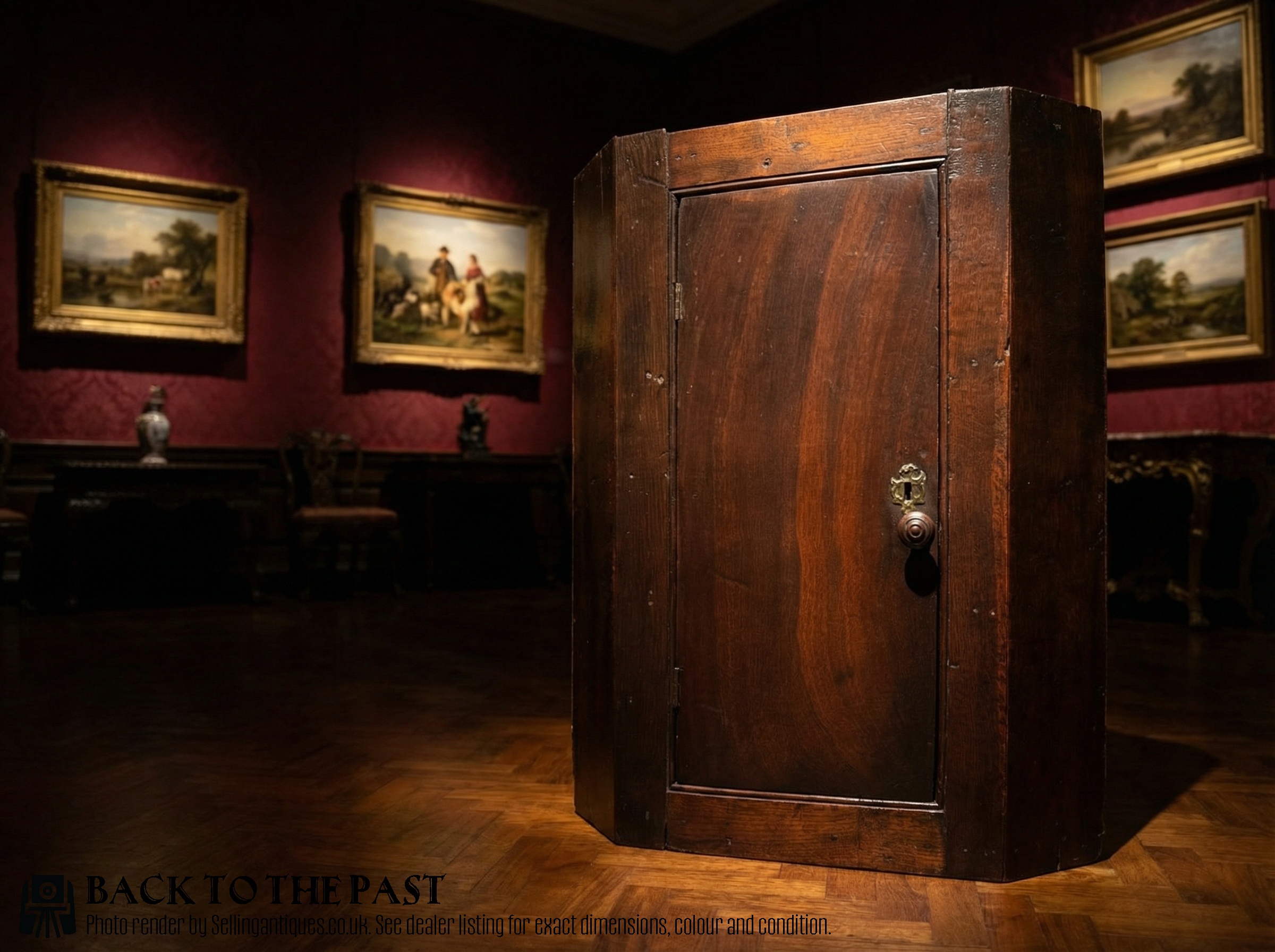
Provincial Oak Wall Cabinet
A provincial oak wall cabinet represents utilitarian storage shaped by regional French and Georgian country traditions. These pieces include wall cupboards, hanging food cupboards, and corner cabinets designed to save floor space in rural homes.
Buyers meet examples spanning the seventeenth through the nineteenth centuries, alongside twentieth-century country items. Forms range from simple single-door wall units to carved and inlaid cabinets bearing specific dates.
Regional variations often display French provincial styles, rustic farmhouse influences, or Georgian country characteristics. Many retain original hanging mechanisms or corner configurations suited for domestic interiors.
Materials and Construction
Makers built these cabinets primarily using solid oak, occasionally utilising bleached oak or incorporating wood inlay for decorative contrast. Structural stability relied on traditional joinery suited for wall-mounted domestic furniture.
Metal components typically consist of iron, steel, brass, and wrought iron used for hinges, latches, and structural reinforcement. Surface treatments range from unpainted timber to rustic painted finishes on related architectural elements.
Some nineteenth-century food cupboards feature slatted doors designed specifically to keep the cheese ventilated.
Assessing Quality and Character
The distinction between standard utility items and finer examples rests upon decorative detailing and timber selection. Pieces featuring carved enrichment, dated inscriptions, or wood inlay demonstrate a higher level of workshop investment than plain functional boxes.
Proportion and survival of original hardware further define the standing of a cabinet. Clean lines, well-preserved internal shaped shelves, and authentic period brass or ironwork elevate the piece beyond basic vernacular carpentry.
The Provincial Oak Wall Cabinet Glossary
- Provincial
- Pertaining to regions outside the capital, denoting furniture made by local craftsmen for rural or domestic use. These pieces often reflect traditional local building methods rather than metropolitan fashions.
- Corner cupboard
- A cabinet specifically constructed to fit into the angle of a room. This form maximises spatial efficiency in smaller domestic interiors.
- Wood inlay
- A decorative technique where pieces of contrasting timber are inserted into the oak surface to form patterns or details. It adds visual interest to the primary wood grain.
- Wrought iron
- Iron shaped through heating and hammering by a blacksmith. This material provides durable hinges and latches for heavy cabinet doors.
- Bleached oak
- Oak timber treated to achieve a lighter, paler tone. This finish alters the natural dark appearance of aged wood.
Provincial Oak Wall Cabinet: Frequently Asked Questions
How were provincial oak wall cabinets used?
These cabinets served primarily for storing food, tableware, or household provisions securely off the floor. In rural kitchens and manoir cellars, hanging cupboards kept contents away from pests and dampness.
Corner versions utilised neglected room angles to provide accessible storage without crowding the living space. Their compact wall-mounted formats made them essential fixtures in modest homes.
How do I hang an antique wall cabinet safely?
Modern fixings must accommodate the substantial weight of solid oak and historic ironwork. Secure attachment to wall studs or masonry is necessary to support the load safely.
Professional installation ensures the historical structure is not strained by uneven pressure. Checking the original hanging points helps determine the correct weight distribution.
What distinguishes French provincial from Georgian styles?
French provincial pieces often exhibit softer curves, distinct regional panel configurations, and characteristic country hardware. They reflect the rural traditions of French manoirs and farmhouses.
Georgian country cabinets typically display more restrained British vernacular lines and architectural mouldings. Both styles prioritize practical utility combined with local aesthetic preferences.
How can I date an oak wall cabinet?
Dating relies on examining construction methods, tool marks, and overall stylistic characteristics of the period. Hand-planed surfaces and forged iron hinges indicate historic manufacture rather than modern production.
Carved dates or specific regional forms provide direct clues to the era of origin. Comparing the timber patination and joinery style with documented pieces helps narrow the timeframe.