
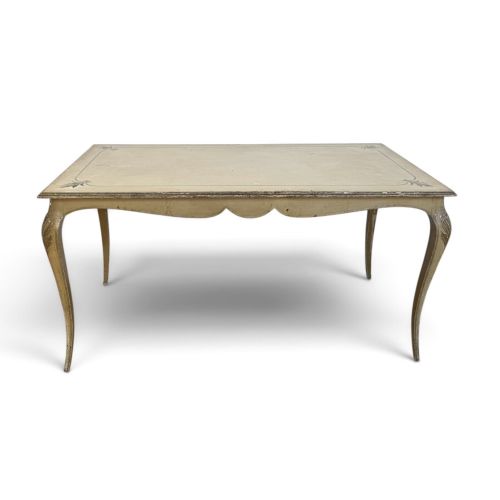
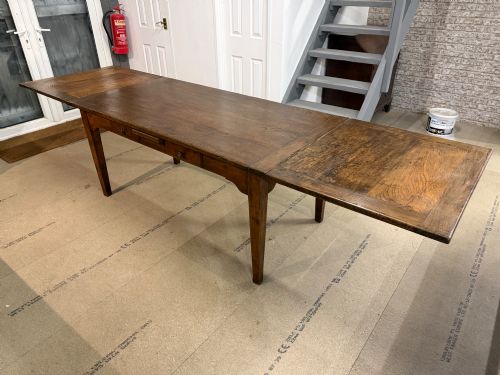
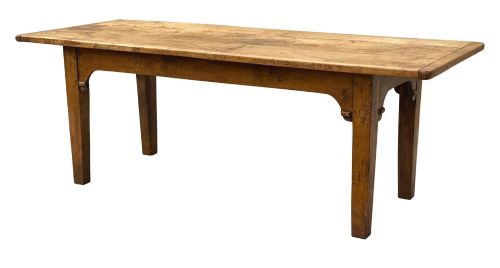
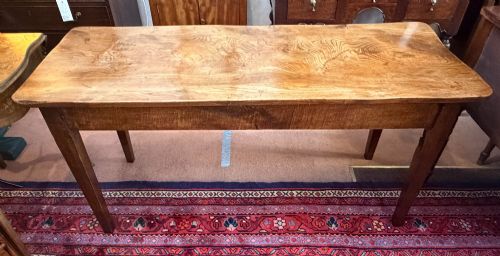

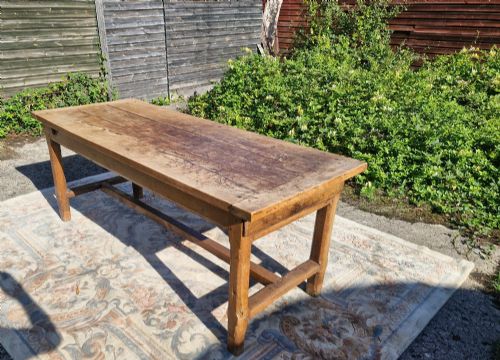
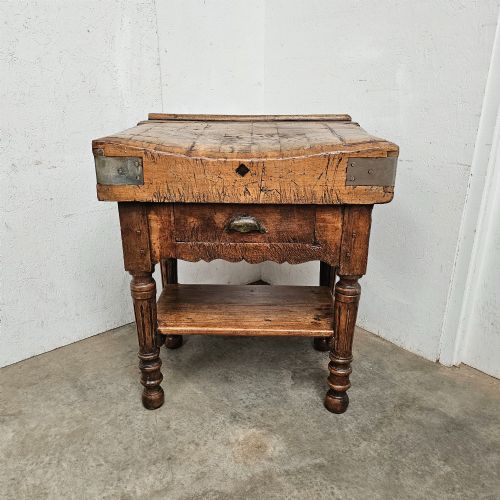
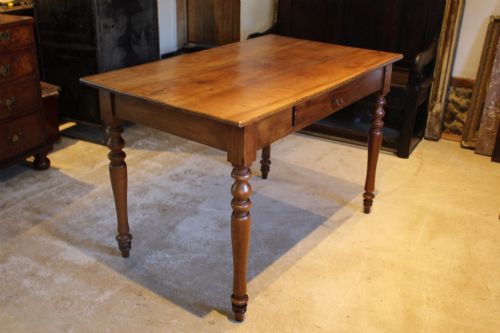
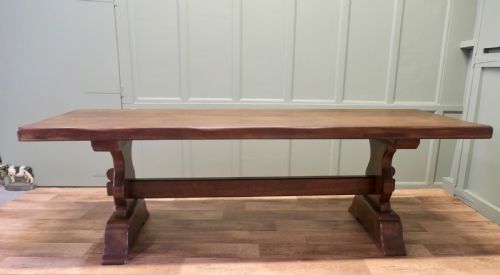
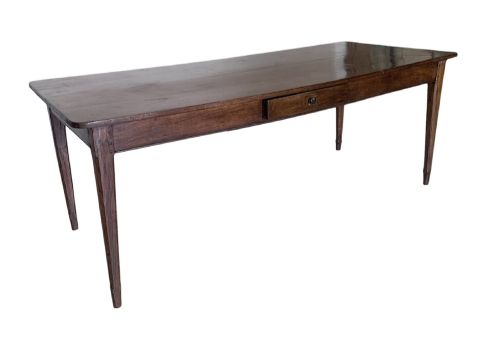
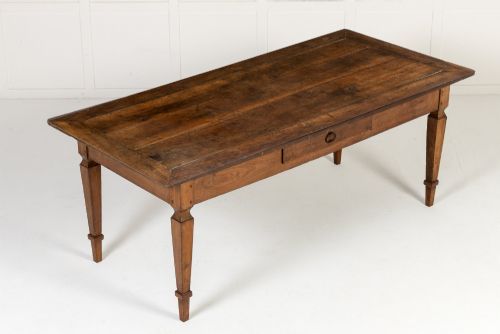
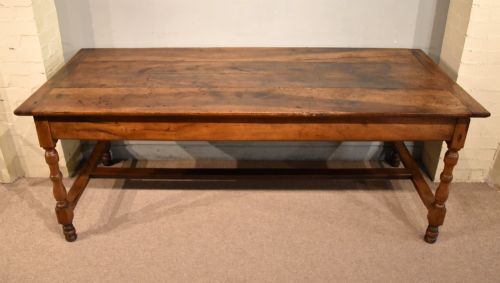
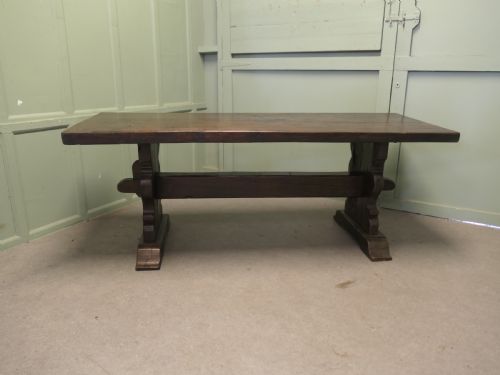
Provincial Kitchen Table
A provincial kitchen table anchors the room with honest timber, offering solid footing for daily meals and heavy domestic labour.
Provincial Kitchen Table
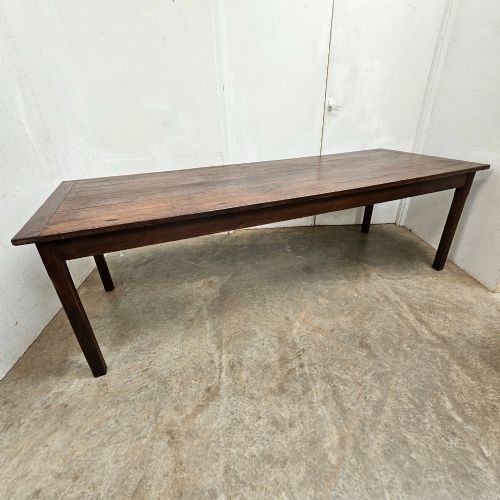
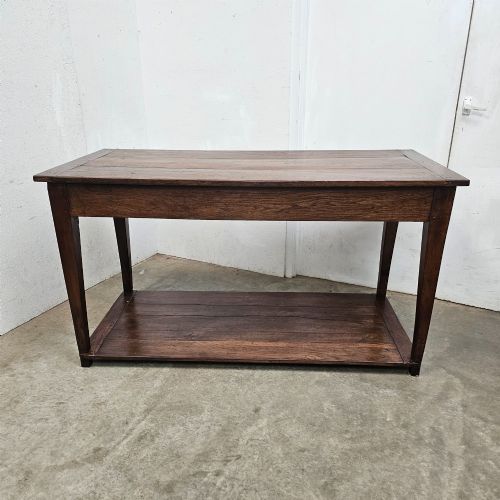
A provincial kitchen table is a sturdy domestic surface designed for daily preparation and dining, originating primarily from regional workshops. These pieces appear most frequently as nineteenth century oak, cherrywood, or fruitwood refectory and farmhouse tables.
How they were made
Construction relies on solid timbers like oak, cherrywood, walnut, fruitwood, and pine, often joined with sturdy stretchers and pegged tenons. Tops are assembled from thick planks of wood, sometimes utilising elm or sycamore to withstand heavy daily use.
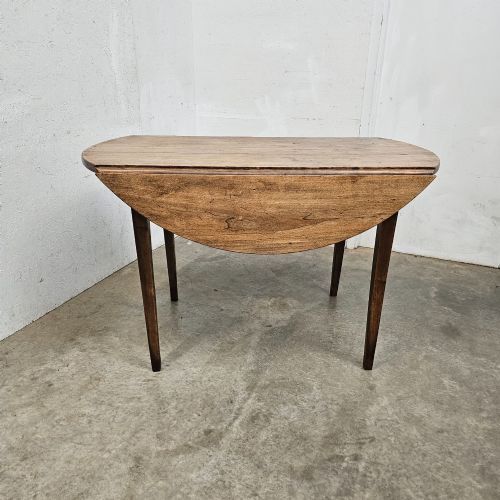
Makers integrated functional elements such as sliding boards for bread, drop-leaf mechanisms, and drawers built directly into the timber frame. Iron hardware occasionally reinforces structural joints on work tables and butchers blocks.
Listings feature timbers including oak, cherrywood, walnut, fruitwood, chestnut, sycamore, elm, beech, and pine across the nineteenth century.
What varies in quality
Quality rests in the selection of timber, the integrity of the board joints, and the retention of original surfaces. Tables constructed from thick cherry, walnut, or quarter-sawn oak demonstrate superior durability compared to simpler pine alternatives.
The presence of period details such as working drawers, bread slides, and unblemished top boards elevates a piece. Proportion and the natural ageing of the timber grain determine the visual strength of the table.
The Provincial Kitchen Table Glossary
- Refectory table
- A long, narrow dining table traditionally used for communal meals, often fitted with structural side stretchers. These tables provide substantial seating capacity.
- Bread slide
- A pull-out wooden board integrated beneath the tabletop, historically used for cooling baked loaves or expanding workspace. It operates on wooden runners within the frame.
- Draw leaf table
- A table equipped with sliding leaves tucked beneath the main top that pull out to extend the surface length. This mechanism offers adaptable proportions for hosting.
- Butchers block
- A thick wooden chopping block mounted on a decorative base, designed for heavy food preparation. Elm and beech are typical timbers chosen for their dense grain.
Provincial Kitchen Table: Frequently Asked Questions
How do I clean a wooden kitchen table?
Wipe the surface with a damp cloth and mild soap, avoiding harsh chemical sprays that strip the timber finish. Dry the wood thoroughly immediately afterwards.
Treat the timber periodically with natural oils or waxes to maintain the lustre of the grain and protect against moisture penetration.
Can I use a antique table daily?
These tables were built for heavy domestic work and kitchen labour, making them robust enough for regular family dining. Use placemats and coasters to guard against heat marks and liquid spills.
Allow the wood to breathe and accept that daily life will add further character to the historic patina of the timber.
What is a bread slide used for?
The sliding board offered additional surface area for rolling pastry or cooling freshly baked loaves in busy kitchens. It tucked neatly away beneath the main top when not in use.
Today, this feature serves as a practical shelf for small items or simply demonstrates the clever utilitarian design of period furniture.
How do I identify fruitwood timber?
Fruitwood displays a warm, rich tone with a fine, even grain that deepens in colour over decades of exposure to light. Cherry and pear woods are common examples found in regional French furniture.
The timber combines a sturdy weight with a smooth texture that feels distinct from coarser oak or pine.