


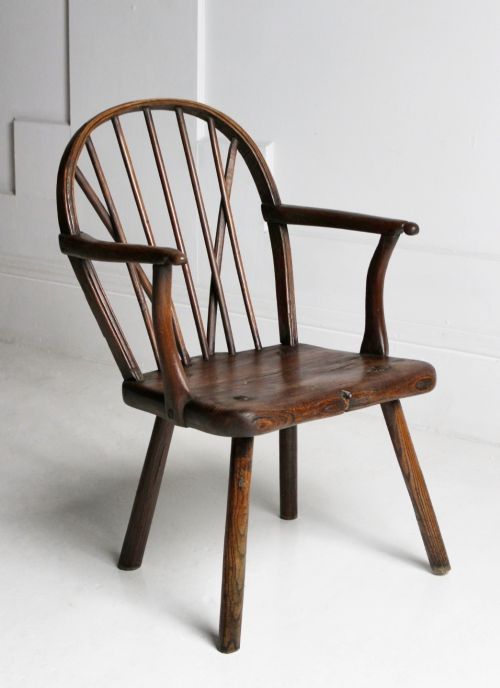


Primitive Wooden Armchair
A primitive wooden armchair brings unpretentious vernacular character to a room, offering honest seating shaped by regional traditions.

What a primitive wooden armchair is
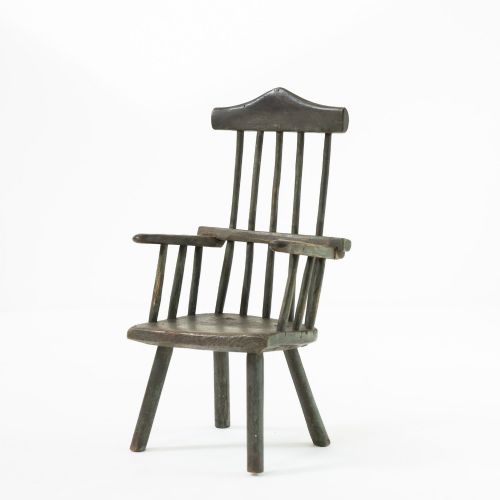
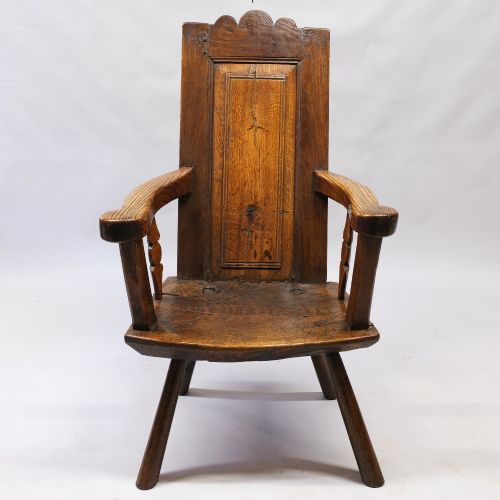
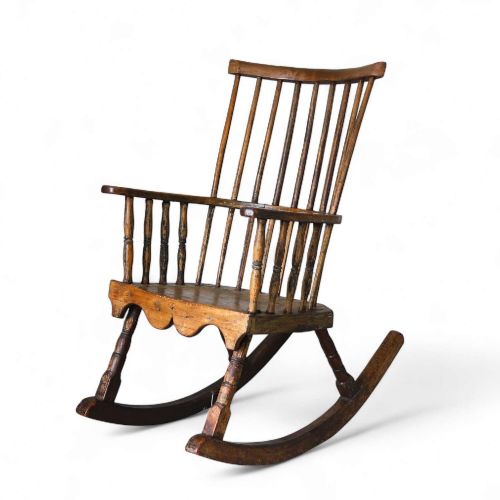
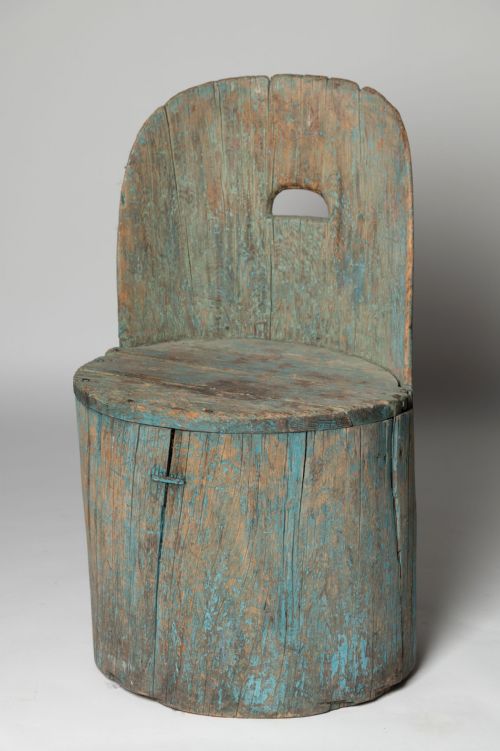
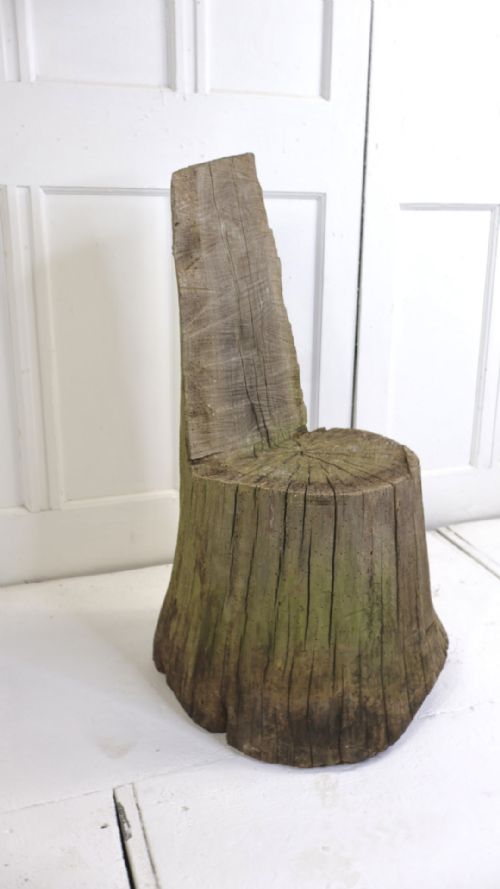
A primitive wooden armchair represents domestic seating stripped of metropolitan polish, built by local makers for everyday use. These chairs emerge from regional traditions across the British Isles, including Welsh, Irish, Thames Valley, and general vernacular styles.
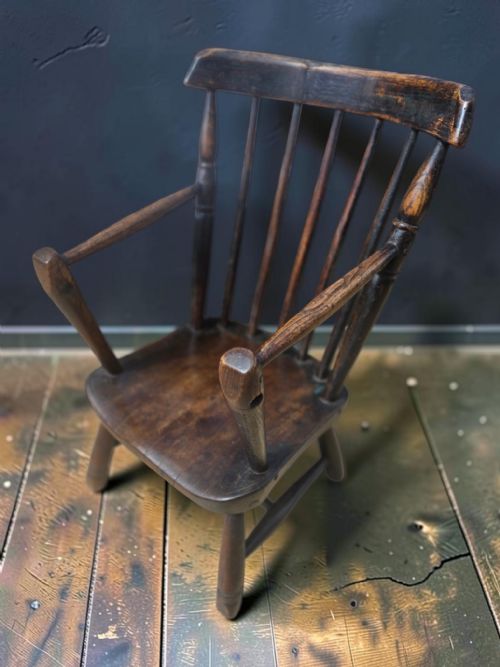
Buyers browsing for a primitive wooden armchair encounter forms spanning the eighteenth and nineteenth centuries. The selection includes standard adult armchairs as well as smaller children's variants designed with the same traditional construction methods.
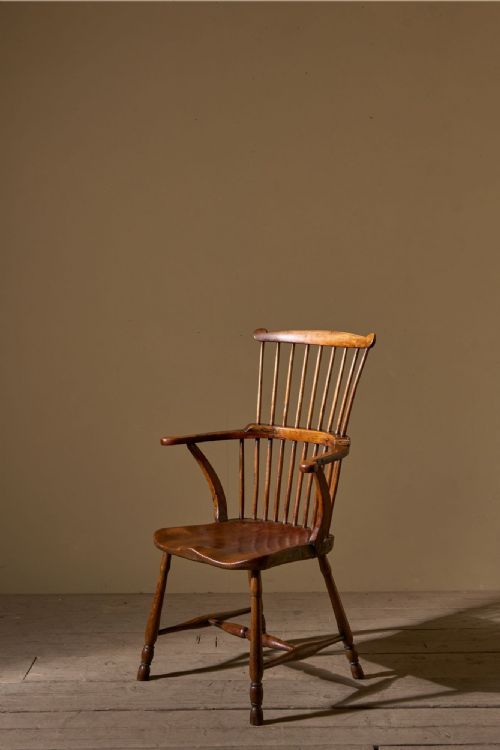
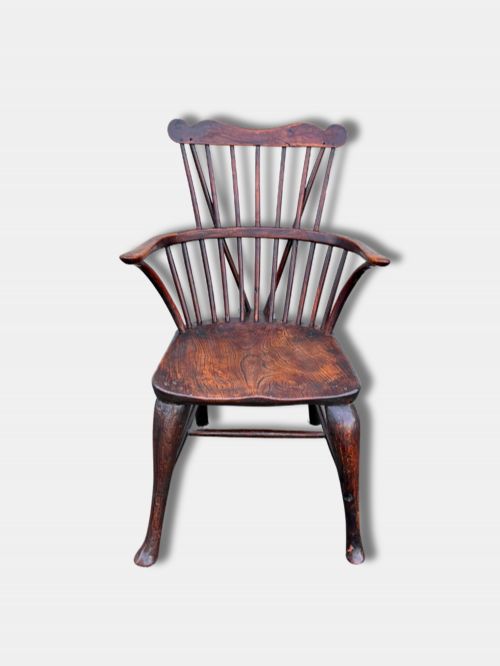
The aesthetic relies on simplicity and functional design rather than decorative excess. Structural elements like stick backs, comb backs, and Windsor frames define the physical presence of these pieces.
How they were made
Construction relies on a mix of native hardwoods selected for specific structural properties. Ash, elm, oak, yew, and general timber appear together within single chairs, utilising bentwood techniques for comb backs and sculpted seats carved from solid blocks.
Makers employed traditional joining methods such as wedged tenons and through-joints to secure spindles and legs directly into the seat base. Surface treatments range from bare timber to historic painted finishes, showing the utilitarian nature of the workshop.
Retail Price Guide 2026
Typical UK retail prices for primitive wooden armchair, calculated from the Sellingantiques database of over a million retail prices indexed since 2003. This retail price guide relies exclusively on Sellingantiques data; no external sources or auction records are used, so the figures do not describe the wider market.
Listings feature pieces spanning the eighteenth and nineteenth centuries, utilising native ash, elm, oak, yew, and painted timber.
What varies in quality
Quality rests in the harmony of the proportions and the boldness of the turning or shaping. A stronger piece displays confident rake in the legs and a fluid line to the comb back, whereas lesser examples can feel rigid or heavy-handed.
The integrity of the timber and the honesty of past repairs dictate the standing of a chair. Patination earned through generations of use elevates a piece, distinguishing direct vernacular expression from derivative later work.
The Primitive Wooden Armchair Glossary
- Comb back
- A chair design where the vertical spindles extend through the arm rail to form a low, comb-like crest across the top.
- Stick back
- A minimalist chair construction featuring plain spindles inserted directly into a solid wooden seat.
- Vernacular
- Architecture and furniture made by local artisans using regional materials and traditional methods, without academic architectural training.
- Comb-grain
- A decorative painted finish applied to imitate the rich grain of finer timbers on simple domestic woods.
- Windsor
- A chair built with a solid wooden seat into which the legs and back spindles are separately inserted.
Frequently Asked Questions
What is a primitive wooden armchair?
A primitive wooden armchair is an unpretentious vernacular seat made by regional joiners using local timbers. These chairs prioritize function and structural honesty over fashionable ornament.
Examples span from the mid-eighteenth century through the nineteenth century, encompassing stick backs, comb backs, and Windsor forms rooted in British and Irish traditions.
How do I date an old wooden armchair?
Dating relies on observing construction techniques, tool marks, and timber wear patterns. Earlier pieces often display wider plank seats and hand-turned spindles that differ from later standardised production.
Regional styles also offer clues, as specific localities maintained distinct framing methods and comb back profiles during the eighteenth and nineteenth centuries.
Are these chairs comfortable for daily use?
Many of these chairs offer surprising ergonomic comfort due to the deep saddle-shaping of the solid wooden seats. The raked legs and supportive stick or comb backs distribute weight effectively.
While they lack modern upholstery, their generous proportions accommodate daily sitting in domestic spaces.
What timbers were used to build them?
Makers utilised native hardwoods readily available in local woodlands. Ash and elm appear frequently, paired with oak, yew, and general timber.
Different parts of the chair required specific woods, such as flexible ash for bent rails and stable elm for carved seats.