
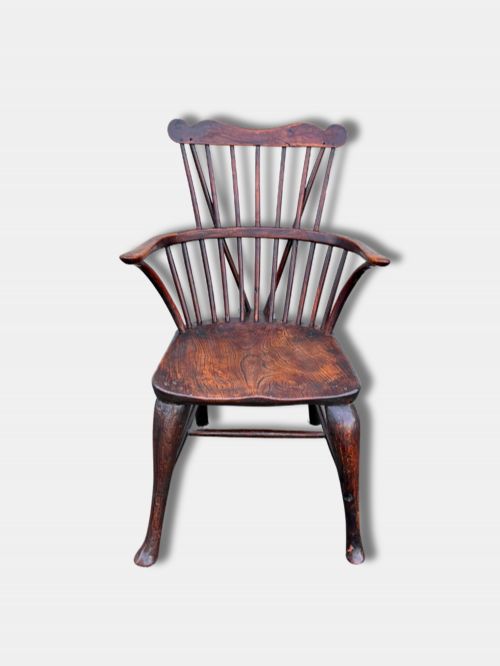


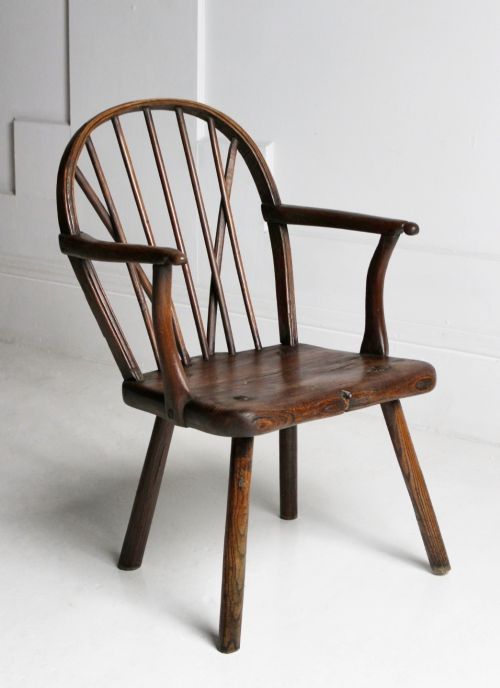


Primitive Stick Back Armchair
A primitive stick back armchair offers the rugged soul of country joinery, built by regional makers who let local timber dictate the form.

Primitive Stick Back Armchair
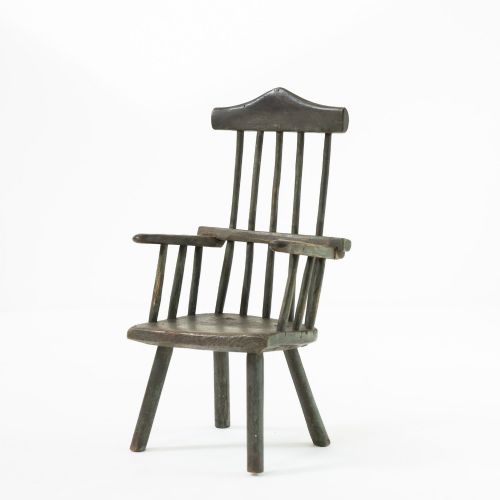
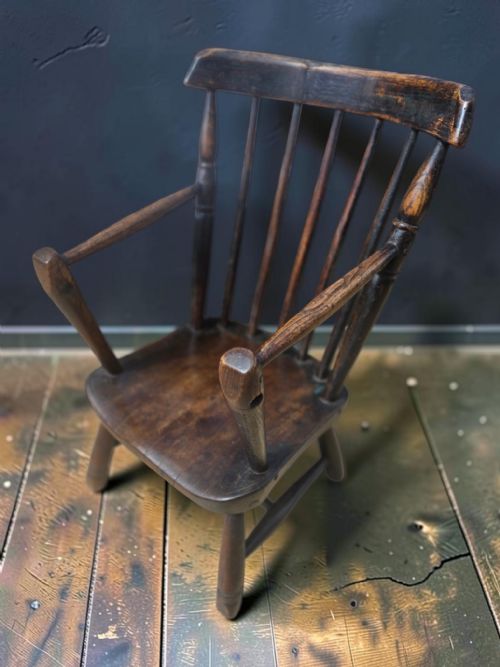
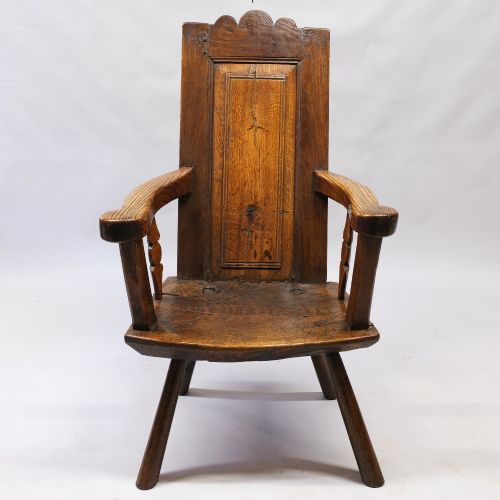
A primitive stick back armchair is a functional seat shaped by regional makers during the eighteenth and nineteenth centuries, spanning Georgian and Victorian periods. These pieces include full-sized armchairs, low stick back variants, comb backs, and children's chairs.
The aesthetic relies on vernacular traditions found across Wales, Ireland, the Thames Valley, and the West Country. Makers prioritized utility and local character over refined court styles, resulting in robust forms that survive from centuries past.
How they were made
Makers constructed these chairs using a combination of native hardwoods, most commonly pairing elm seats with ash spindles and steam-bent rails. Woods like yew, fruitwood, laburnum, and oak appear frequently, chosen for their strength or distinctive grain.
Green woodworking techniques allowed craftsmen to shape unseasoned timber, letting the components shrink and lock together tightly as they dried. Surfaces were often left bare to weather naturally, though historical painted finishes and burr elm details survive on regional examples.
The evidence spans the eighteenth and nineteenth centuries, incorporating Georgian vernacular styles from Welsh and English workshops.
What varies in quality
Quality rests in the harmony of the timber selection and the confidence of the joinery rather than standardised manufacture. Chairs combining multiple contrasting woods, such as yew, elm, and fruitwood in a single frame, demonstrate greater ambition from the maker.
The balance of the comb or stick back and the ergonomic shaping of the solid elm seat distinguish superior regional pieces from simpler utility seating. Provenance to specific localities like the Welsh valleys or Thames Valley adds historical weight to individual forms.
The Primitive Stick Back Armchair Glossary
- Comb back
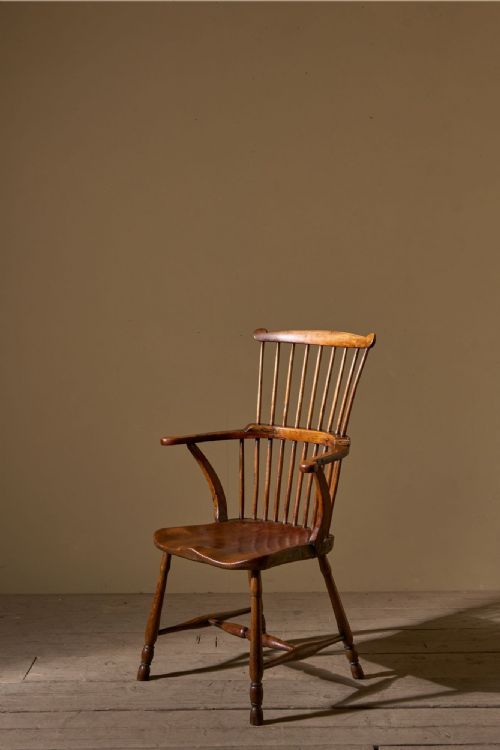
- A Windsor chair variation where the central spindles extend upward through a top rail to resemble the teeth of a comb. This construction provides additional upper back support.
- Stick back
- A chair design where turned or cleft spindles are wedged directly into a solid wooden seat. It represents an ancient method of Windsor and vernacular chair construction.
- Vernacular
- Architecture or furniture built by local craftsmen using traditional methods and native materials without academic architectural training. These objects reflect the specific customs of their geographic region.
- Lobster pot
- A descriptive term for a specific regional comb back Windsor chair form featuring raked, radiating back sticks. The profile mimics the woven slats of traditional fishing traps.
Primitive Stick Back Armchair: Frequently Asked Questions
How do I date a stick back armchair?
Dating relies on tool marks, timber combinations, and structural evolution, moving from heavier eighteenth-century sections to lighter nineteenth-century forms. Regional traits often align with specific decades recorded by makers.
Examining the wear patterns on the elm seat and the method used to secure the arm supports provides further clues to the period of manufacture.
Where were these chairs made?
These chairs originated in rural workshops across England, Wales, and Ireland, with distinct regional styles emerging in areas like the Thames Valley, Swansea, and Carmarthenshire. Local wood availability dictated the choice of ash, elm, and fruitwood.
Country joiners utilised whatever timber grew nearby, creating localized traditions that help historians trace their geographic origins today.
Can I use an antique stick back chair daily?
Most surviving primitive armchairs remain structurally robust and suitable for everyday use in a modern home. Their solid elm seats and pegged joints were engineered for heavy domestic service.
Placing them away from direct heat sources and rapid humidity changes preserves the ancient timber and historical finishes.