

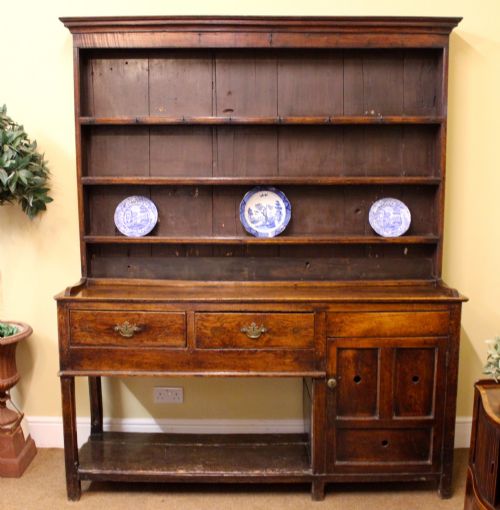


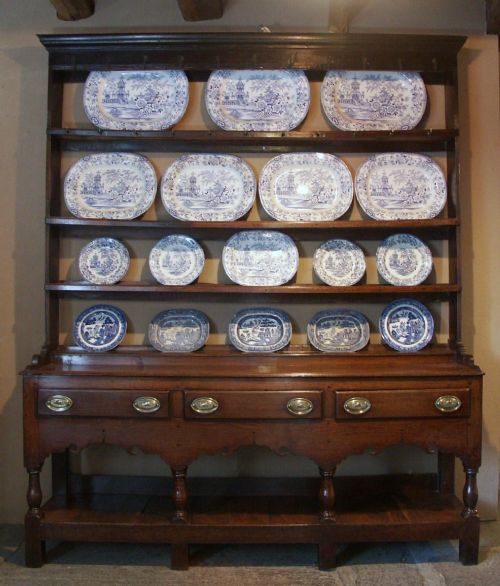


Potboard Kitchen Cupboard
A potboard kitchen cupboard is a heavy, timber-framed utility piece with an open lower shelf designed to store heavy pots and plates.

Potboard Kitchen Cupboard
A potboard kitchen cupboard is essentially a large timber dresser featuring an open potboard base beneath the main storage sections. Buyers search for these pieces to anchor a traditional kitchen or dining space with genuine regional character.
The versions most commonly found here date from the eighteenth and nineteenth centuries, originating predominantly from Welsh and English regional workshops. These items combine upper shelving or plate racks with enclosed lower cupboards and the signature low board for heavy kitchenware.
Makers constructed these sturdy items using native hardwoods and softwoods suited to domestic utility rather than formal parlour display. They serve today as both practical storage units and focal points of historic craftsmanship.
How they were made
Cabinet makers built these pieces using solid native timbers such as oak and pine, frequently selecting local woods for different parts of the construction. Panels were traditionally panelled and pegged by hand to accommodate seasonal wood movement.
Hardware consists of forged iron and brass hinges, handles, and escutcheons fitted directly to doors and drawers. Some examples also feature painted finishes applied over the bare timber surfaces.
Potboard Kitchen Cupboard Retail Price Guide 2026
Typical asking prices for potboard kitchen cupboard among the pieces listed under this phrase on Sellingantiques today, from the lower quarter to the upper quarter. They describe what is for sale here now, not the wider market.
Every potboard bears the silent weight of generations of heavy pots dragged across the boards.
What varies in quality
Quality rests primarily in the integrity of the timber selection and the degree of regional decorative detail, such as geometric carvings. Finer examples display balanced proportions, particularly in smaller dimensions, alongside untouched original surfaces.
Construction methods also separate standard utility items from superior regional pieces, visible in the snugness of drawer dovetails and the weight of the potboard planks. Uniformity in timber ageing and the retention of original hardware elevate a piece within its period.
The Potboard Kitchen Cupboard Glossary
- Potboard
- An open lower shelf positioned near the floor of a dresser, historically used for storing heavy pots and pans. This feature defines the lower section of the cupboard.
- Plate back
- The upper wooden framework of a dresser containing shelves and grooves designed to display plates upright. It forms the upper half of the typical kitchen dresser.
- Vernacular
- Objects designed and built by local tradesmen for everyday use rather than high-style metropolitan fashion. This style relies on regional traditions of construction.
- Dovetail
- A joint formed by interlocking wedge-shaped fingers, used extensively in drawer construction. It provides exceptional tensile strength without relying on metal fasteners.
- Escutcheon
- A flat plate of brass or iron surrounding a keyhole to protect the surrounding wood. It often provides a subtle decorative accent to the drawer or door front.
Potboard Kitchen Cupboard: Frequently Asked Questions
What is a potboard kitchen cupboard?
A potboard kitchen cupboard is a traditional timber storage unit featuring an open lower shelf beneath the main body. These pieces were built for heavy domestic use in regional kitchens.
They typically combine upper display shelving with lower storage space, making them substantial furniture items designed to hold heavy kitchenware and tableware.
Where were these cupboards made?
These cupboards originated primarily in regional workshops across Wales and England during the eighteenth and nineteenth centuries. Local cabinet makers utilised native timbers available in their immediate areas.
Regional variations in style, such as those from Snowdonia or Carmarthenshire, reflect distinct local woodworking traditions and domestic requirements of the period.
How were potboard cupboards used originally?
In historic kitchens, these units functioned as the central workstation and storage hub for all cooking and dining equipment. The open lower potboard held heavy cast iron pots and earthenware.
Upper plate racks kept everyday ceramics accessible and dry, while enclosed drawers and cupboards protected dry goods and utensils from household dust.
How do I live with a potboard cupboard?
Living with one of these cupboards involves using the robust open shelves and deep drawers for daily storage or display. Their substantial proportions require adequate wall space and a room scaled to accommodate heavy timber furniture.
Regular care simply requires maintaining ambient room conditions to protect the historic wood from extreme moisture or heat fluctuations.
How do I tell periods apart?
Earlier eighteenth-century pieces often display hand-carved geometric details, pegged joinery, and heavier oak timbers with deep patination. They reflect simpler, robust rural construction methods.
Nineteenth-century examples may incorporate pine secondary woods, different hardware styles, or painted finishes that indicate evolving regional tastes and workshop practices.