

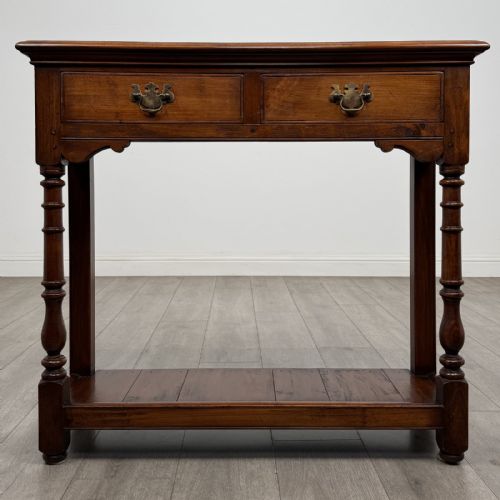
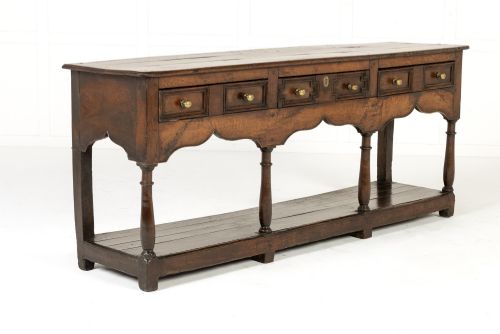
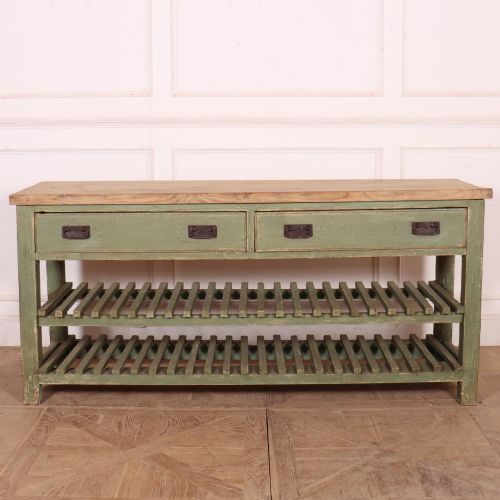
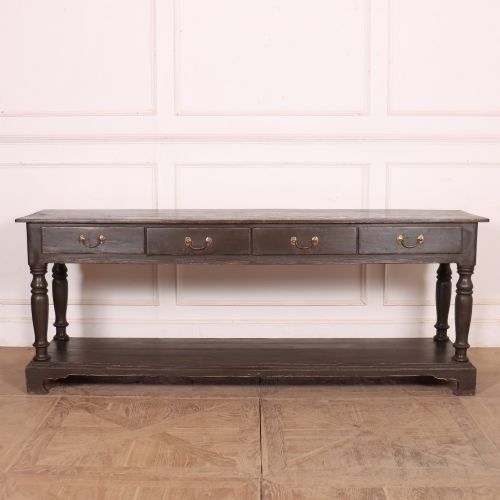

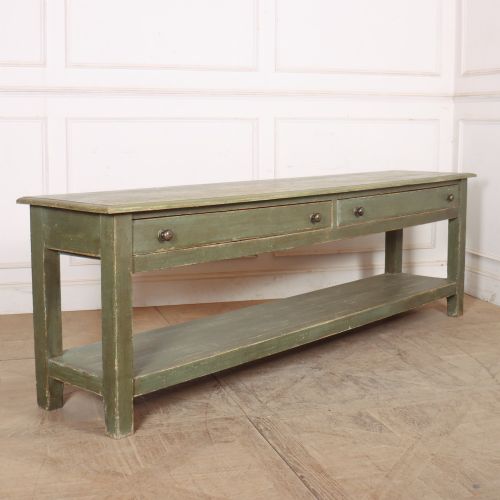


Potboard Console Table
These potboard console table examples combine low display shelves with sturdy timber tops, offering practical storage for country kitchens and hallways alike.
Potboard Console Table
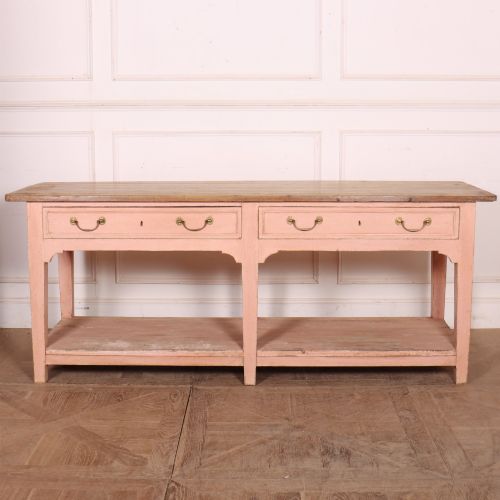
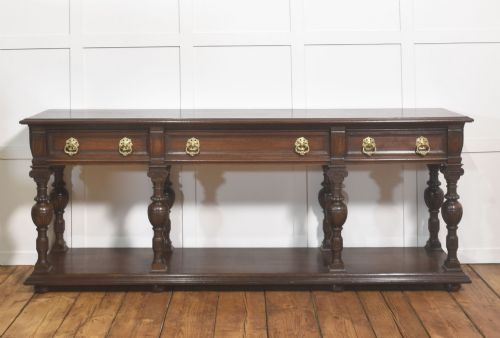
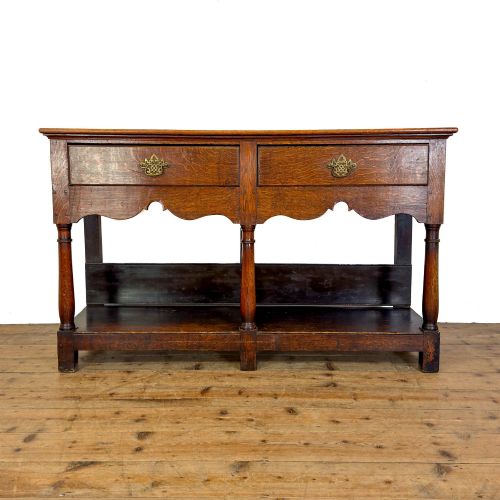
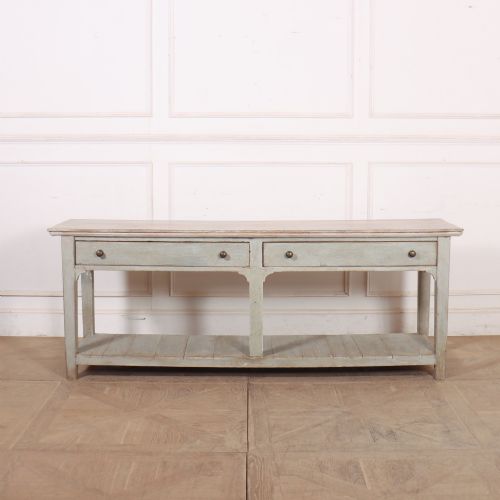
A potboard console table is a substantial serving surface or dresser base fitted with a low slatted or solid board near the floor. You will encounter these pieces across 18th century, 19th century, and early 20th century periods, originating from English, Welsh, Scottish, Spanish, and French workshops.
The form typically manifests as a long, narrow table rather than a standard sideboard, designed originally to hold heavy kitchen pots and drying dishes. Surviving examples reflect regional vernacular traditions, spanning rustic farmhouse, Georgian, Jacobean style, and provincial country aesthetics.
Most entries on this page belong to the wider family of dresser bases and serving tables rather than narrow decorative hall tables. Buyers searching for this phrase generally seek pieces with authentic utilitarian character and visible timber grain.
Materials and construction
Makers built these pieces primarily using native hardwoods and softwoods, with oak and pine appearing most frequently across the inventory. Selected timbers were joined using traditional pegged mortise and tenon construction to withstand heavy daily use.
Secondary treatments include painted wood finishes, bleached oak surfaces, and occasional brass hardware details. Certain continental examples feature marble tops set into the timber framework.
The low potboard rests securely on lower stretchers or feet, tying the legs together to ensure structural rigidity. Surface distressing on older items reflects decades of active domestic service.
Potboard Console Table Retail Price Guide 2026
Typical asking prices for potboard console table among the pieces listed under this phrase on Sellingantiques today, from the lower quarter to the upper quarter. They describe what is for sale here now, not the wider market.
Listings span oak, pine, and mahogany, with painted wood and marble also represented across the inventory.
Distinctions in quality
The value of a piece rests heavily on the integrity of its timber and the honesty of its surface finish. Original unblemished boards command attention, whereas heavily restored or replacement timbers alter the historical weight.
The presence of original hardware, unaltered paint layers, and genuine patina separates ordinary utility furniture from finer collector pieces. Construction methods that retain early pegging and hand-planed panels indicate superior workshop origins.
The Potboard Console Table Glossary
- Potboard
- The lower shelf fitted between the legs of a table or dresser base, traditionally used for storing pots and pans. This defining feature sits just above the floor.
- Dresser Base
- The lower portion of a traditional kitchen dresser, functioning independently as a serving table or sideboard with drawers and cupboards. These items form the backbone of the current selection.
- Drapers Table
- A long, narrow commercial display table originally utilised in fabric shops, sharing similar proportions with many console tables. They often feature clean lines and deep working surfaces.
- Mortise and Tenon
- A traditional woodworking joint where a projecting tongue fits snugly into a matching cavity, secured with wooden pegs. This method provides immense structural strength without modern fasteners.
- Vernacular
- Furniture made by local craftsmen for everyday use rather than high London or Parisian workshops, prioritising local materials and function. This style encompasses regional farmhouse and country pieces.
Potboard Console Table: Frequently Asked Questions
What was a potboard used for?
The lower shelf held heavy earthenware pots, copper pans, and wet dishes to air them near the floor. This kept bulky kitchen items off the main working surface.
Over time, households transitioned these sturdy tables into hallways and dining rooms for general display and serving purposes.
How do I tell an 18th century piece from a 19th century one?
Earlier pieces from the 18th century often display deeper patination, hand-cut pegging, and thicker plank construction shaped by simple hand tools. Oak was the predominant choice for these robust country builds.
Later 19th century items sometimes introduce softer pines, painted finishes, or more refined mouldings reflecting changing domestic fashions.
Are these tables suitable for modern kitchens?
Their narrow depth makes them ideal for placement along kitchen walls, behind sofas, or in hallways without obstructing movement. The durable timber tops handle everyday surface tasks easily.
The lower potboard provides practical open storage for baskets, cookbooks, or decorative ceramics.
What is the difference between a console table and a dresser base?
A traditional dresser base incorporates working drawers and sometimes cupboards beneath the main top surface, designed for heavy domestic storage. Console tables often feature simpler open frames or lighter leg structures.
Both categories frequently overlap in antique terminology when they include the signature lower potboard.