

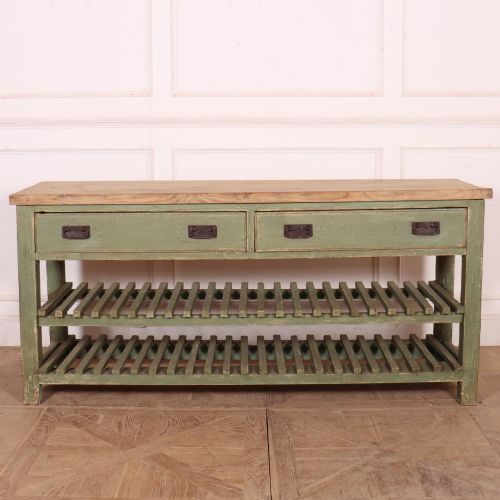
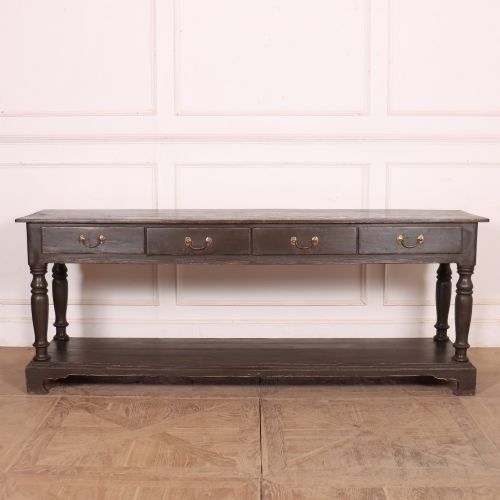
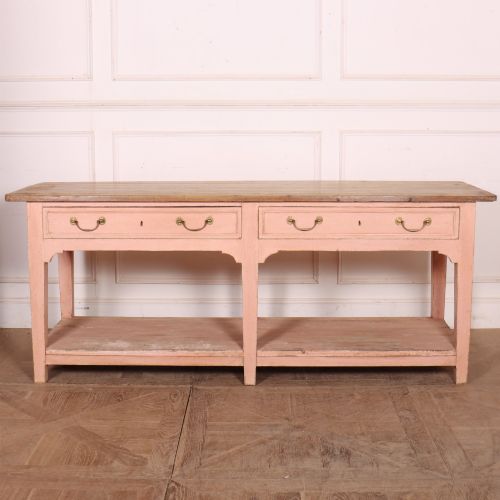

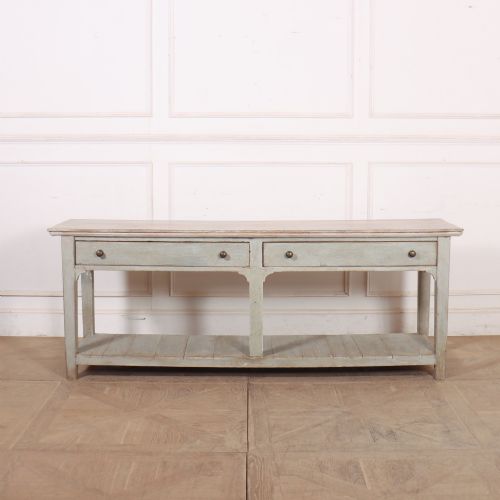
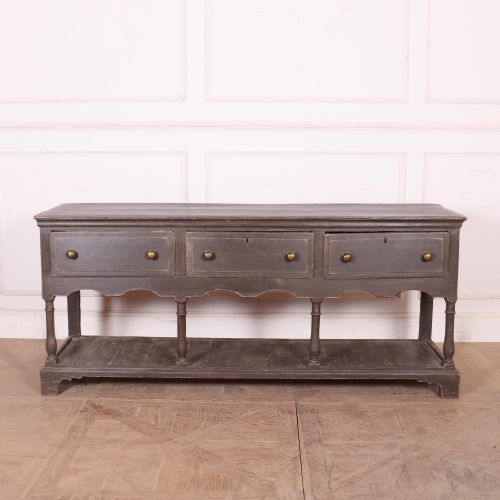
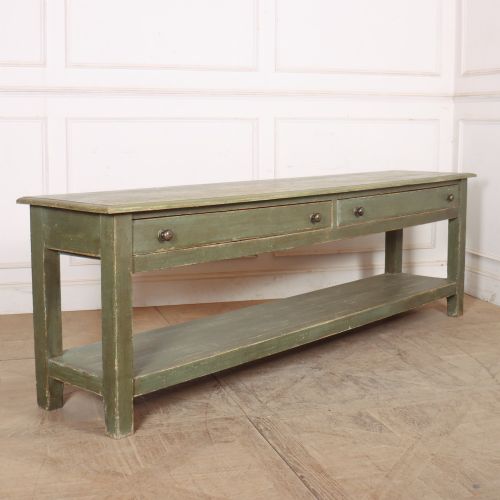


Painted Potboard Table
These painted potboard table examples are robust working furniture designed to anchor a country kitchen or dining room with practical storage.
Painted Potboard Table
A painted potboard table brings together the utility of a dresser base, serving table, or low server with the distinctive lower shelf known as a potboard. You are most likely to meet 18th-century and 19th-century English and French country pieces on this page, often showing layers of old paint.
The form spans serving tables, dresser bases, console tables, and drapers tables. These practical items range from Scottish farmhouse examples to English country house pieces and French provincial formats.
The lower potboard sits close to the floor, traditionally used for cooling pots and pans or storing heavy crockery. Their sturdy frames make them as useful in a modern interior for stacking books or baskets as they were in a historic kitchen.
Materials and construction
Makers relied primarily on pine and timber, shaping structural frames to bear heavy daily use in busy households. Surfaces received coats of paint, creating the characteristic painted wood finishes seen across English and French variants.
Details such as brass hardware occasionally accent the timber framework, whilst selected serving and console tables feature marble tops. The combination of solid pine construction and durable painted finishes ensured these tables survived centuries of domestic service.
Painted Potboard Table Retail Price Guide 2026
Typical asking prices for painted potboard table among the pieces listed under this phrase on Sellingantiques today, from the lower quarter to the upper quarter. They describe what is for sale here now, not the wider market.
Lower shelves were built low to the floor so damp pottery could dry away from the hearth.
Assessing quality and character
Quality rests in the balance of proportions and the integrity of the original timber frame. Pieces with deep, honest patination on the paint surface carry greater visual weight than later or heavily restored equivalents.
Finer examples display careful joinery in the potboard tier and drawer construction, distinguishing utility pieces made by regional joiners from more refined country house furniture.
The Painted Potboard Table Glossary
- Potboard
- A low slatted or solid wooden shelf positioned near the floor of a dresser base or serving table. It was originally designed for storing heavy pots and culinary vessels.
- Dresser base
- The lower section of a kitchen dresser, featuring drawers and cupboards beneath a work surface, built without the upper plate rack. These form the backbone of country house utility furniture.
- Drapers table
- A long, narrow table historically used in textile shops for folding and measuring cloth. They often share the height and open lower framing characteristic of potboard tables.
- Console table
- A wall-mounted or freestanding table designed to sit flat against a wall, frequently topped with marble in French provincial forms.
- Patina
- The surface sheen and wear developed over decades of handling and cleaning. It reveals the age and history of the painted timber.
Painted Potboard Table: Frequently Asked Questions
What is a potboard table used for?
These tables provide a wide surface for serving food or food preparation alongside open lower storage. In a contemporary home, they work well as sideboards, console tables, or kitchen islands.
The lower shelf accommodates baskets, large tableware, or books, combining display space with practical utility.
How do I date a painted potboard table?
Dating relies on examining construction methods, tool marks on the timber, and the composition of the paint layers. Eighteenth-century pieces typically show hand-planed boards and pegged joints.
Nineteenth-century examples often incorporate machine-sawn timber and different fastening techniques, reflecting industrial changes in furniture making.
Are these tables English or French?
The selection includes both English country pieces and French provincial examples. English versions often feature heavy pine or timber frames with rustic farmhouse roots.
French variations, such as drapers tables or marble-topped consoles, tend to display lighter proportions and different regional stylistic details.
How do I care for painted wooden furniture?
Protect the painted surface by avoiding excessive moisture and direct heat sources. Dust gently with a dry or slightly damp cloth without harsh chemical cleaners.
Maintaining stable room humidity preserves both the timber substrate and the historic paint layers against cracking or flaking.