
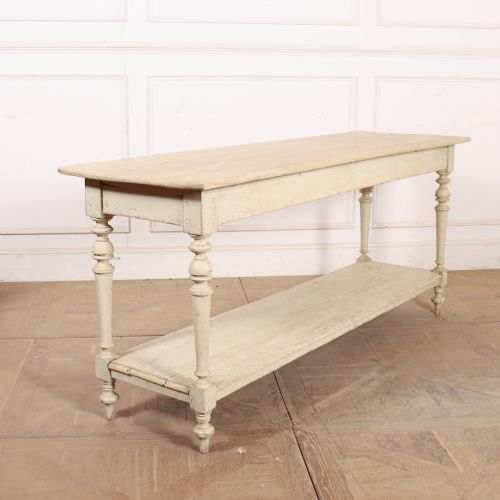


Antique Haberdashery Tables
Antique haberdashery tables are practical shop fittings and display pieces that bring generous proportions and useful glazing to modern interiors.
Antique Haberdashery Tables
When you search for antique haberdashery tables, you encounter robust shop fittings, drapers tables, and display counters designed for commercial use during the nineteenth and early twentieth centuries. These pieces encompass various forms including bow end counters, glazed vitrines, and French oak drapers tables originating from periods like the Victorian and Edwardian eras. Buyers find both English and French examples constructed to serve demanding retail environments.
The most common versions on this page are sturdy drapers tables and shop display counters fashioned from pine, oak, and mahogany. Many pieces retain original painted surfaces, bleached finishes, or glass panels intended originally for merchandising fabrics and small wares. Their substantial length and functional depth make them adaptable for domestic use in kitchens, hallways, and living spaces.
Makers and workshops from the nineteenth and early twentieth centuries produced these utilitarian tables to withstand heavy daily trading. Pieces range from late Victorian English mahogany tables to 1930s commercial display units and specific American showcases. Each iteration reflects the practical needs of period shops adapted now for domestic display.
Materials and construction
Makers utilised durable timbers such as pine, oak, and mahogany to build these heavy commercial counters and tables. Softwood carcasses often received painted or bleached finishes, whilst hardwood frames provided structural integrity for daily retail use. Glass panels and brass details frequently completed the construction of display cabinets and counters.
Construction techniques prioritised utility and strength, incorporating cast iron and brass hardware to support operational components like sliding doors or display stands. Joinery methods focused on endurance, ensuring that large display tables and shop fittings could bear significant weight. Surfaces often show the natural wear of working interiors alongside period finishing methods.
Materials recorded across the current selection include pine, oak, mahogany, glass, brass, and velvet.
Assessing quality and character
The standard of a piece rests upon the grade of timber selected and the original purpose of the furniture. Superior examples display dense hardwoods like mahogany and oak, or feature well-executed painted finishes and substantial glass glazing. Fine craftsmanship appears in the balance of proportions and the retention of original hardware such as brass fittings.
Quality also shows in the integrity of the original commercial structure, whether in a bow end counter or a drapers table. Pieces that preserve their authentic working patina and original structural elements hold greater interest. Variations in proportion, from modest display stands to large glazed cabinets, dictate how effectively the piece integrates into a room.
Quincy Showcase Works Illinois
The Antique Haberdashery Tables Glossary
- Draper's table
- A long, wide table historically utilised in fabric shops for measuring and folding textiles. These pieces often feature lower shelves or multiple drawers beneath a spacious wooden top.
- Vitrine
- A glass-fronted display cabinet or table designed to showcase delicate objects and collectables. They incorporate glazed panels to permit all-round visibility of the contents.
- Shop fitting
- Furniture and fixtures built specifically for commercial retail environments. Examples include counters, display stands, and shelving units designed for durability.
- Bow end
- A curved cabinet or counter end that softens rectangular room lines. This shaping appears on display counters to improve customer flow and visibility.
- Bleached oak
- Timber treated to lighten its natural colour whilst retaining the grain pattern. French bleached oak tables show a softer, lighter tone favoured in interior decoration.
Antique Haberdashery Tables: Frequently Asked Questions
How were haberdashery tables used originally?
Merchants utilised these substantial tables in drapery and general shops to display, measure, and fold textiles for customers. The generous surface area and lower storage shelves allowed shopkeepers to keep stock organised and accessible during busy trading hours.
Over time, these commercial fittings evolved to incorporate glass display counters and specialised drawers for smaller haberdashery items. Their robust construction ensured they could support heavy bolts of cloth and daily customer interaction.
Where do these tables work best at home?
Many buyers place drapers tables in kitchens to serve as large central islands with useful storage underneath. Their long proportions also suit hallways, dining rooms, or studios as display surfaces.
Glazed display cabinets and counters find places in living spaces or libraries for exhibiting collections. The combination of timber and glass brings both practical workspace and visual interest to a room.
How do I identify a Victorian table?
Victorian pieces often feature denser timbers like mahogany or pine with traditional joinery methods appropriate to the nineteenth century. Details such as turned legs, brass handles, and panelled construction point towards this period.
Examining the wear patterns and construction marks helps distinguish nineteenth-century shop fittings from later revivals. Original painted surfaces or patinated softwood also indicate the working age of the piece.
What is the difference between oak and pine versions?
Oak tables provide a harder, heavier surface with prominent grain patterns suited to heavy commercial use. They frequently appear in French provincial styles with bleached or natural finishes.
Pine versions often carry original painted finishes or softer patinas developed in British shops. Whilst pine is a softer softwood, period examples demonstrate durable construction capable of enduring modern use.