



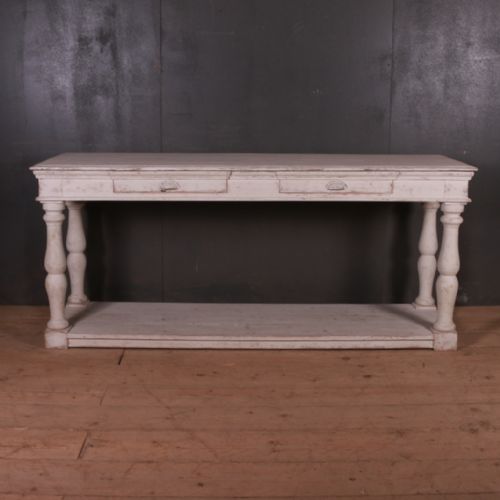


Long Painted Console Table
These long painted console table examples offer a practical surface and distinct regional character for a hallway or living space.
Long Painted Console Table
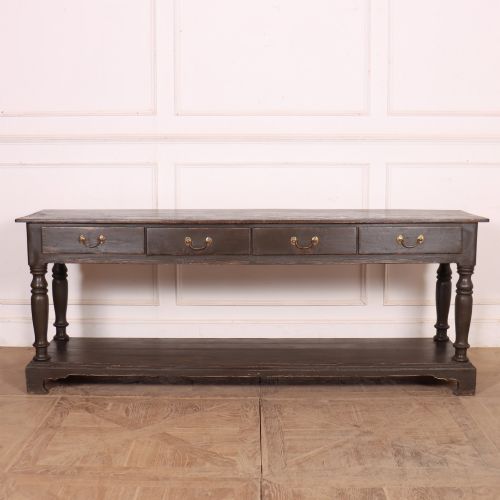
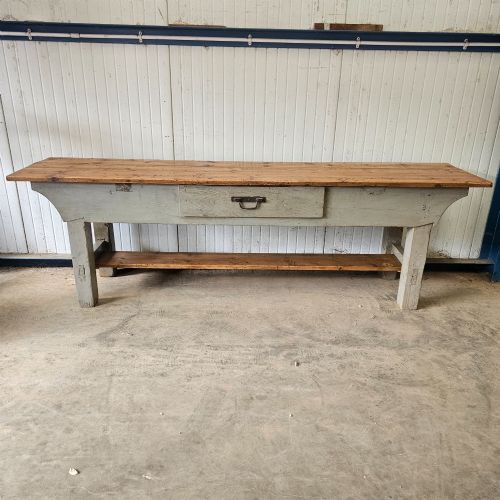
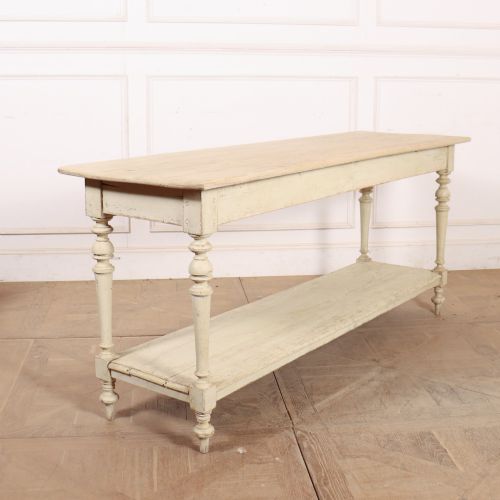
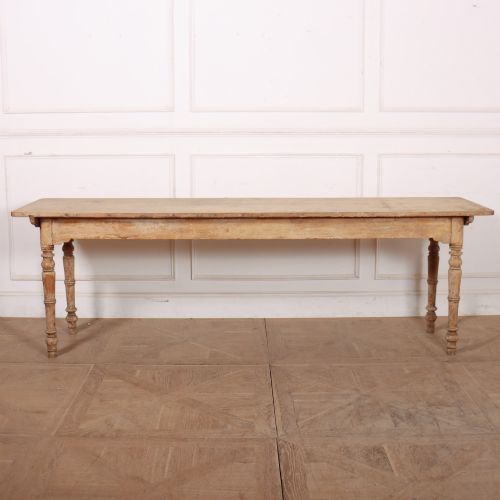
A long painted console table provides a narrow surface suited to narrow rooms, hallways, and living spaces. These pieces serve as functional servers, preparation tables, and display surfaces within domestic interiors.
The selections on this page span several decades and regional traditions, ranging from English country houses to French provincial workshops. Buyers encounter forms such as drapers tables, potboard serving tables, and dresser bases adapted to console use.
Nineteenth century examples form the majority of the available stock, alongside pieces from the 1860s, 1880s, 1890s, and 1920s. Common country house and provincial styles include French country, rustic farmhouse, English country, and Scandinavian country variants.
Materials and construction
Carpenters constructed these tables primarily using pine, oak, beech, and timber, selecting woods that provided stable support for daily utility. Secondary elements incorporate brass and cast iron fittings such as drawer pulls or structural framing.
Surfaces received layers of paint, often applied in provincial workshops or country houses to protect the timber and provide a decorative finish. Many pieces retain original painted surfaces that display natural wear from decades of practical service.
Long Painted Console Table Retail Price Guide 2026
Typical asking prices for long painted console table among the pieces listed under this phrase on Sellingantiques today, from the lower quarter to the upper quarter. They describe what is for sale here now, not the wider market.
Listings feature nineteen-century pine, oak, and beech pieces spanning French, English, Italian, and Scandinavian country styles.
Assessing quality and proportion
Quality rests in the integrity of the original timber frame, the balance of the long proportions, and the depth of the painted finish. Tables with untouched surface patination and robust potboards or multiple drawers command greater attention from collectors.
Construction methods distinguish finer workshop output from simpler utilitarian pieces, visible in joint stability and the retention of original hardware like brass handles. The harmony between the length of the table and the depth of the top defines the visual success of each console.
The Long Painted Console Table Glossary
- Console table
- A long, narrow table designed to stand against a wall, frequently utilised in hallways, dining rooms, and reception spaces.
- Potboard
- A low open shelf beneath a table or dresser base, traditionally used for storing pots and heavy kitchen utensils.
- Drapers table
- A long, narrow utilitarian table originally utilised in fabric shops for measuring and cutting cloth.
- Dresser base
- The lower section of a kitchen dresser, featuring cupboards or drawers beneath a flat top surface.
- Patina
- The surface sheen and wear developed on wood and paint over decades of use and cleaning.
Long Painted Console Table: Frequently Asked Questions
Where should I place a long painted console table?
These narrow tables suit entrance halls, long corridors, and living rooms where floor space is limited. Their shallow depth allows them to sit against walls without obstructing pathways.
They also function effectively behind sofas or as serving surfaces in dining areas.
How do I identify the period of a console table?
Dating relies on construction methods, timber selection, and regional design characteristics recorded across the nineteenth century and early twentieth century. Examining drawer dovetails and tool marks helps determine the approximate age.
Paint layers and wear patterns further indicate whether a piece dates to the 1860s, 1880s, 1890s, or later.
Are painted finishes on these tables original?
Many pieces retain their original painted surfaces, showing cumulative wear appropriate to their age and utilitarian history. Original paint often exhibits craquelure, softening, and subtle variations in tone.
Later overpainting is also common, applied during subsequent periods of domestic redecoration.
What is the difference between a console and a drapers table?
A console table is designed primarily for display and placement against a wall in domestic rooms. A drapers table originates from commercial retail use, featuring an extended rectangular top and narrow proportions built for handling textiles.
Both forms now function similarly within modern residential interiors.