
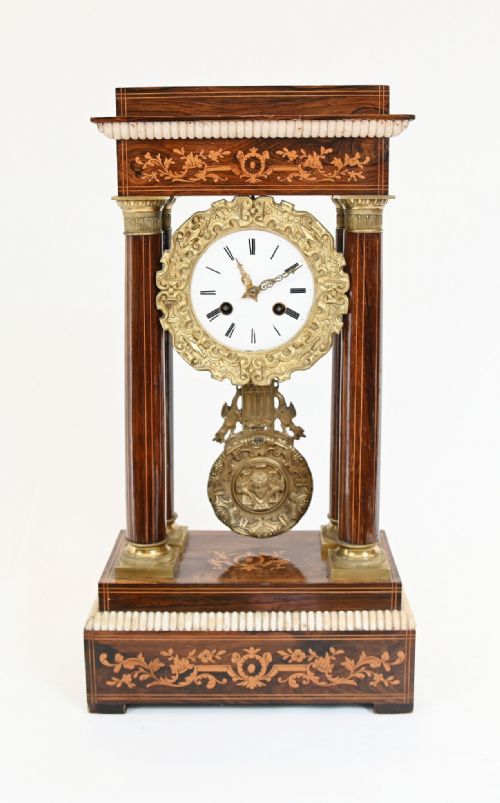
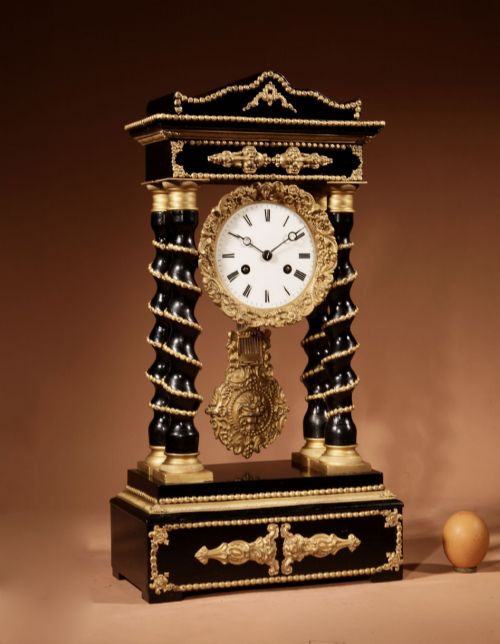


Portico Mantel Clock
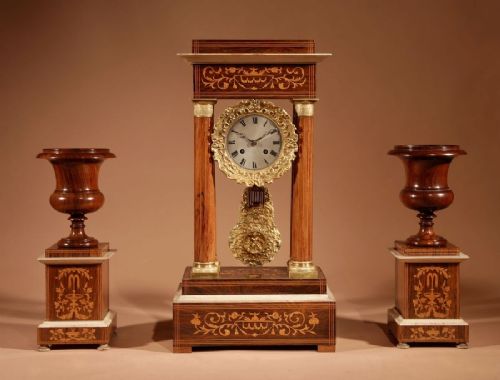
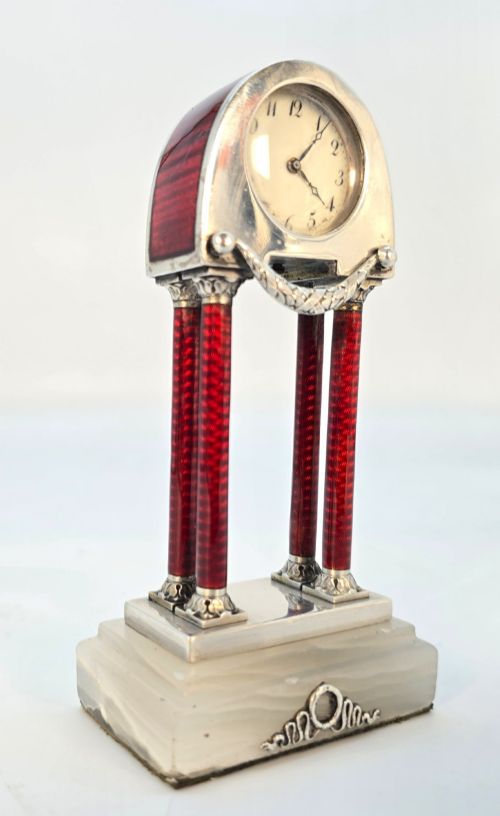
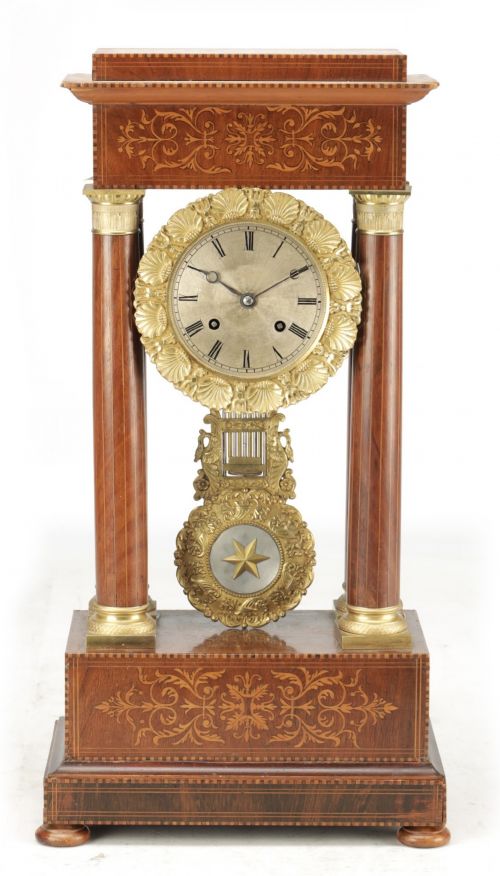
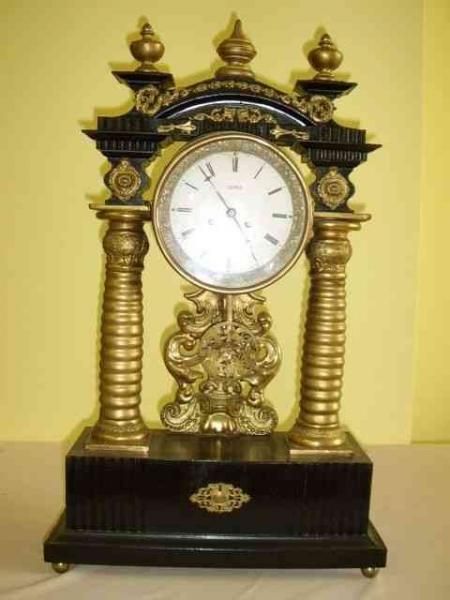
These portico mantel clock examples are striking architectural timepieces defined by classical columns, bringing French Empire elegance and precision movement into a room.
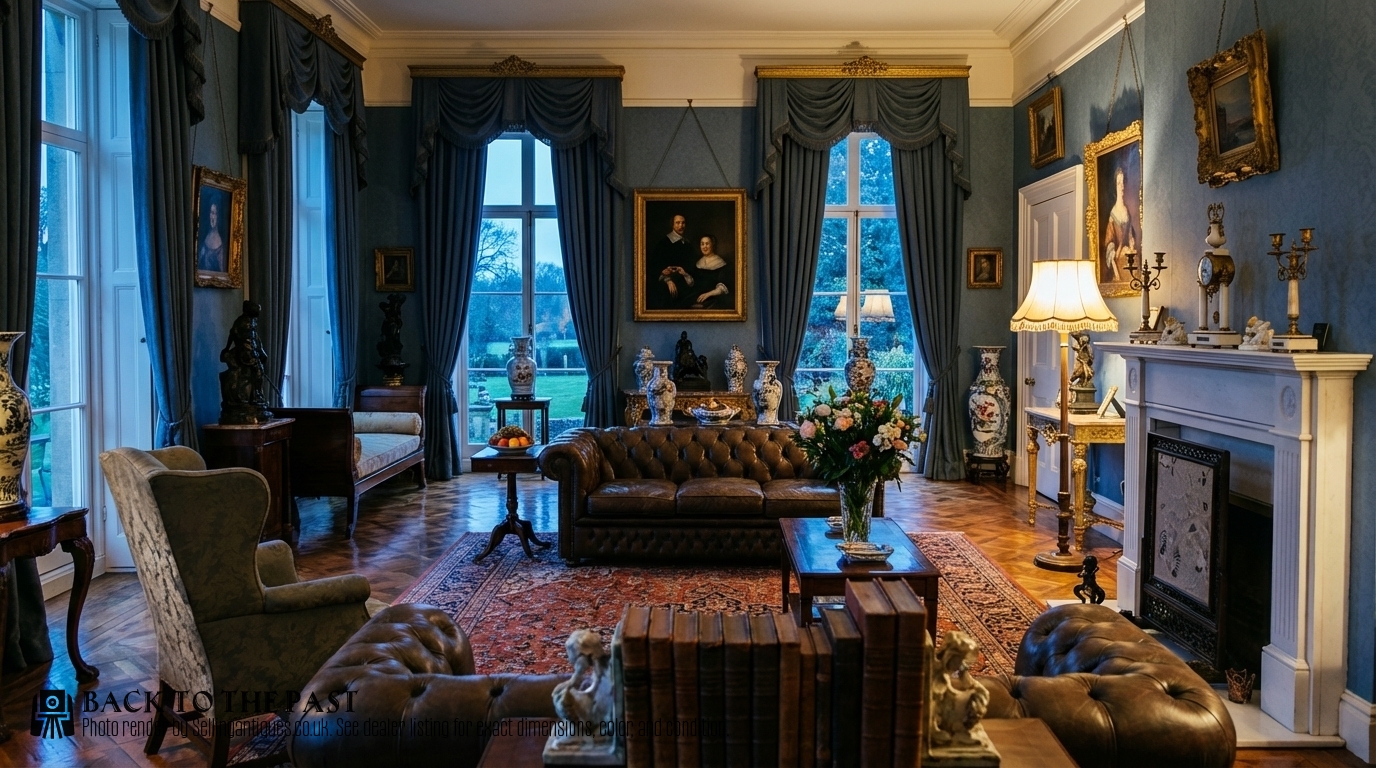
Portico Mantel Clock
A portico mantel clock is an architectural timepiece supported by two or more structural pillars, forming a central opening for the pendulum to swing freely. Most items found here originate from France, spanning the late eighteenth century through the nineteenth century.
Makers often housed the movement in a raised entablature above the columns, sometimes paired with matching garnitures, candelabras, or glass domes. Buyers will encounter both simple timepieces and complex bell striking mechanisms.
The architectural format draws heavily from neoclassical design principles, utilising symmetrical columns and pediments. Variants range from towering marble structures to compact desk clocks.
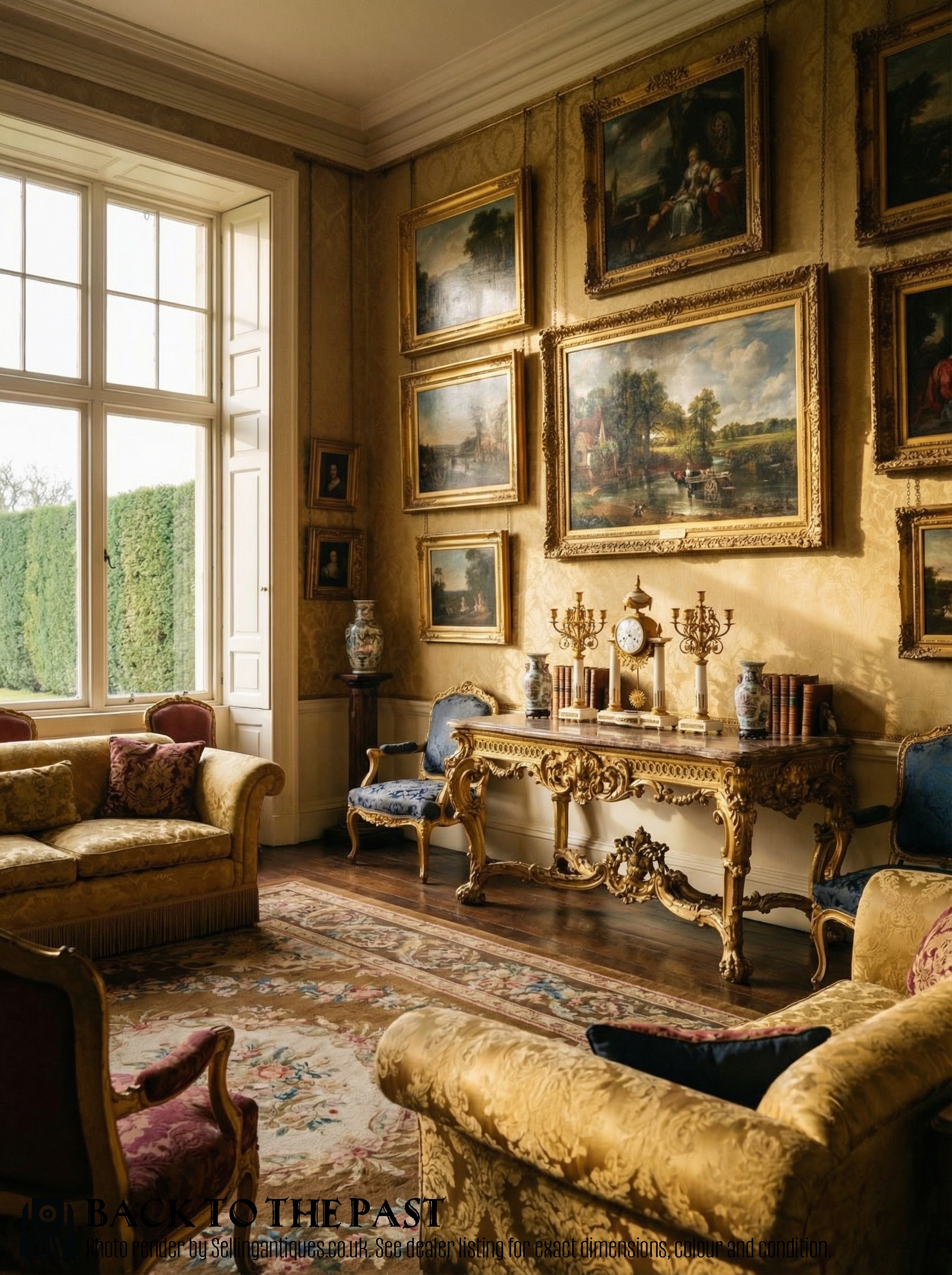
How They Were Made
Craftsmen built the architectural frames using dense timbers like rosewood and ebonised wood, frequently decorated with intricate lemon wood, satinwood, or marquetry inlay. Alternatively, white, pink, or siena marble provided a heavy, classical foundation.
Gilt bronze, ormolu, and brass mounts highlighted the capitals, bases, and bezels of the columns, adding metallic contrast to the timber and stone. Enamel and silvered dials displayed the numerals, sheltered beneath bevelled glass.
Clockmakers incorporated precision movements, including fusee and knife edge suspension systems, often signed by notable French and Viennese makers. Crystal components and cut glass added further refinement to the column shafts.
Portico Mantel Clock Retail Price Guide 2026
Typical asking prices for portico mantel clock among the pieces listed under this phrase on Sellingantiques today, from the lower quarter to the upper quarter. They describe what is for sale here now, not the wider market.
Materials span white marble, rosewood, ormolu, cut crystal, and ebonised wood across French and Viennese origins.
What Varies in Quality
The precision and crispness of the gilt bronze or ormolu mounts dictate much of the visual standard, separating sharp, hand-chiseled detailing from softer cast decoration. The grade of the marble or the complexity of the timber marquetry inlay also shifts across the range.
Mechanisms differ in mechanical sophistication, with signed movements and specialised suspensions like knife edge or fusee commanding greater respect among horologists. The presence of original matching garnitures or glass domes elevates the completeness of the set.
Georg Adam Scheid·Breguet·Baltazart·AD Mougin Paris·Leroy
The Portico Mantel Clock Glossary
- Portico clock
- A mantel clock featuring an architectural case supported by columns that frame the suspended pendulum. This classical layout became popular during the French Empire and Charles X periods.
- Ormolu
- Gilt bronze created by applying a finely ground high-carat gold-mercury amalgam to a bronze object. The mercury was then driven off by heat, leaving a rich golden coating.
- Garniture
- A set of decorative matching objects designed to flank a central clock on a mantelpiece. These often include candelabras or ornamental urns made from matching marble and ormolu.
- Fusee
- A conical pulley used in clockmaking to maintain even force on the gear train as the mainspring unwinds. This mechanical addition improves timekeeping accuracy.
- Marquetry
- The art of applying decorative pieces of veneer to a structural wood surface to form geometric or floral designs. Cabinetmakers utilised contrasting timbers like rosewood and lemon wood for this work.
Portico Mantel Clock: Frequently Asked Questions
What is a portico mantel clock?
A portico mantel clock is a nineteenth-century timepiece structured like a classical building with vertical columns and a central swinging pendulum.
These clocks display distinct architectural symmetry, housing the dial in the upper entablature above the supporting pillars.
How do you date a portico clock?
Dating relies on stylistic markers, such as the transition from heavy French Empire or Charles X ormolu designs to later Victorian rosewood and inlaid timber cabinets.
Examining the materials, dial construction, and signature styles helps narrow the period of manufacture between the late eighteenth and late nineteenth centuries.
How do you care for a marble clock?
Marble and alabaster cases require gentle dusting with a dry microfibre cloth to protect the polished stone surface from moisture damage.
Mechanical movements should be handled carefully and serviced periodically by a professional clockmaker to ensure the gear train runs smoothly.