



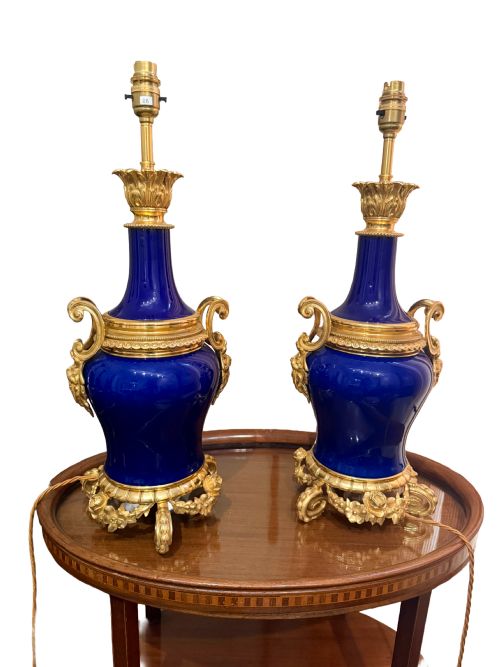
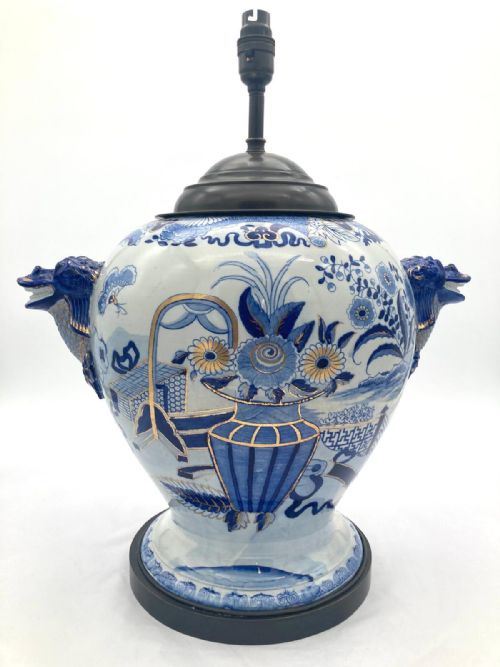


Porcelain Urn Lamp Pair
These porcelain urn lamp pairs bring classical proportion and rich glaze to a room, turning decorative vessels into practical lighting.
Porcelain Urn Lamp Pair
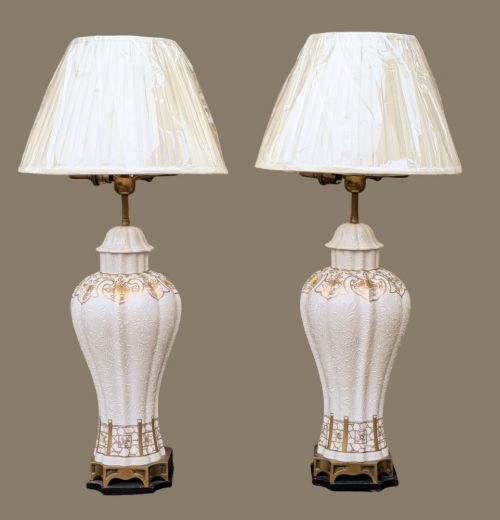
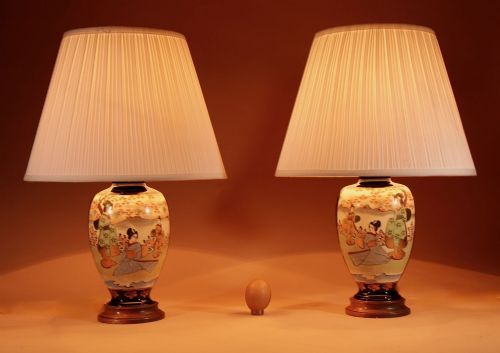
A porcelain urn lamp pair consists of two matching ceramic vessels, originally made as vases or jars, which have been converted into table lamps. These pieces range from nineteenth century French and English productions to Japanese Satsuma and Chinese export works.
Makers often adapted decorative vessels by drilling the base or mounting them with brass and gilt fittings, pairing Asian export ceramics and European revival styles with domestic electrical wiring.
How they were made
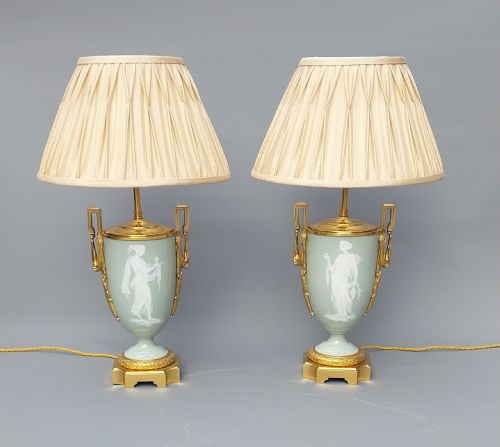
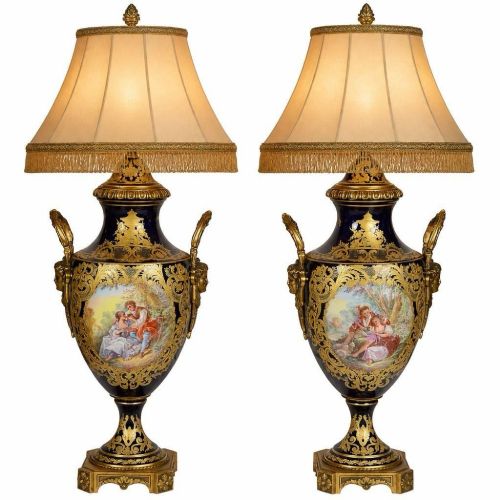
Potters shaped the ceramic bodies by throwing or casting porcelain, applying hand-painted glazes in cobalt blue, celadon, or polychrome enamel before firing at high temperatures. Many pieces display intricate hand-painted decoration, sometimes enhanced with gilt details.
Metalworkers fitted the porcelain bodies with mounts cast in ormolu, gilt bronze, or gilt brass to secure the structure and elevate the height. These metal mounts frame the ceramic base and provide a stable foundation for the electrical components and handmade shades.
Porcelain Urn Lamp Pair Retail Price Guide 2026
Typical asking prices for porcelain urn lamp pair among the pieces listed under this phrase on Sellingantiques today, from the lower quarter to the upper quarter. They describe what is for sale here now, not the wider market.
Listings feature porcelain urn lamp pairs spanning the eighteenth to the twentieth centuries, utilising materials like silk, gilt bronze, and enamel.
What varies in quality
The quality of a pair rests primarily on the crispness of the porcelain painting and the precision of the metal mounts. Finer examples display hand-painted detail with deep, clear glazes and heavy cast bronze or ormolu mounts that fit the ceramic body without excessive gap.
Matching symmetry between the two pieces defines the better examples on the market. Slight variations in size or glaze tone reveal whether the pair was genuinely conceived together or assembled later from matched stock.
The Porcelain Urn Lamp Pair Glossary
- Ormolu
- Gilt bronze mounts applied to furniture, clocks, and ceramic bases. This technique uses a mercury and gold amalgam fired onto bronze to create a durable, golden finish.
- Celadon
- A pale green jade-like glaze originating in East Asia. The subtle hue comes from iron oxide in the glaze reacting during a reduction firing.
- Satsuma
- Japanese earthenware pottery featuring a crackle-glaze ivory ground decorated with intricate polychrome and gilt enamels. These pieces were widely exported to Europe during the Meiji period.
- Rose Medallion
- A nineteenth century Chinese export porcelain style characterised by panelled scenes of figures and birds surrounded by green and pink floral borders.
Porcelain Urn Lamp Pair: Frequently Asked Questions
Are these lamps originally wired?
Most antique lamps started life as decorative vases, ginger jars, or oil lamps before conversion. They received electrical wiring and brass fittings during the nineteenth or twentieth century to suit modern domestic interiors.
Converters typically drilled the ceramic base or secured wiring through the existing collar to preserve the visual integrity of the original vessel.
How do I match shades to these lamps?
Handmade fabric or silk shades complement the scale and weight of heavy ceramic bases. Neutral or pleated designs help balance the strong colours of cobalt blue or polychrome enamel bodies.
Proportion guides the choice, ensuring the shade diameter matches the widest part of the porcelain urn below it.
Can antique porcelain lamps be cleaned safely?
Gentle dusting with a dry microfiber cloth keeps the glazed surface and gilt mounts free from grit. Moisture should be kept away from electrical fittings and unglazed porcelain areas.
Harsh chemical cleaners strip the gilt finish from ormolu mounts and damage delicate hand-painted enamel details.