






Cream Porcelain Bedside Lamps
Cream porcelain bedside lamps bring tactile warmth to a room, offering soft illumination through fired clay and hand-painted detail.
Cream Porcelain Bedside Lamps
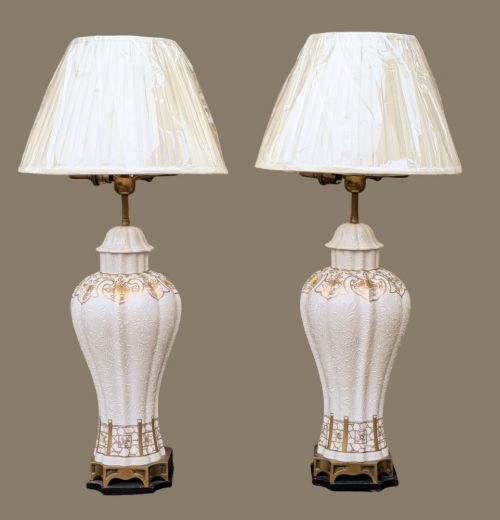
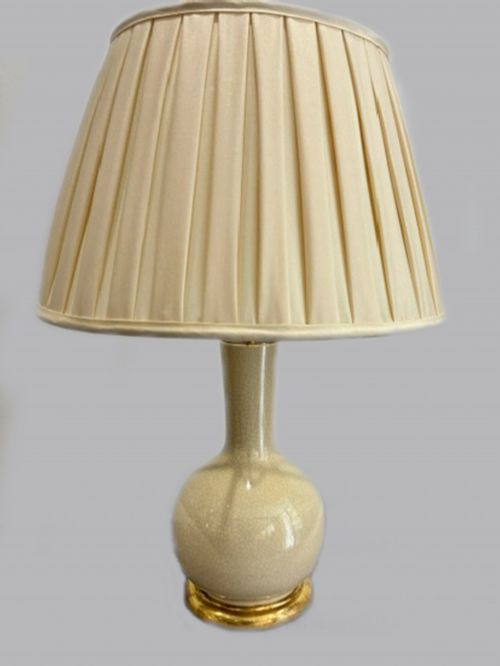
Cream porcelain bedside lamps comprise table lamps fashioned from pale ceramic bodies, often adapted from earlier vases or jars. These pieces arrive in various styles, including Japanese Meiji, French Chateau, and Chinese Export designs.
Buyers meet pairs and single items spanning the nineteenth century up to the nineteen thirties. Many examples combine porcelain with brass, gilt metal, or wooden bases to support modern electrical fittings.
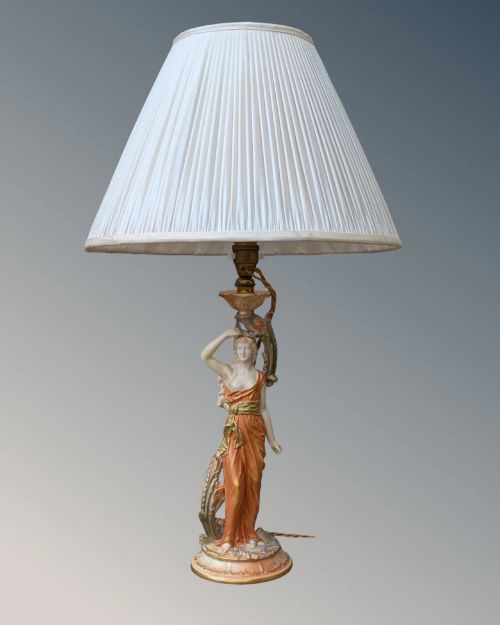
The selection here draws upon global traditions, ranging from Satsuma ware and Paris porcelain to Royal Worcester and German animal figures. Each lamp displays distinct regional painting techniques and glaze characteristics upon pale ceramic.
Materials and construction
Potters shaped these bodies using porcelain, earthenware, and crackleware clays, fired in kilns before receiving intricate overglaze or underglaze decoration. Artisans applied hand-painted motifs featuring florals, figures, and birds directly onto the pale surfaces.
Metal components in brass and gilt metal provide structural support and secure mounts for the ceramic bodies and lamp holders. Silk and fabric shades frequently top these assemblies, diffusing the light cast by the bulbs.
Cream Porcelain Bedside Lamps Retail Price Guide 2026
Typical asking prices for cream porcelain bedside lamps among the pieces listed under this phrase on Sellingantiques today, from the lower quarter to the upper quarter. They describe what is for sale here now, not the wider market.
German ceramic owls stand ready to illuminate bedside tables with wide-eyed vigilance.
Assessing quality and craftsmanship
The finesse of the hand-painted decoration determines much of the visual merit, separating hasty production from meticulous artistry. Precision in the porcelain potting and the clarity of the glaze finish define the upper tier of these lighting pieces.
Proportion and matching matter significantly when evaluating pairs of lamps. Symmetrical balance between the ceramic bodies and the accompanying metal mounts dictates the overall elegance of the finished object.
Ernst Bohne and Sohn·Royal Worcester
The Cream Porcelain Bedside Lamps Glossary
- Crackleware
- Pottery featuring a network of fine cracks in the glaze layer, intentionally created during the firing process. This decorative finish appears across various nineteenth-century pieces.
- Satsuma ware
- Japanese earthenware with a pale, ivory-coloured crackle glaze, typically decorated with polychrome enamels and gilt. These wares frequently find new life as table lamps.
- Paris porcelain
- High-quality ceramic produced by numerous independent workshops in and around Paris during the eighteenth and nineteenth centuries. These bodies often display rich gilding and detailed hand painting.
- Meiji period
- A historic Japanese era spanning from eighteen sixty-eight to nineteen twelve, noted for intricate decorative arts exported to Western markets. Many lamps utilise vases originating from this time.
Cream Porcelain Bedside Lamps: Frequently Asked Questions
How do I choose the right size bedside lamp?
Consider the height of your bedside table and the clearance needed for reading in bed. Taller porcelain bodies require wider surfaces to maintain stable proportions in the bedroom.
Ensure the light source sits at a comfortable level relative to your pillow, preventing direct glare while you rest.
Can antique vases be safely converted into lamps?
Many nineteenth-century vases and vessels undergo conversion into lighting fixtures by feeding a cord through the base or mounting it securely. This practice allows fragile ceramics to serve a functional purpose in modern interiors.
Professional wiring ensures the delicate porcelain remains protected from excessive heat or structural strain during daily use.
What distinguishes Satsuma porcelain from Paris porcelain?
Satsuma pieces originate from Japan, displaying characteristic ivory-coloured crackle earthenware decorated with dense enamels and gilt. Paris porcelain exhibits European neoclassical or floral motifs upon a refined white ceramic paste.
Both traditions offer distinct aesthetic qualities suited to traditional and eclectic interior schemes alike.