


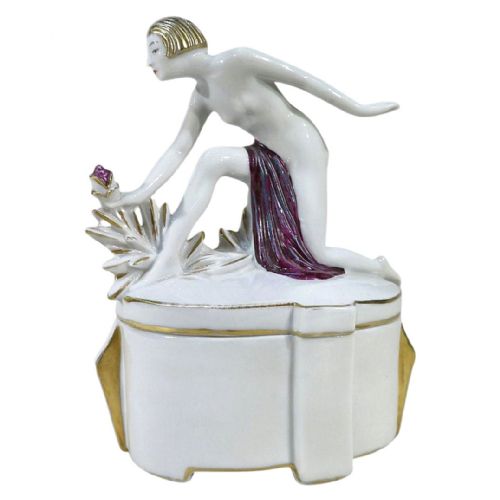


Porcelain Powder Bowl
A porcelain powder bowl brings the elegance of the dressing table home, offering both practical storage and a distinct sculptural presence.
Porcelain Powder Bowl
A porcelain powder bowl serves as a decorative container for cosmetics, often taking the form of vanity accessories and trinket boxes. These pieces belong to the Art Deco period, dating primarily to the 1930s with occasional French and German origins.
The most common examples encountered on this page feature figural lids depicting bathing belles, flapper girls, half dolls, and jesters. These novelty designs combine ceramic bowls with sculptural figures that sit atop the lid as handles.
Originating from workshops in France, Germany, and Austria, these vanity items reflect the playful and sophisticated design language of the early twentieth century. Collectors find them used alongside perfume sets and powder puff stands.
How they were made
Gilt highlights and metal mounts occasionally enhance the porcelain body, adding metallic contrast to the fired ceramic. Some examples incorporate fabric elements to complement the vanity set presentation.
A grinning jester watches over your loose powder with absolute ceramic mischief.
What varies in quality
The sophistication of the modelling on the figural lid dictates much of the visual appeal. Delicately painted facial expressions and detailed attire on figures like flapper girls or bathing belles separate superior examples from simpler productions.
The preservation of the enamel colours and any applied gilt work significantly influences the overall character of the piece. Crisp definition in the ceramic moulding and smooth glazing across the bowl interior demonstrate careful kiln work.
Limoges·Paul Louchet
The Porcelain Powder Bowl Glossary
- Porcelain
- A white vitrified ceramic material of high density and fine texture. It is fired at high temperatures to achieve a non-porous finish suitable for fine decorative items.
- Glaze
- A glassy coating fused to the ceramic body through firing. This layer provides a smooth, impermeable surface and enhances the brilliance of the underlying colours.
- Enamel
- Opaque glass-like paint applied to the surface of fired porcelain. Artisans use it to add detailed polychrome decoration before a final low-temperature fixation.
- Half doll
- A ceramic figure modelled from the waist up without legs. These figures served as decorative toppers for powder boxes, whisk brooms, and tea cosies.
- Trinket box
- A small lidded container used for storing jewellery and small personal items. They share similar manufacturing techniques and forms with cosmetic powder jars.
Porcelain Powder Bowl: Frequently Asked Questions
What is a porcelain powder bowl used for?
These containers held loose face powder and cosmetic puffs on dressing tables during the early twentieth century. They served as both functional vanity storage and decorative ornaments.
Today, they are used to hold small trinkets, jewellery, or simply displayed as sculptural objects representing the design tastes of the 1930s.
How do I identify an Art Deco powder bowl?
Art Deco powder bowls are characterised by geometric forms, stylised figures, and specific motifs like flapper girls, bathing belles, and pierrots. They date predominantly from the 1930s and reflect the modern aesthetic of that decade.
The use of brightly coloured enamel decoration and novelty figural lids further distinguishes these pieces from earlier nineteenth-century vanity items.
Where were these powder bowls made?
Production was centered in European ceramic hubs, with significant output coming from France, Germany, and Austria. Notable factories and studios in regions such as Limoges produced fine porcelain vanity wares.
German and Austrian makers frequently specialised in novelty figural designs, incorporating half dolls and theatrical characters into the lid construction.
How should I display my powder bowl?
Place the bowl on a dressing table, vanity, or glass-front cabinet where the figural lid can be seen from multiple angles. Keeping them away from direct sunlight helps preserve the delicate enamel painted details.
Ensure they rest on a stable surface away from edges, as the porcelain lids and protruding figural elements are vulnerable to accidental knocks.