


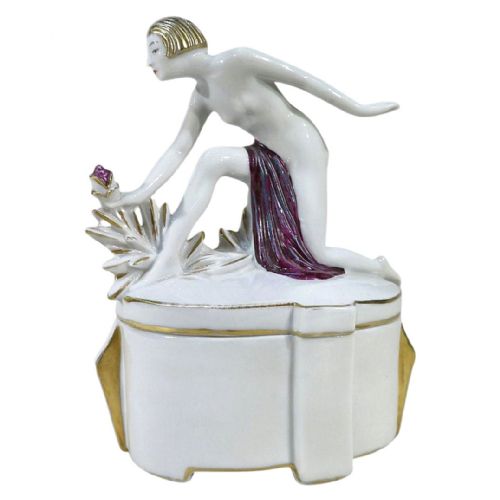


Art Deco Figurine Jar
An art deco figurine jar brings dressing table elegance into focus through ceramic craft and period design.
Art Deco Figurine Jar
An art deco figurine jar combines a functional container for cosmetics or small trinkets with a sculptural lid depicting a fashionable woman or character. These pieces span powder bowls, trinket boxes, and bonbonniere forms originating from the nineteen thirties.
The most common version encountered here is the flapper girl or bathing belle half doll perched atop a ceramic or porcelain bowl. European workshops in France, Germany, and Austria produced these charming vanity items to hold loose powder or dressing table treasures.
Makers shaped these utilitarian objects to double as miniature room ornaments, reflecting the stylistic tastes of nineteen thirty design. Each art deco figurine jar merges practical storage with distinct period character.
How they were made
Selected examples incorporate gold leaf or gilt highlights to accentuate the contours of the figures and the rims of the bowls. Firing techniques fixed the bright enamel colours to the ceramic bodies, creating durable surfaces suited for daily dressing table use.
Listings feature porcelain, ceramic, and earthenware materials decorated with enamel and gold leaf.
What varies in quality
Origin also influences distinction, with specific European porcelain houses achieving greater refinement in both the moulding of the figurine lid and the balance of the supporting ceramic bowl.
Limoges
The Art Deco Figurine Jar Glossary
- Half doll
- A ceramic torso without legs, designed specifically to be attached to the top of powder puffs, lampshades, or dresser jars. These figures usually depict fashionable women or dancers from the period.
- Bonbonniere
- A small ornamental jar or box originally intended for holding sweets or bonbons. On this page, the term describes lidded ceramic containers used on dressing tables.
- Gilt
- A thin layer of gold applied to the ceramic surface as a decorative accent. It highlights rims, clothing details, and decorative borders on the powder bowls.
Art Deco Figurine Jar: Frequently Asked Questions
What were art deco figurine jars used for?
These lidded vessels served primarily on dressing tables to hold face powder, cosmetics, or small trinkets. Women used them as both functional containers and decorative ornaments in their bedrooms.
Over time, their role shifted from utilitarian vanity items to collectible display pieces that showcase period ceramic art.
How do I identify a nineteen thirties piece?
Look for characteristic styling in the clothing, hairstyles, and facial expressions of the ceramic figures, which typically reflect the flapper aesthetic of nineteen thirty. The construction methods and paste types used in European ceramics from France, Germany, and Austria also point to this era.
Examining the glaze colours and enamel techniques helps confirm the period production methods.
Where were these powder jars made?
Production was centered largely in European ceramic hubs, with notable pieces originating from France, Germany, and Austria. Specific workshops, including those in Limoges, contributed significantly to the output of decorated porcelain powder boxes.
Regional styles often show distinct approaches to moulding the figurine lids and glazing the ceramic bowls.
How should I display a powder jar?
Place these lidded vessels on flat surfaces such as dressing tables, mantelpieces, or display cabinets where the figurine lid can be appreciated from multiple angles. Ensure they sit securely away from heavy foot traffic to protect the delicate ceramic extremities.
Keep them out of direct sunlight to preserve the vibrancy of the hand-painted enamels and gold leaf highlights.