
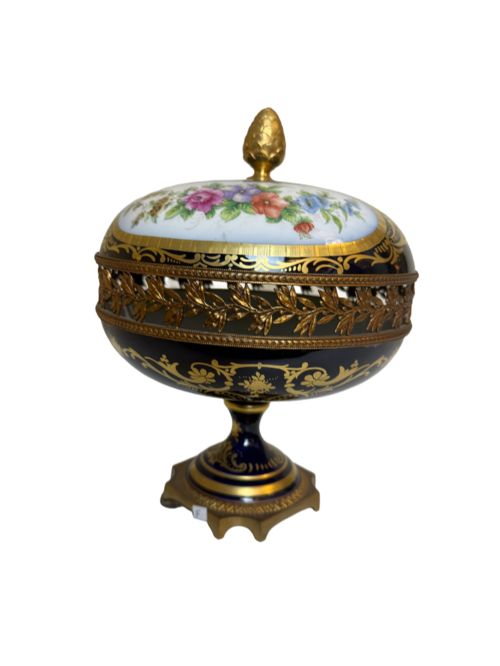


Porcelain Trinket Jar
A porcelain trinket jar sits on a dressing table to hold small treasures, combining delicate ceramics with practical charm.
Porcelain Trinket Jar
A porcelain trinket jar serves as a small, lidded container for vanity items and small valuables. These pieces span from late nineteenth century European works to nineteen thirties dressing table novelties.
The most common version met on this page is the Art Deco powder box or half doll jar. French and German potteries produced many of these figurative lidded vessels for dressing tables.
Other examples include potpourri bowls, vanity sets, and bonbonnieres from periods such as the Victorian era and the nineteen tens. Each object combines storage with decorative ceramic form.
Materials and manufacture
Potters shaped these jars from porcelain and earthenware, applying smooth glazes to create durable surfaces. Kiln firing fixed the ceramic bodies before decorators added surface details.
Enamel colours, gold leaf, and gilding provide the surface decoration seen across these jars. Artisans painted motifs directly onto the glazed ceramic or incorporated glass elements.
Several nineteen thirties jars feature cheeky flapper girls and jester half dolls peering out from powder bowls.
Judging quality and execution
The precision of the painted details and enamel work sets finer examples apart from standard production items. Hand-painted motifs display careful brushwork and considered placement across the ceramic surface.
Mould definition in figural pieces, particularly half doll figures and novelty lids, indicates the skill of the maker. Crisp lines and balanced proportions separate superior jars from simpler ones.
Limoges·Dresden·Meissen·Royal Worcester
The Porcelain Trinket Jar Glossary
- Half doll
- A ceramic upper figure attached to a fabric skirt or directly forming the lid of a powder box. These figures often depict flapper girls or ladies of the period.
- Bonbonniere
- A small decorative jar intended for sweets or small confections. These lidded containers frequently appear in fine porcelain.
- Potpourri
- A mixture of dried petals and spices kept in a lidded bowl to scent a room. Perforated lids allowed the fragrance to escape.
- Gilding
- The application of gold leaf or gilt paint to ceramic surfaces. This technique highlights rims, handles, and decorative motifs.
Porcelain Trinket Jar: Frequently Asked Questions
What were porcelain trinket jars used for?
These jars held small personal items on dressing tables, including powder, hairpins, and trinkets. Vanity sets often included matching bowls and dishes for daily grooming.
Ladies used them to keep loose items organised while adding a decorative accent to the bedroom or boudoir.
How do I date a porcelain trinket jar?
Stylistic details such as Art Deco flapper figures point towards the nineteen thirties, while floral motifs and ornate gilding often suggest the Victorian period or late nineteenth century.
Maker marks on the base provide further clues to the origin and production era of each ceramic piece.
Where were these jars made?
European factories in France, Germany, Austria, and England produced many of the porcelain jars found here. Limoges, Dresden, and Meissen are notable centres of this ceramic work.
Asian potteries also contributed lidded jars and enamel pieces to the wider market during the early twentieth century.
How should I display a trinket jar?
Place them on dressing tables, mantelpieces, or open shelves where their painted glazes and gilded details catch the light. Their compact size makes them suitable for small display surfaces.
Lids can be set slightly ajar or removed entirely to showcase the interior finish alongside the decorated exterior.