

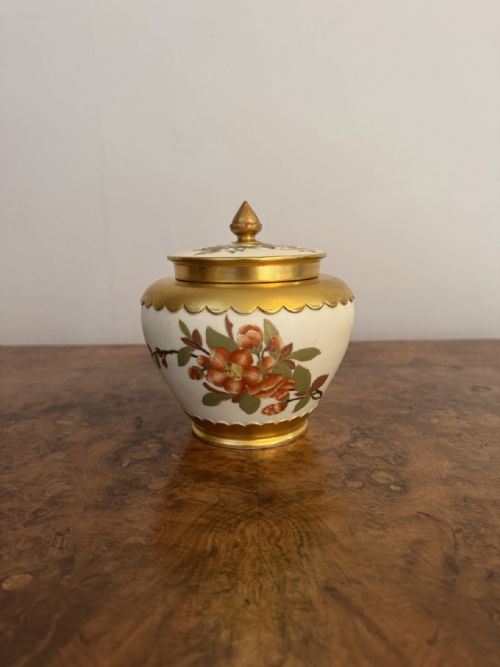


Porcelain Potpourri Jar
A porcelain potpourri jar brings fragrance and decoration to a room, drawing collectors through its painted surfaces and pierced covers.
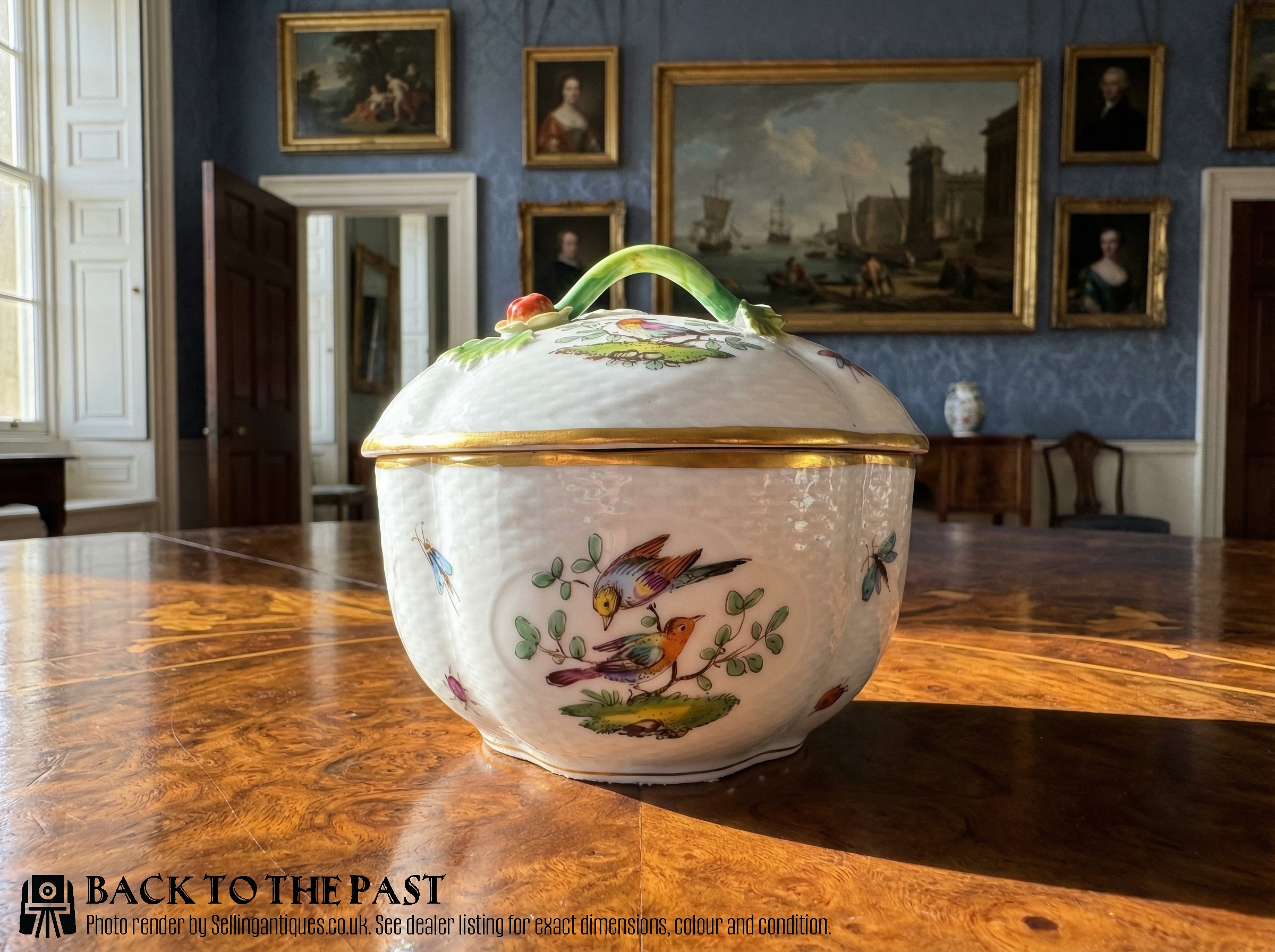
Porcelain Potpourri Jar
A porcelain potpourri jar takes the form of a lidded vessel, vase, urn, or bowl designed to hold dried scented plant material. These pieces appear across multiple periods, with nineteenth-century examples and Royal Worcester designs forming a large part of the selection.
Makers shaped these containers to sit on mantelpieces or tables, often incorporating pierced covers to allow scent to circulate. The forms range from small pommanders to large blush ivory urns and ginger jars.
English and continental potteries produced these objects, utilising materials such as ironstone alongside fine ceramic bodies. The selection spans from Georgian and Victorian eras through to the mid-twentieth century.

Materials and Construction
Potters shaped ceramic and porcelain bodies by hand or mould before applying enamel paints and glazes. Many examples incorporate intricate hand-painted floral or fruit motifs across the surface.
Gilding, gold leaf, and gilt bronze mounts frequently accent the porcelain, adding rich metallic trim to the rims, handles, and crown covers. Ironstone provides a heavier, more durable alternative for utilitarian decorative vessels.
Perforations in the lids require careful cutting and firing before the glaze cures, ensuring the ceramic retains structural integrity around the ventilation holes.
Porcelain Potpourri Jar Retail Price Guide 2026
Typical asking prices for porcelain potpourri jar among the pieces listed under this phrase on Sellingantiques today, from the lower quarter to the upper quarter. They describe what is for sale here now, not the wider market.
Listings feature porcelain, ironstone, and enamel materials across Victorian, Georgian, and twentieth-century periods.
Factors That Distinguish Quality
The precision of the painted detail separates ordinary production from exceptional work, particularly in hand-painted botanical or figurative scenes. Fine brushwork and layered enamel colours demonstrate superior artistic skill.
The crispness of the pierced lid design and the weight of the gilt bronze or gold leaf application indicate the standard of manufacture. Well-balanced proportions between the vessel body and its crown cover mark superior craftsmanship.
Royal Worcester·Dresden Porcelain·Mason's Ironstone·Sitzendorf Porcelain·Herend
The Porcelain Potpourri Jar Glossary
- Potpourri jar
- A lidded vessel designed to hold dried flower petals and spices for room fragrance. These pieces feature pierced or perforated covers.
- Blush ivory
- A soft cream-coloured porcelain ground developed by Royal Worcester in the late nineteenth century. It often serves as a backdrop for delicate floral painting.
- Ironstone
- A heavy, durable ceramic material patented in the nineteenth century. It combines earthenware properties with porcelain strength.
- Gilding
- The application of gold leaf or gold powder to the surface of porcelain or bronze mounts. It highlights rims, handles, and moulded details.
- Pomander
- A small container used for holding aromatic substances. Early examples held spices to freshen the air.
Porcelain Potpourri Jar: Frequently Asked Questions
What is a porcelain potpourri jar?
A porcelain potpourri jar is a lidded container made to hold dried scented botanicals. The pierced cover allows the fragrance to disperse into the room.
These pieces function as decorative objects while serving their original aromatic purpose. Collectors value them for their painted ceramic bodies and varied historical styles.
How do I date an antique jar?
Dating relies on maker marks, ceramic bodies, and decorative styles. Nineteenth-century pieces often feature specific factory stamps and hand-painted motifs.
Comparing the glaze type and mounting materials helps narrow the period of production. Victorian and Georgian examples display distinct artistic conventions.
What is blush ivory porcelain?
Blush ivory is a matte cream ceramic finish introduced by Royal Worcester. It provides a muted background for painted floral decoration.
This finish is characteristic of late Victorian and Edwardian pieces. It gives the ceramic a warm, tactile quality.
How were these jars used historically?
Households placed these vessels in living spaces to mask unpleasant odours and freshen indoor air. Dried flowers mixed with spices filled the interior.
The pierced lids allowed the scent to escape gradually. They doubled as ornamental table centrepieces.