




Porcelain Pitcher Bowl
These porcelain pitcher bowl sets bring generous utility and decorative presence to a room, offering tactile connection to domestic life of the past.

Porcelain Pitcher Bowl
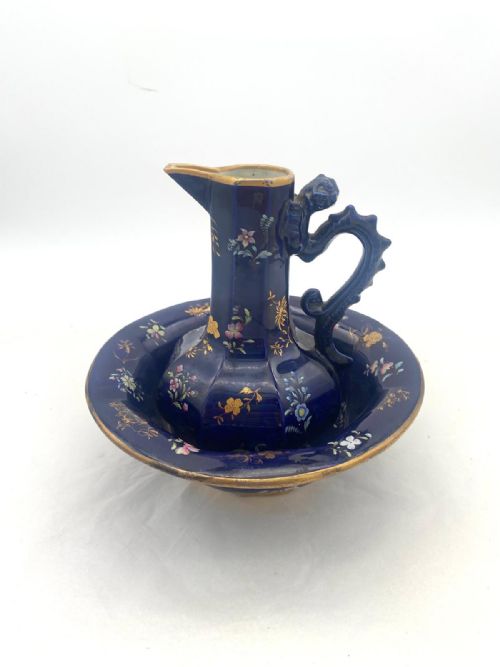
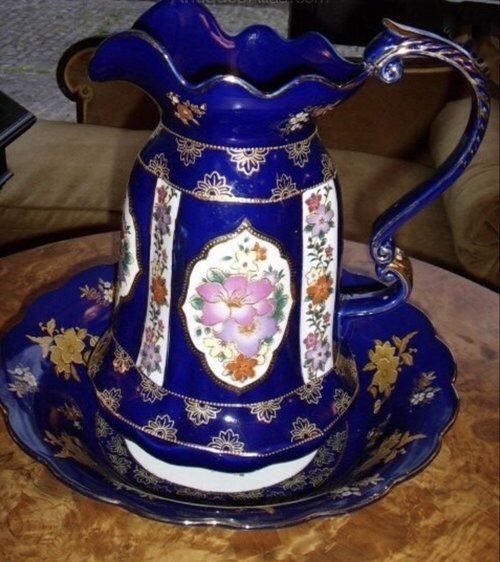
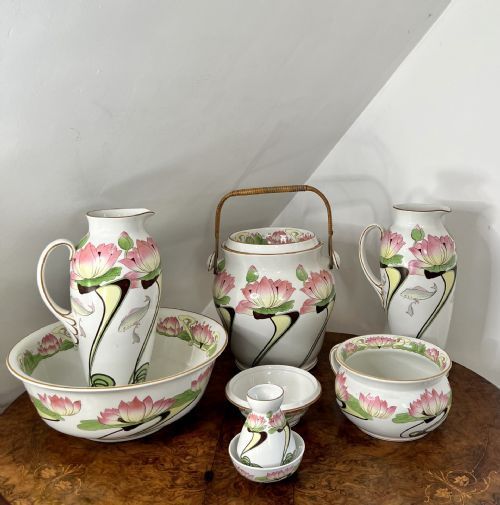
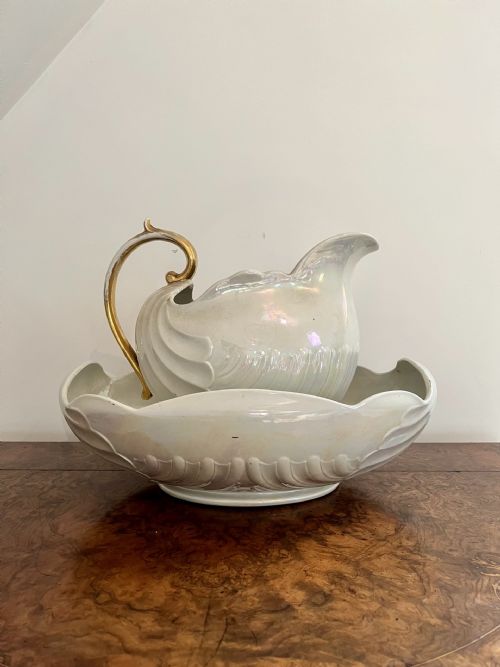
When searching for a porcelain pitcher bowl, buyers encounter substantial washing vessels designed for domestic hygiene before indoor plumbing became universal. These domestic sets predominantly manifest as complete wash sets, jug and basin sets, and washstand sets spanning the Victorian, Edwardian, and early twentieth-century periods.
The assortment includes diverse interpretations ranging from grand Victorian earthenware basins to delicate Edwardian blue and white configurations and miniature Victorian assemblages. Makers responded to households requiring practical washing vessels by producing coordinated jugs and bowls that also served decorative functions in bedrooms.
Distinctions in quality
Quality rests in the crispness of the moulding, the evenness of the glaze application, and the preservation of hand-painted decorative elements such as floral patterns or gilt highlights. Superior pieces display harmonious proportions between the pitcher and bowl along with stable, well-balanced foot rims.
The distinction between standard utilitarian washware and finer cabinet examples lies in the delicacy of the porcelain body, the complexity of decorative styles like French Rococo Revival or Chinoiserie, and the reputation of the producing pottery or maker.
Miniature Victorian jug and bowl sets offered doll-sized washing practice for children long before adults modernised their morning routines.
Masons Ironstone·Doulton Burslem·Royal Worcester·Shelley
The Porcelain Pitcher Bowl Glossary
- Ironstone
- A dense, durable type of earthenware patented in the nineteenth century to provide a resilient alternative to porcelain. It forms heavy pitchers and basins capable of withstanding rigorous daily handling.
- Gilt
- A thin layer of gold applied to ceramic surfaces for decorative enhancement. It frequently highlights the rims and handles of pitchers and bowls.
- Mazarine
- A deep rich blue colour used in ceramic decoration. It appears on nineteenth-century pieces to create striking contrast against white porcelain bodies.
- Washset
- A matched assemblage of domestic vessels comprising a large pitcher and a corresponding basin used for personal hygiene. These sets sat upon dedicated washstands in bedrooms.
Porcelain Pitcher Bowl: Frequently Asked Questions
What were porcelain pitcher bowls used for?
These vessels served domestic washing needs in bedrooms before plumbed bathrooms became standard in homes. Householders used the pitcher to pour water into the basin for morning and evening ablutions.
Beyond utilitarian washing, complete sets provided decorative colour and stylistic coherence to period bedroom furniture, often displayed prominently on wooden washstands.
How do I date a jug and bowl set?
Dating relies on observing stylistic markers, ceramic bodies, and decorative motifs characteristic of periods like the Victorian and Edwardian eras. Heavy ironstone forms with cobalt underglazes often point to the nineteenth century, while lighter bodies and specific floral treatments suggest later decades.
Maker marks stamped or printed on the underside provide the most precise chronological indicator when visible. Comparing the decorative style, such as Chinoiserie or Art Nouveau, further narrows the timeframe of manufacture.
Are these sets still practical to use today?
Many collectors continue to use robust ironstone and ceramic wash sets for functional display or floral arrangement holding in contemporary homes. Their durable glazed surfaces handle water safely, though antique pieces warrant careful manual washing.
Given their age and historical value, some buyers prefer to exhibit them as decorative sculptural objects rather than subjecting them to daily utilitarian service.
How do I care for antique porcelain washware?
Cleaning requires gentle washing with warm water and mild soap, avoiding harsh abrasive pads that can scratch the old glaze or wear away gilt decoration. Hand drying with a soft cloth prevents water spots from forming on delicate surfaces.
Placement should avoid areas subject to extreme temperature fluctuations or heavy impact to protect the ceramic body and handle joints from accidental damage.