



Porcelain Floor Vase
A porcelain floor vase commands the room with scale and presence, bringing towering height and intricate hand-painted detail to any hallway or grand interior.
Porcelain Floor Vase
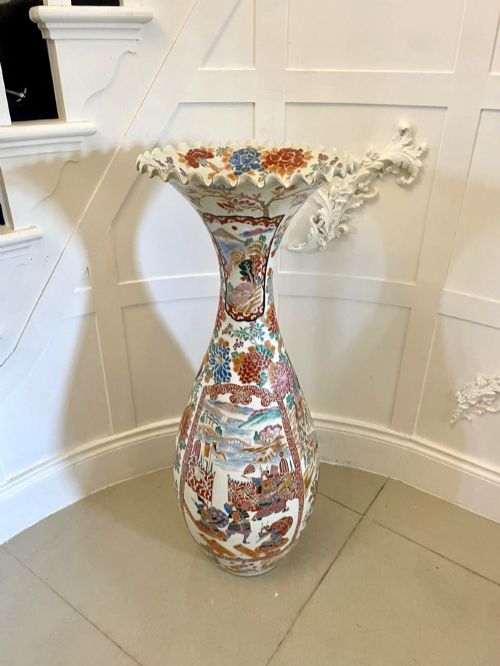
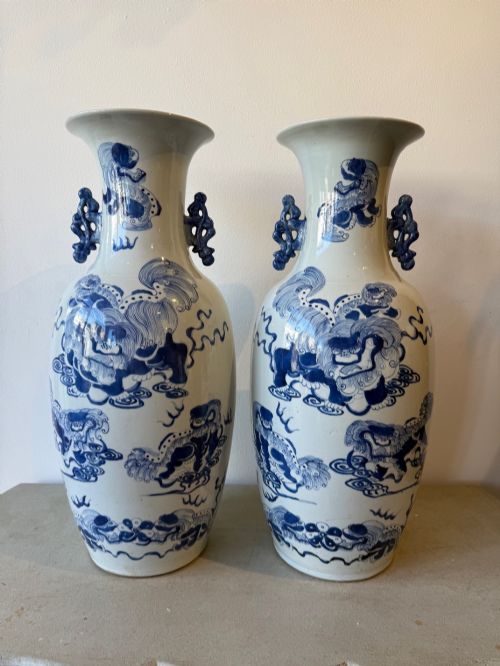
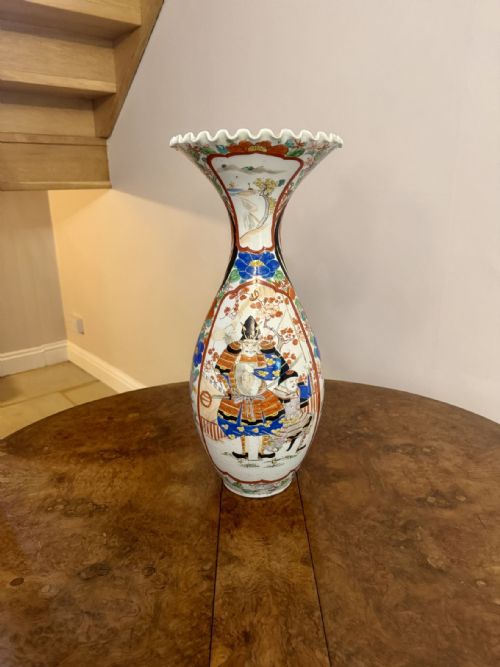
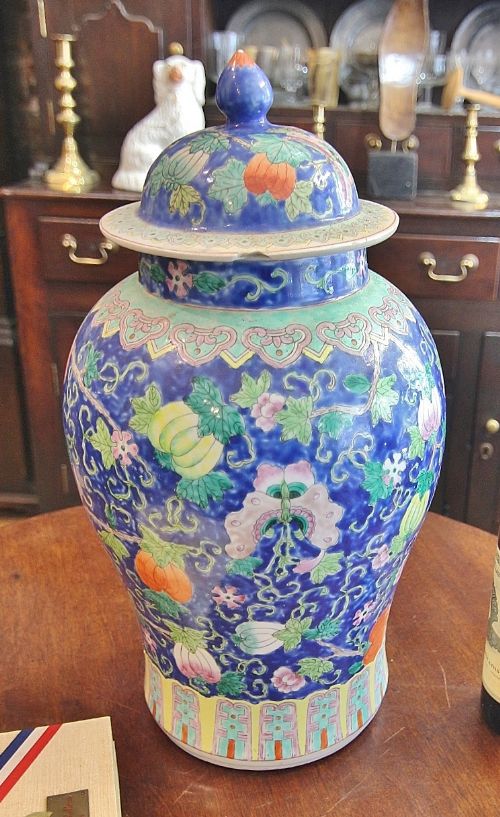
When searching for a porcelain floor vase, collectors encounter substantial vessels designed to stand directly on the ground rather than rest on furniture. These pieces span the nineteenth and twentieth centuries, originating primarily from Japanese and Chinese kilns during periods such as the Meiji era and Qing dynasty.
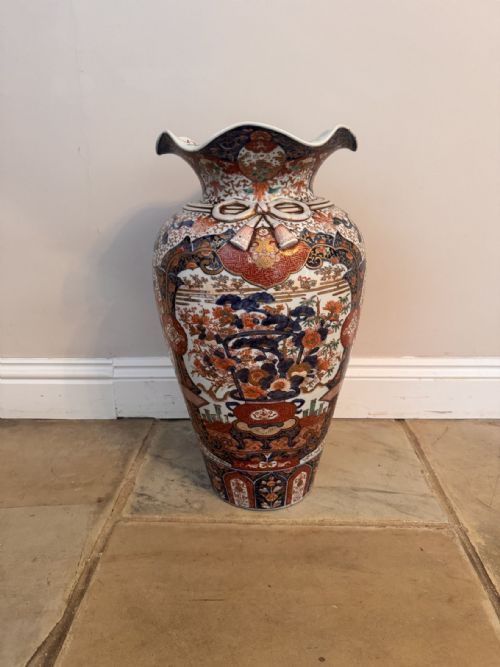
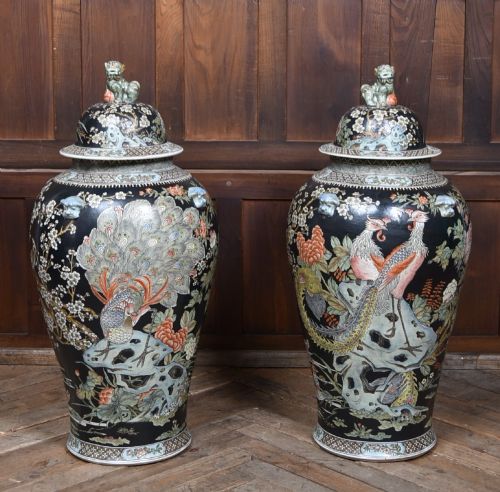
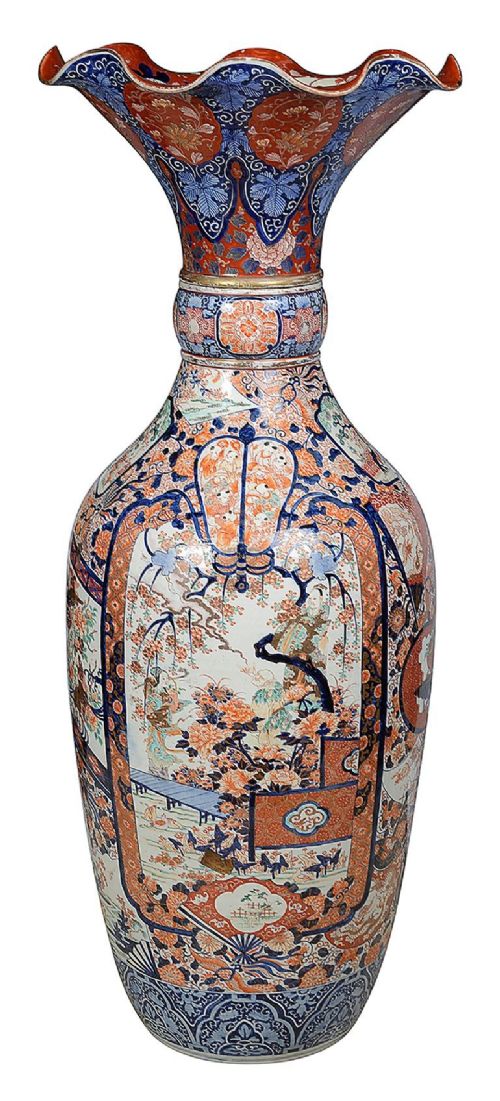
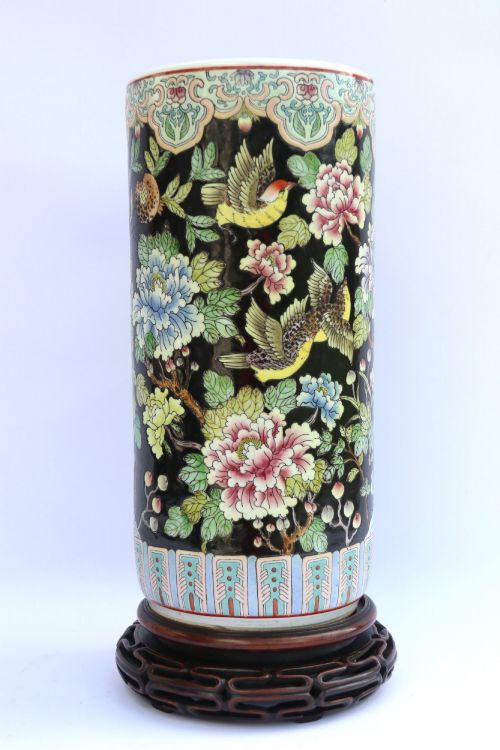
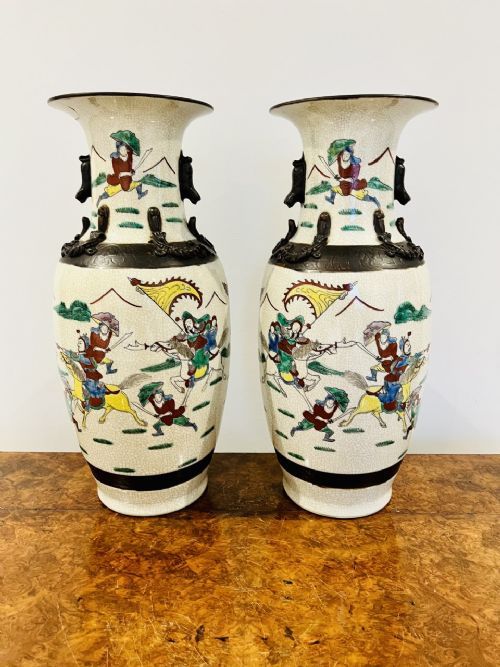
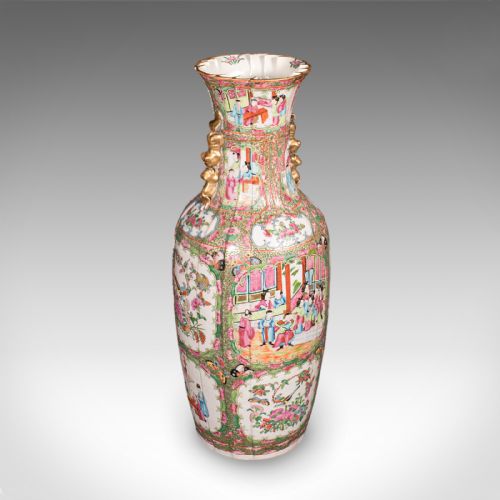
The selections on this page concentrate heavily on large forms, including Japanese Imari standing vases, Chinese palace jars, and monumental Cantonese baluster vessels. Many retain their original height, sometimes accompanied by matching hardwood stands or porcelain bases.
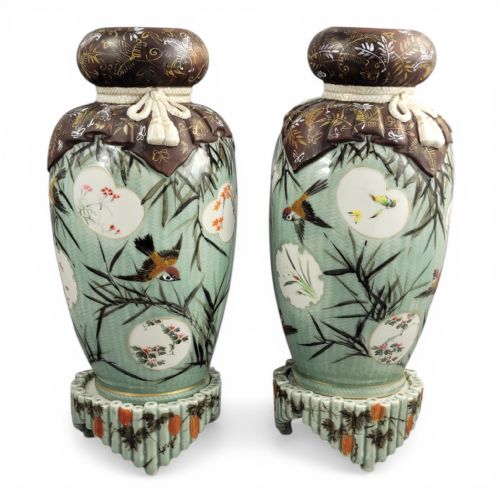
Buyers find both single exhibition pieces and balanced pairs intended for symmetrical placement in grand spaces. Forms vary from bulbous bodies to flared rims and lidded urns, decorated with extensive pictorial scenes.
How they were made
Potters shaped these large bodies from ceramic and porcelain clays, often requiring multiple firings in large kilns to support such monumental heights. The structural weight necessitated thick walls and stable foot rings to bear the load of the vessel.
Surface decoration combined underglaze blue with overglaze enamel colours, frequently heightened with gold leaf or gilt detailing. Artisans applied hand-painted motifs ranging from floral panels to intricate figures, occasionally incorporating lacquer panels or geometric inset designs directly onto the ceramic body.
Some towering vessels stand taller than the average collector, demanding careful navigation through doorways.
What varies in quality
The standard of a floor vase rests upon the crispness of the hand-painted brushwork and the complexity of the enamel palette. Superior examples display precise control over detailed figures and vibrant floral arrangements without blurring or pooling in the glaze.
Proportion and scale dictate the visual success of monumental vessels, where balanced weight distribution ensures the piece stands securely. The inclusion of original accessories, such as custom hardwood stands or matching covers, elevates the integrity of the piece.
Kato Sanhei
The Porcelain Floor Vase Glossary
- Imari
- A traditional Japanese style of porcelain decorated in underglaze blue, iron red, and gold. This palette creates rich contrast across large decorative surfaces.
- Famille Rose
- A major palette of Chinese ceramic glaze dominated by opaque pink or rose enamels. Introduced during the Qing dynasty, it allowed for soft pictorial shading.
- Baluster
- A tall vase form with a rounded body that tapers toward the base and flares slightly at the neck. This silhouette provides stability for large floor-standing vessels.
- Satsuma
- A type of Japanese earthenware featuring a crackled ivory glaze decorated with polychrome enamels and gilt. These pieces often depict dense figural scenes from the Meiji period.
- Celadon
- A term for ceramics denoting a pale green glaze resembling jade. It results from iron oxide reacting in a reduction kiln.
Porcelain Floor Vase: Frequently Asked Questions
Where should I place a floor vase?
These tall vessels suit spacious entrance halls, wide corridors, or corners of reception rooms where their height can be appreciated without obstruction.
Ensure they rest on stable, level flooring away from heavy foot traffic to protect their substantial ceramic bodies.
How do I clean a porcelain floor vase?
Dust the surface gently with a soft, dry microfibre cloth to remove everyday particles without disturbing delicate gilt or enamel work.
Avoid using water, chemical cleaners, or abrasive cloths, which can damage historic glazes and gold leaf applications.
Can these vases hold water?
Large antique floor vessels are primarily designed as decorative ornaments rather than functional containers for fresh flowers and water.
Introducing moisture can seep through historic unglazed interior bases or affect old repairs, so dry display is strongly recommended.
How do I identify Meiji period pieces?
Meiji period items reflect the artistic output of Japan between eighteen sixty-eight and nineteen twelve, often showcasing dense Imari patterns or fine Satsuma earthenware.
Look for intricate hand-painted detail and specific stylistic markers typical of Japanese export production from this era.
Are wooden stands original?
Certain large vases retain custom-carved hardwood stands designed specifically to elevate and support the base of the heavy ceramic body.
These matching elements complement the proportions of the vessel and provide an extra layer of stability on solid floors.