



Porcelain Figure with Dog
A porcelain figure with dog brings the distinct charm of past animal and human companions into your home through enduring ceramic forms.
Porcelain Figure with Dog
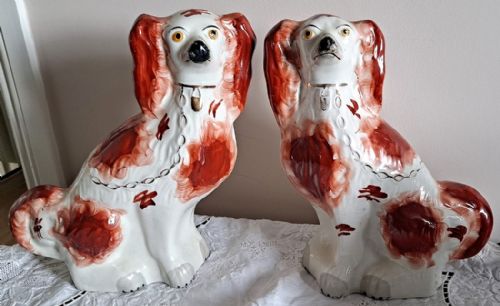
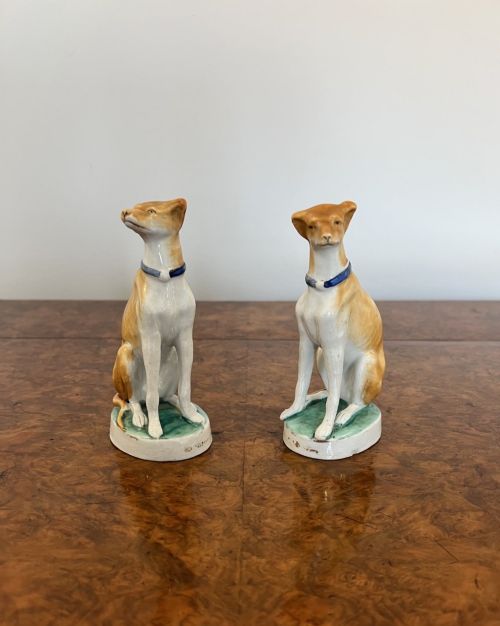
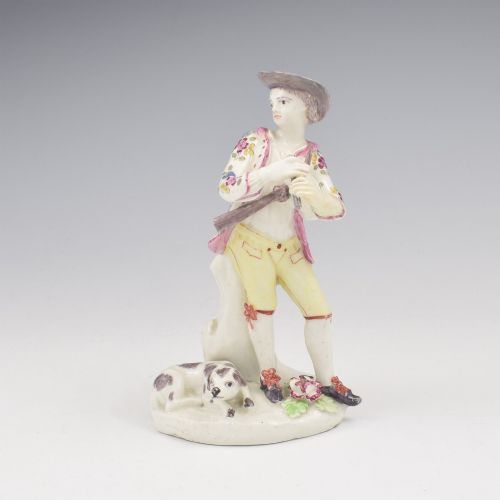
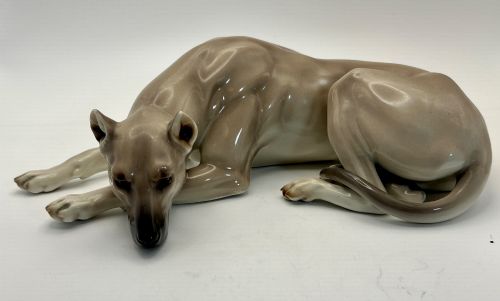
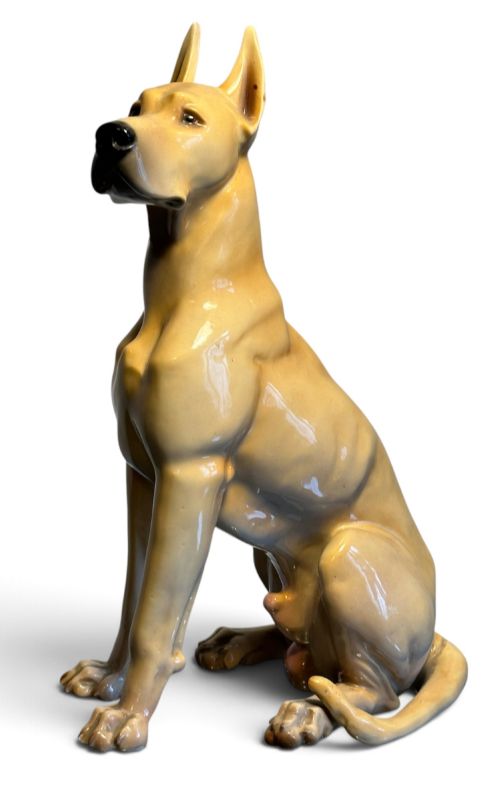
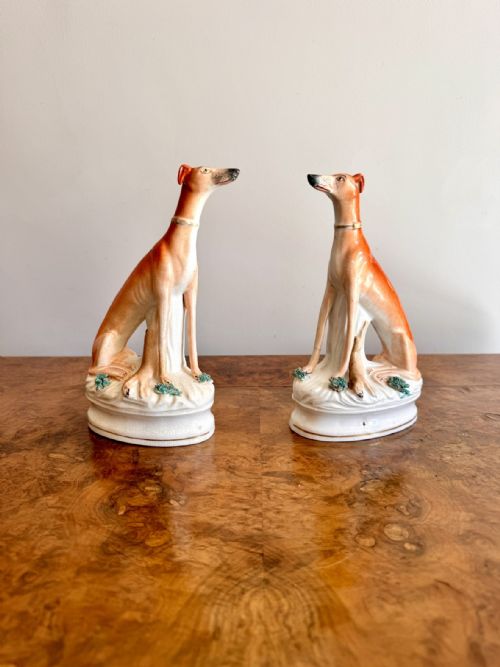
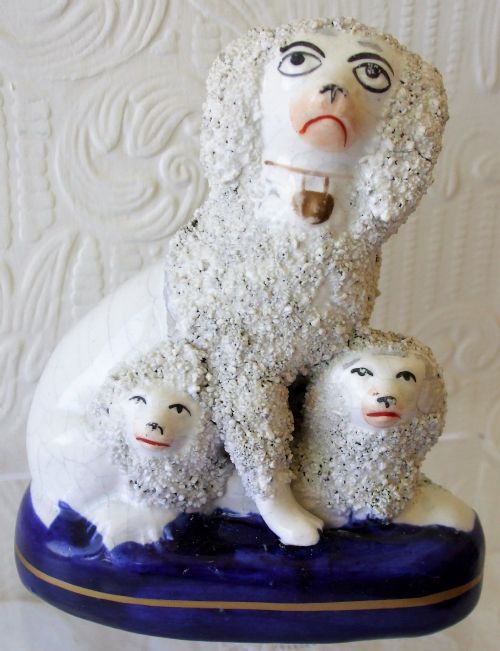
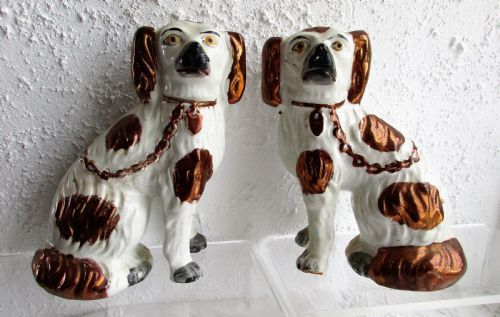
A porcelain figure with dog encompasses sculptural representations ranging from Georgian Derby figures and Meissen groups to Victorian Staffordshire poodles, musicians, and quill holders. You will most commonly encounter Staffordshire pairs and Royal Dux dog models on this page, reflecting popular tastes across the eighteenth, nineteenth, and early twentieth centuries.
The objects take various forms, including decorative figurines, sculptural groups of children or shepherds alongside animals, and functional quill holders. These pieces draw on styles such as Rococo, Neoclassical, Art Nouveau, and Victorian vernacular traditions, capturing domestic and pastoral scenes.
Materials and construction methods
Makers utilised porcelain, soft-paste porcelain, earthenware, and ceramic bodies to shape these figures, often finishing the surfaces with hand-applied paint, enamel, and glaze. Certain pieces incorporate details in gold leaf or utilise Parian ware to achieve specific sculptural textures.
Techniques varied from the delicate modelling of eighteenth-century factories like Derby and Meissen to the robust earthenware casting found in nineteenth-century Staffordshire potteries and Royal Dux manufactories.
Porcelain Figure with Dog Retail Price Guide 2026
Typical asking prices for porcelain figure with dog among the pieces listed under this phrase on Sellingantiques today, from the lower quarter to the upper quarter. They describe what is for sale here now, not the wider market.
Materials represented include Parian ware, enamel, gold leaf, and traditional glazed ceramic bodies.
Distinguishing quality in figures
Quality rests upon the crispness of the modelling, the precision of the hand-painted enamel work, and the fidelity of the sculptural detail in both the human figures and their canine companions. Earlier pieces from factories like Derby or Bristol demonstrate refined porcelain bodies and subtle facial expressions.
Later productions, including Staffordshire poodles and Royal Dux groups, depend on the depth of the glaze, the vitality of the posture, and the preservation of any applied elements such as baskets or game.
Derby Porcelain·Meissen·Royal Capodimonte Factory·Royal Dux·William Duesbury Co
The Porcelain Figure with Dog Glossary
- Soft-paste porcelain
- An artificial ceramic composition fired at lower temperatures than true porcelain, often seen in eighteenth-century English factory output. It has a warm, slightly softer appearance under the glaze.
- Quill holder
- A decorative desk accessory featuring a hollow section designed to hold writing feathers. These pieces frequently integrate animal figures into the functional design.
- Parian ware
- A fine-grained unglazed biscuit porcelain resembling white marble, developed in the nineteenth century. It allows for sharp sculptural relief without surface glaze.
- Patch mark
- A small unglazed blemish on the underside of eighteenth-century porcelain, caused by the kiln furniture supports used during firing. Its presence helps date early factory pieces.
- Enamel
- Coloured vitreous glass fused to the ceramic surface through firing. It provides the bright decorative hues on figures and costumes.
Porcelain Figure with Dog: Frequently Asked Questions
How do I clean my figure?
Dust the surface gently with a soft, dry brush to remove accumulated particles without disturbing delicate painted details or gold leaf.
Avoid immersing antique ceramic pieces in water, particularly earthenware and soft-paste porcelain, as moisture can penetrate old glazes or damage historic bodies.
Were these figures meant for display?
Most examples served as decorative chimney ornaments or cabinet pieces designed to display the owner's taste and refinement in formal parlours.
Some specialised forms, such as quill holders, combined decorative figural sculpture with practical desk functions for daily use.
How do I tell early porcelain from later earthenware?
Examine the material body closely under a good light to check for translucency and weight. Porcelain and soft-paste pieces typically feel denser and show light through thin edges, whereas Staffordshire earthenware is opaque and heavier.
Look at the underside of the base for glaze pooling, firing marks, or crazing patterns characteristic of nineteenth-century pottery.
What does a pair usually signify?
Pairs of figures, such as Staffordshire poodles or musicians with dogs, were modelled to balance each other visually when placed on a mantelpiece or sideboard.
They often mirrored contemporary theatrical characters, pastoral ideals, or domestic pet ownership trends popular during the Victorian period.