


Polychrome Wooden Relief
These polychrome wooden relief carvings bring together rich pigment and sculptural depth, offering a tactile piece of history for any interior.
Polychrome Wooden Relief
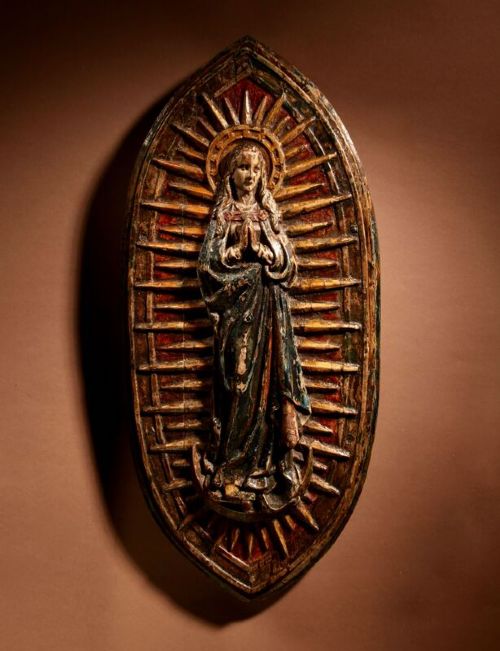
A polychrome wooden relief combines carved timber with applied pigments and often gilding, creating a dimensional surface that brings figures and ornament forward from a flat background. These works range from small domestic wall plaques to monumental fragments taken from larger religious altarpieces and architectural schemes.
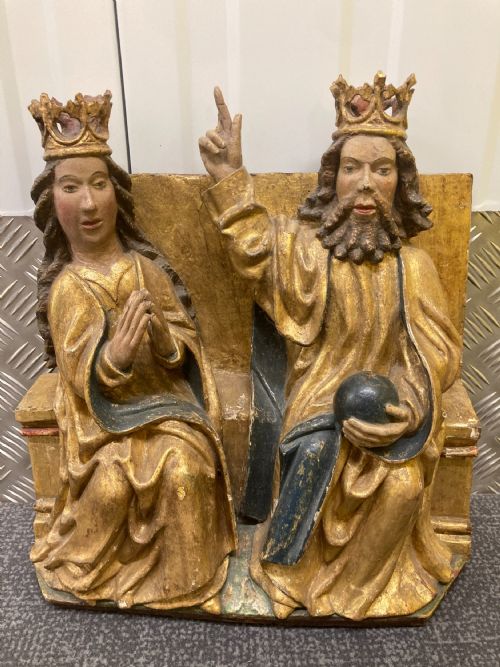
The versions most commonly met on this page span several centuries, featuring British, European, and Asian workmanship. Buyers encounter everything from medieval religious panels and Baroque figural groups to 19th-century folk art and decorative floral carvings.
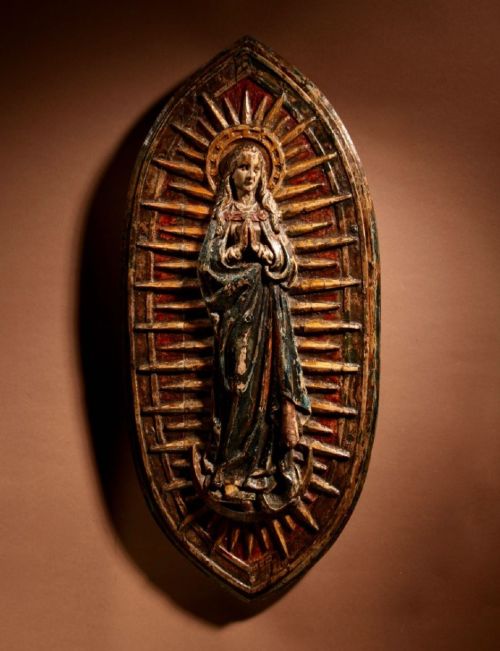
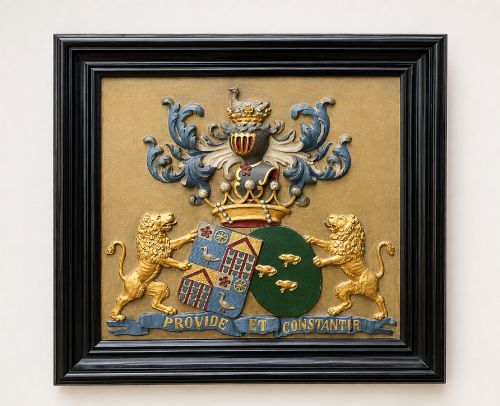
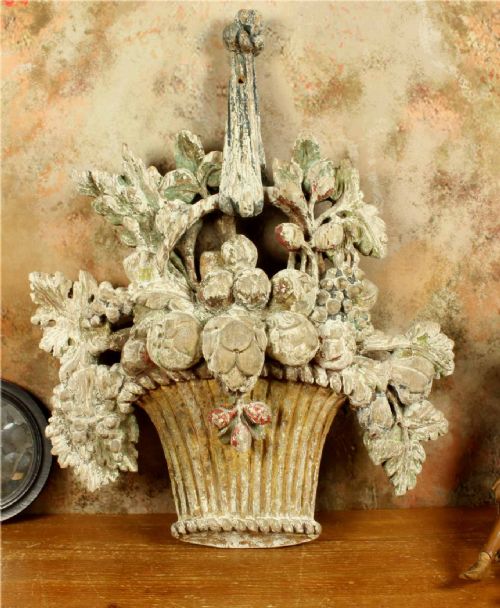
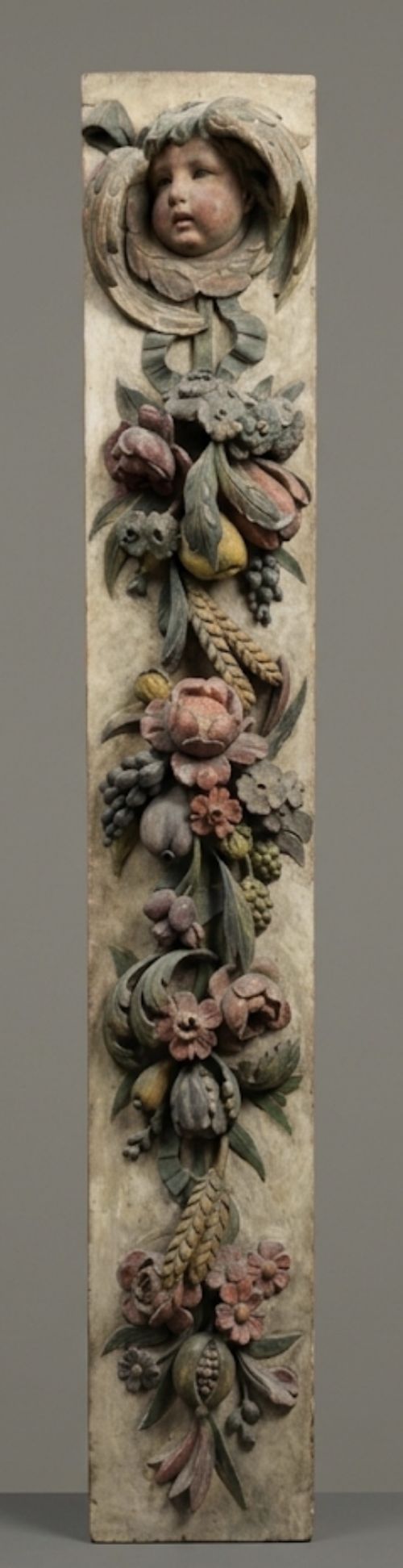
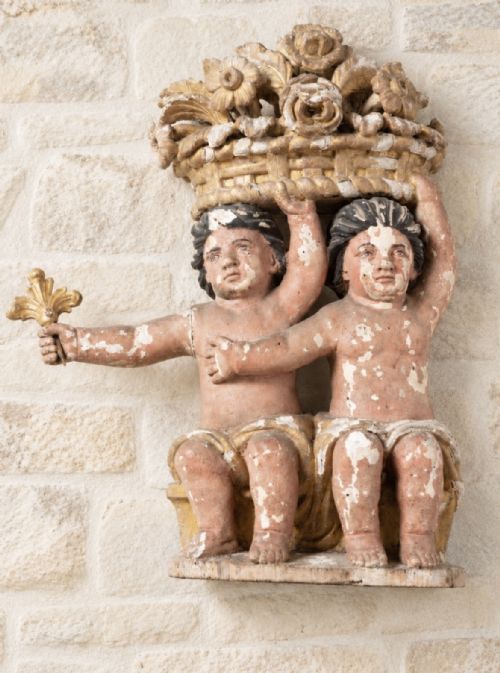
Religious subjects dominate the earlier centuries, depicting figures such as the Virgin Mary, Jesus Christ, and celestial cherubs. Later pieces extend into secular marriage plaques, heraldic displays, ritual figures, and decorative floral baskets.
Judging quality in carved reliefs
Quality rests primarily in the confidence of the hand carving and the preservation of the original surface. Master carvers achieved anatomical conviction and fluid drapery folds, whereas lesser pieces rely on stiff proportions and blunt detailing.
The survival of original polychrome paint and gesso substantially elevates a piece. Retained pigment with natural wear demonstrates authenticity, while excessive modern overpainting obscures the historical integrity of the surface.
Listings feature wood reliefs spanning from the sixteenth century through to the mid-twentieth century, utilising carved timber, gesso, and gold leaf.
The Polychrome Wooden Relief Glossary
- Polychrome
- Decorated in multiple colours. This term describes wood or stone objects finished with various painted pigments.
- Gesso
- A plaster mixture used as a base coat on wood. It provides a smooth surface for painting and gilding.
- Giltwood
- Wood that has been coated with gold leaf. This technique adds a reflective finish to carved details.
- Relief
- Sculpture in which figures project from a background. High relief elements stand out boldly, while low relief variations remain shallow.
- Altarpiece
- A structural piece set behind an altar. Central panels from these structures often survive as standalone wall reliefs.
Polychrome Wooden Relief: Frequently Asked Questions
How were polychrome wooden reliefs displayed?
Many of these pieces originally formed part of larger architectural structures, church altarpieces, or domestic wall schemes. Over time, surviving panels were detached and mounted on walls as independent works of art.
Today, buyers mount them on interior walls using secure fixings suited to the weight of the solid timber and gesso construction.
How do I distinguish 16th-century panels from 19th-century pieces?
Earlier pieces from the 16th century frequently depict religious subjects with Gothic or Renaissance styling, utilising heavy oak and dense gesso layers. Nineteenth-century examples often display greater variety, including folk art, secular plaques, and Asian ritual figures.
Examining the tool marks, timber shrinkage, and the ageing of the pigment helps confirm the period of manufacture.
How do I care for antique painted wood?
Display these reliefs away from direct sunlight and strong heat sources to prevent the wood from warping and the paint from flaking. Maintaining a stable indoor environment protects both the timber substrate and the delicate gesso layers.
Dust the surface gently with a soft, dry brush, avoiding any liquids or chemical cleaning products that could damage the pigment.