



Medieval Oak Carving
When you search for medieval oak carving, you encounter figures of saints, architectural fragments, and ecclesiastical furniture shaped centuries ago.
Medieval Oak Carving
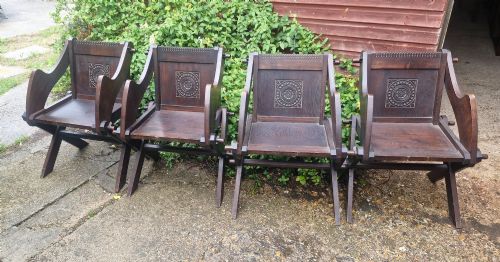
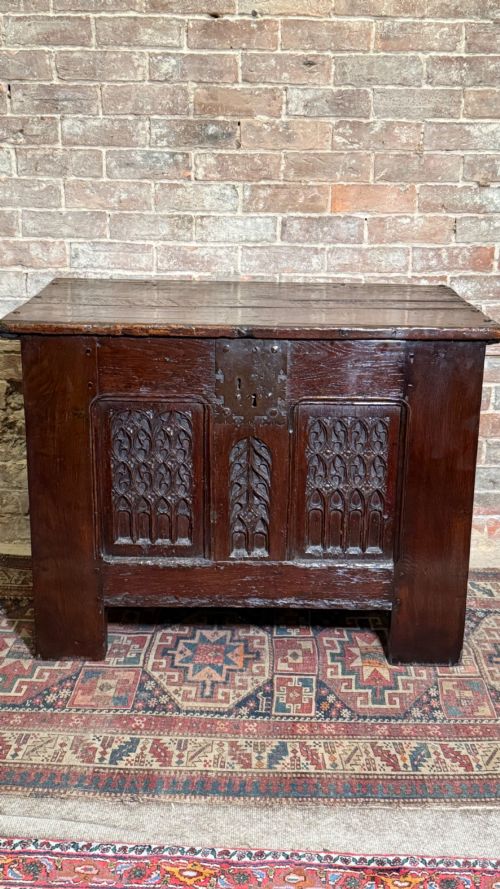
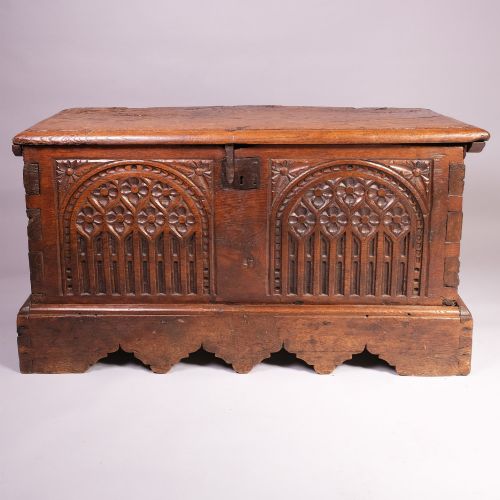
A medieval oak carving brings centuries-old craftsmanship into view, spanning devotional figures, architectural salvage, and heavy storage chests. Pieces frequently emerge from the fifteenth and sixteenth centuries, alongside later nineteenth-century revivals inspired by the same gothic vocabulary.
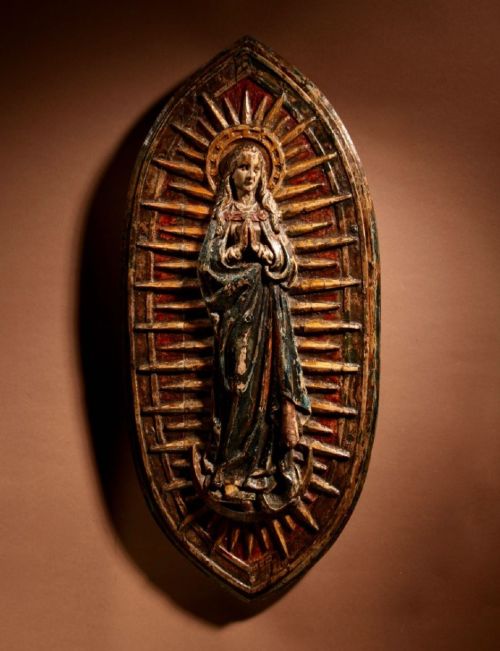
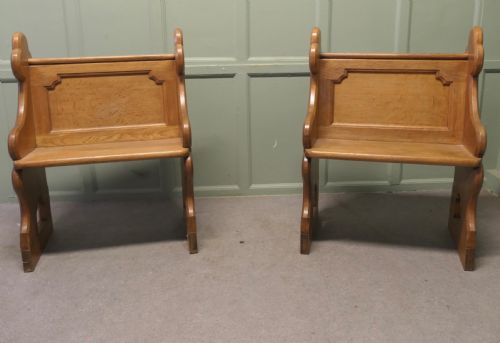
The selection ranges from small wall sculptures of the Madonna and child to substantial church furniture like armchairs and coffers. Makers across England, France, Germany, and Flanders left behind distinct regional interpretations of religious subjects and structural woodwork.
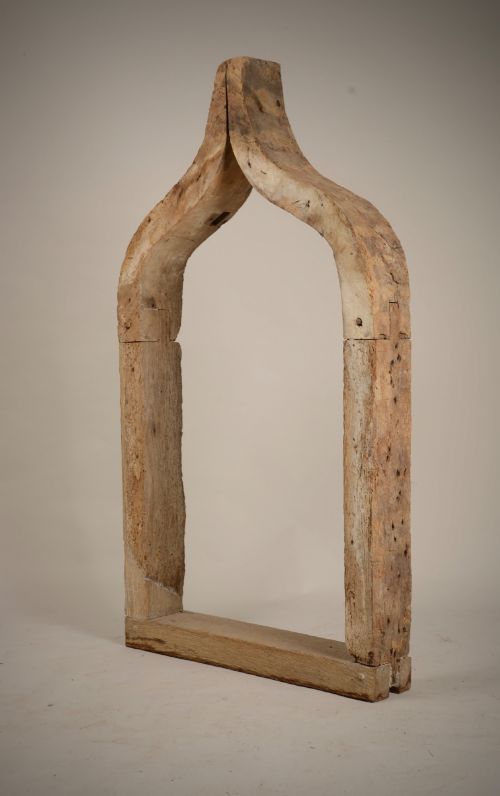
Figures of saints, altarpiece panels, and tracery fragments dominate the forms. Buyers encounter both original pre-reformation liturgical items and later nineteenth-century reinterpretations intended for libraries and halls.
Materials and Technique
Carpenters and carvers relied principally on slow-grown timber, shaping heavy boards with axes, adzes, and gouges. Elm occasionally accompanies the primary wood in large coffers, while iron fittings provide structural reinforcement.
Surfaces often retain traces of polychrome paint and gold leaf beneath later patination. The joinery employs pegged tenons and boarded construction suited to the dense grain of mature timber.
Several centuries of prayer wear the oak smooth on the hands of these tiny saints.
Assessing Quality
Extensive replacement of timber or later re-carving alters the historical weight of an object. The survival of early polychrome decoration alongside untouched patination elevates a carving above stripped surfaces.
The Medieval Oak Carving Glossary
- Polychrome paint
- Decoration applied in multiple colours to wood sculpture, frequently seen on religious figures. Surviving pigment alters the visual impact of an ecclesiastical carving.
- Tracery
- Openwork pattern in stone or wood, commonly found in gothic windows and panels. It defines the geometric rhythm of medieval architectural ornament.
- Coffer
- A heavy wooden chest used for storage, often boarded and iron-bound. These pieces frequently display front panels carved with gothic motifs.
- Corbel
- A structural piece of stone or timber projecting from a wall to support a weight. Medieval examples often take the form of carved human heads or grotesque figures.
- Pieta
- A subject in Christian art depicting the Virgin Mary supporting the dead body of Christ. Sculptural groups of this theme appear in fifteenth-century German and Flemish work.
Medieval Oak Carving: Frequently Asked Questions
How do I date a carving?
Dating relies on tool marks, joint construction, and stylistic conventions typical of fifteenth- and sixteenth-century workshops. Regional variations in costume and facial type also help place an object.
Later nineteenth-century gothic revival pieces mimic these older forms but generally reveal machine-sawn timber and softer patination upon closer inspection.
Were these pieces painted originally?
Many medieval wood sculptures received layers of gesso and polychrome paint, often with gilding applied to highlights and garments. Over centuries, much of this pigment was stripped or worn away.
Remaining flecks of colour provide vital evidence of the original appearance and add significant value for collectors.
Where were these carvings displayed?
Most surviving figures originated inside churches, mounted on altarpieces, rood screens, or ecclesiastical furniture like throne seats. Architectural fragments formed parts of larger stone and timber buildings.
Later revival armchairs and wall panels were made for domestic interiors, libraries, and halls during the Victorian era.
How should I care for old oak?
Dense timber requires stable humidity levels to prevent splitting and movement in the historic wood. Avoid placing pieces near direct heat sources or in areas of strong sunlight.
An occasional application of microcrystalline wax helps protect the surface without building up greasy residue on dry timber.