
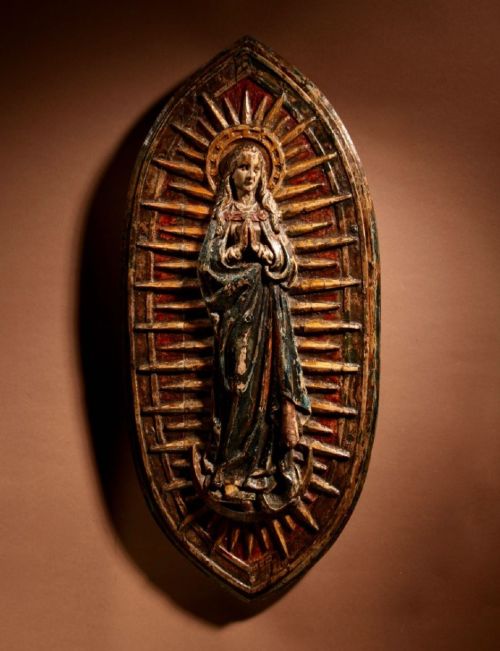
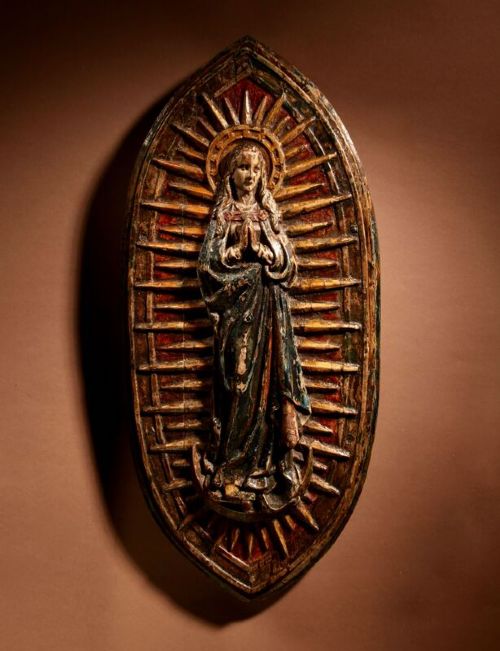
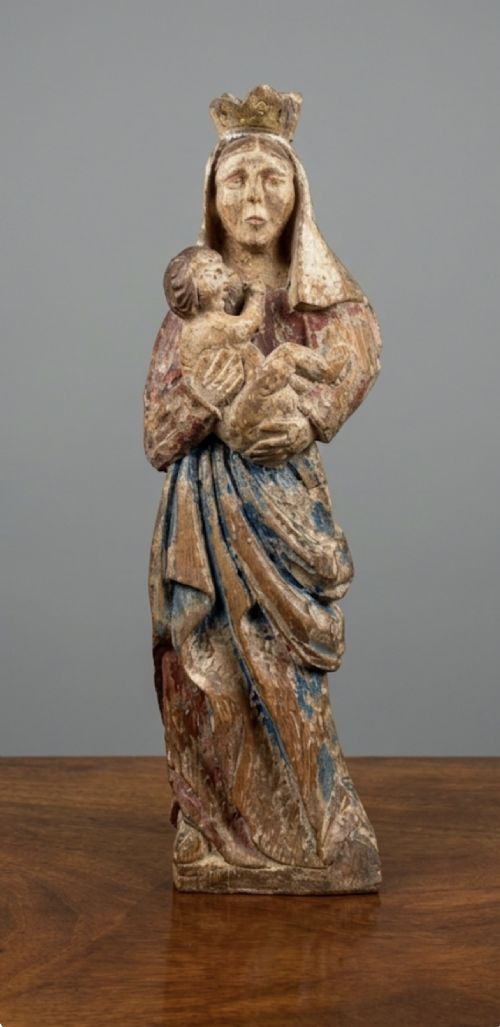


Polychrome Oak Sculpture
Polychrome oak sculpture brings historic figurative carving and architectural ornament into a room, carrying centuries of pigment and timber working.
Polychrome Oak Sculpture
When you search for polychrome oak sculpture, you examine historic carved figures, reliefs, and architectural elements fashioned from solid timber and finished with paint, gesso, or gold leaf. These pieces span from the fifteenth century through to the nineteenth century, encompassing Gothic, Renaissance, Jacobean, and Queen Anne styles.
Religious figures, wall sculptures, altarpiece panels, and architectural salvage dominate the forms you meet on this page. Subjects range from the praying Virgin and saints to armorial crests and newel post finials.
Pieces from the sixteenth century appear frequently alongside later eighteenth and nineteenth-century examples. Each object records the intersection of carpentry and early painting traditions on European timber.
Materials and methods
Carvers shaped these works primarily from solid oak, utilising its dense grain for both free-standing sculptures and deep architectural reliefs. Woodcarvers employed chisels and gouges to build up three-dimensional forms from single blocks or joined panels.
Surfaces were prepared with layers of gesso before painters applied polychrome pigments and gold leaf to bring depth to drapery and faces. The resulting finish combined traditional woodwork with decorative paint layers designed for ecclesiastical or domestic interiors.
A sixteenth-century Virgin stands on half a moon with a snake, proving historic carvers included surprising celestial detail.
Assessing quality
Quality rests in the crispness of the original carving and the proportion of surviving contemporary polychrome paint or gilding. Finer pieces retain their early pigment layers intact, revealing skilled brushwork on faces and garments.
The Polychrome Oak Sculpture Glossary
- Polychrome paint
- Pigments applied to the surface of wood or gesso to create coloured decoration. This finish defines the multi-coloured appearance of historic carvings.
- Gesso
- A plaster mixture applied to wood as a smooth base for painting and gilding. It provides a stable ground for adhering gold leaf and fine pigments.
- Gilded wood
- Timber decorated with thin sheets of gold leaf over a prepared ground. This technique highlights specific details like halos, crowns, or heraldic elements.
- Newel post finial
- A decorative carved terminal ornament positioned at the top of a staircase post. These architectural elements often take sculptural forms such as lions.
- Altarpiece panel
- A carved and painted wooden section designed for display behind an altar. These panels frequently depict religious figures and narrative scenes.
Polychrome Oak Sculpture: Frequently Asked Questions
What periods do these sculptures cover?
The selection spans several centuries, starting from the fifteenth century and extending through the sixteenth, seventeenth, eighteenth, and nineteenth centuries. Each era brings distinct stylistic traits, from Gothic and Renaissance religious works to later armorial crests.
Studying the specific carving style and the handling of the polychrome paint helps place an object within its correct historical period.
How were these pieces originally used?
Many of these carvings served religious functions within churches, forming parts of altarpieces, shrines, or wall sculptures depicting saints and biblical figures. Others fulfilled secular roles in grand houses as architectural salvage, armorial crests, or staircase finials.
Their dual nature as woodwork and painted art made them central to both ecclesiastical and domestic decorative schemes.
How do I care for polychrome oak sculpture?
Keep these historic objects in stable environment conditions away from direct sunlight, excessive heat sources, and dampness. Sudden humidity changes can cause the oak timber to move and the gesso or paint layers to flake.
Dust them gently with a soft, dry brush and avoid using any liquid cleaners, polishes, or modern solvents on the painted surfaces.
How do I distinguish a religious figure from a secular carving?
Religious figures typically depict identifiable saints, biblical scenes, or devotional subjects like the Virgin and child, often accompanied by traditional iconography such as serpents or halos. Secular carvings usually feature armorial crests, heraldry, or decorative motifs like lions intended for domestic or civic architecture.
Examining the subject matter and original context clarifies the intended purpose of the piece.