



Polychrome Porcelain Figure Pair
When you seek a polychrome porcelain figure pair, you acquire matched sculptural groups brought to life through painted enamels and glazes.
Polychrome Porcelain Figure Pair
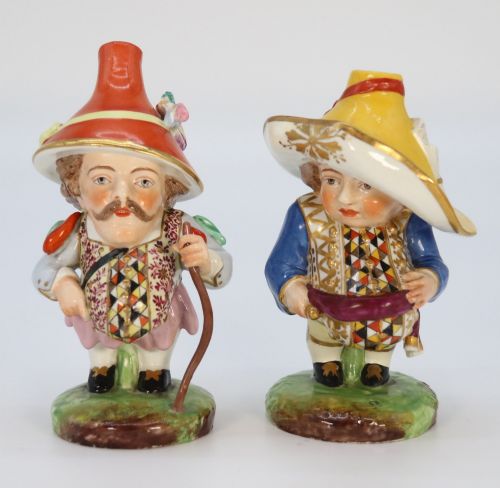
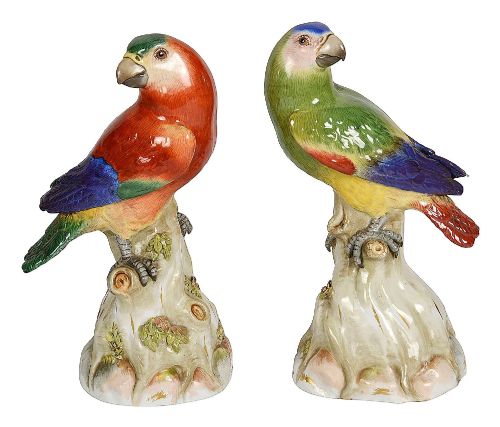
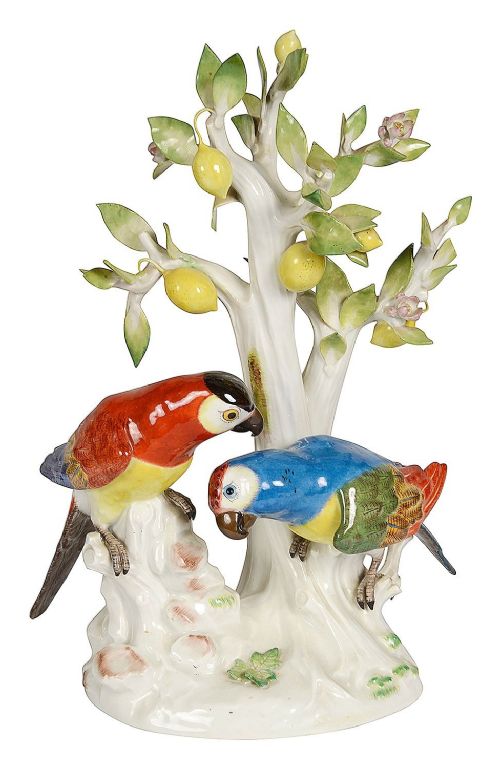
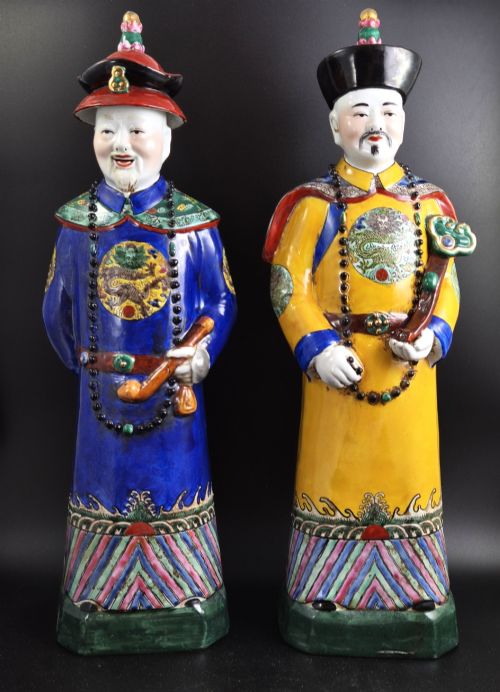
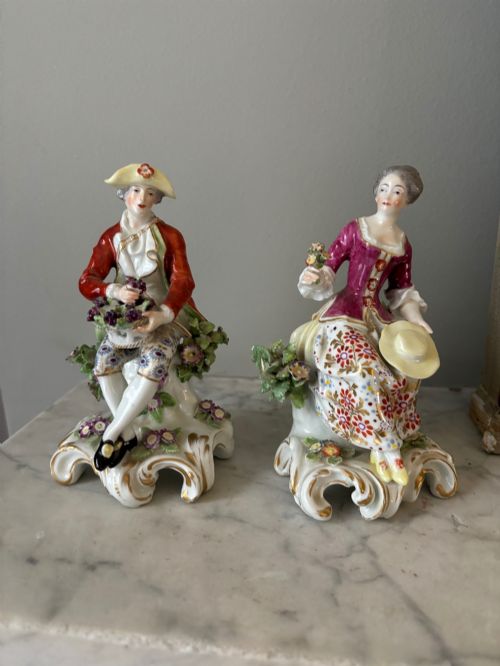
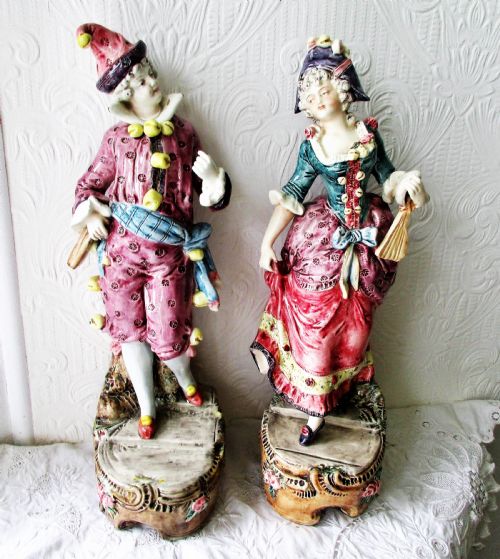
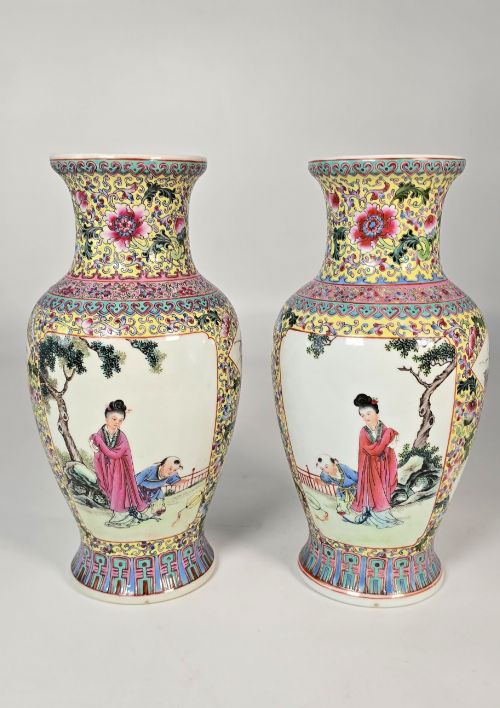
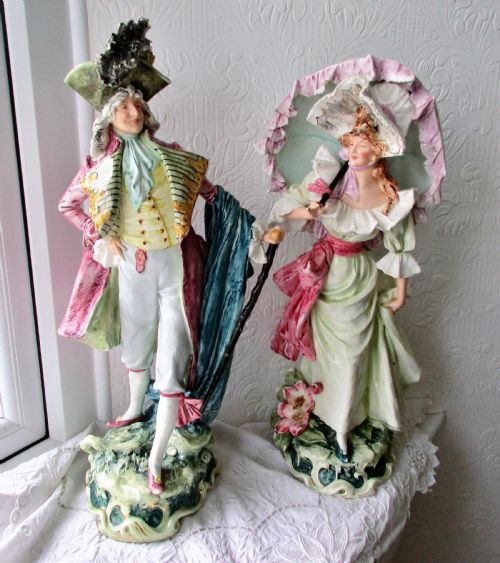
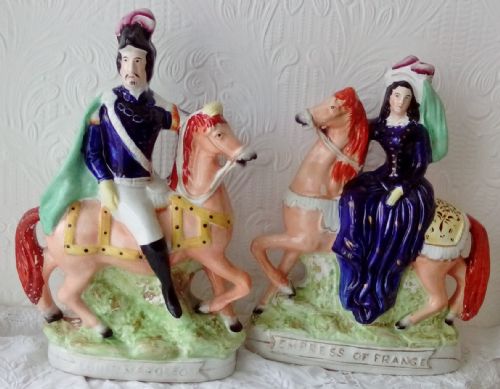
A polychrome porcelain figure pair consists of two matching sculptural objects created to sit together as a balanced display, frequently depicting human figures, animals, or allegorical scenes. Buyers searching this phrase encounter examples originating from 18th-century English and continental factories as well as 19th-century revivals and adaptations.
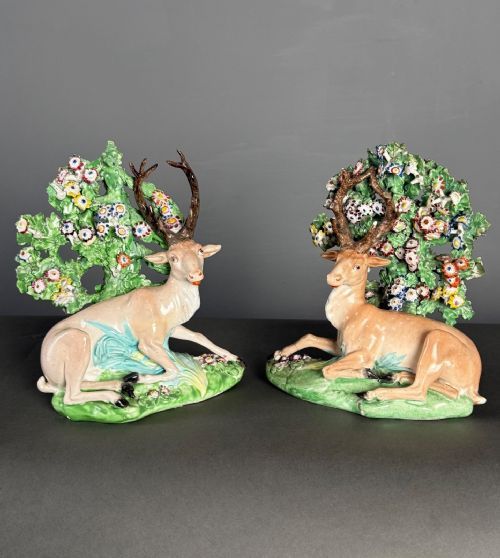
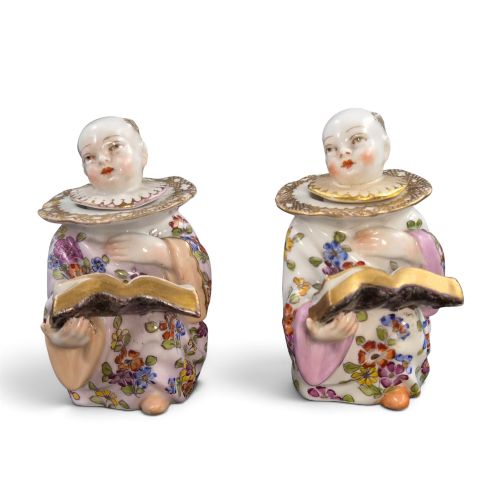
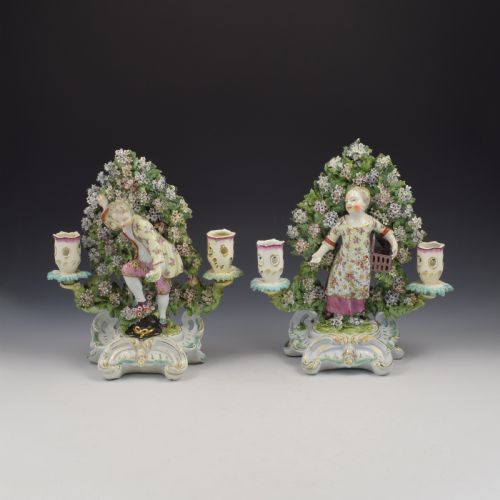
The selections span diverse functional forms, including freestanding figurines, figural candlesticks, bouquetières, inkwells, and vases. Many pieces draw upon pastoral themes, theatrical characters, or classical mythology, often arranged as seated or standing counterparts representing opposing elements, seasons, or romantic companions.
English and European kilns dominate the selection, featuring works from historic centres such as Derby, Bow, Chelsea, and Meissen, alongside later Parisian and German workshops. Alongside these European traditions, Chinese and Japanese pieces in hard-paste porcelain, earthenware, and faience appear across the listings.
Materials and methods of construction
The foundation of these objects rests on porcelain, hard-paste porcelain, or earthenware, shaped through moulding or hand-modelling. Elaborate examples incorporate applied decorative elements such as floral bocage, which required meticulous individual placement before firing.
Polychrome Porcelain Figure Pair Retail Price Guide 2026
Typical asking prices for polychrome porcelain figure pair among the pieces listed under this phrase on Sellingantiques today, from the lower quarter to the upper quarter. They describe what is for sale here now, not the wider market.
Listings feature hard-paste porcelain, earthenware, and biscuit porcelain spanning the eighteenth, nineteenth, and twentieth centuries.
Factors determining quality
Quality in these figures depends upon the crispness of the modelling and the precision of the hand-painted enamel work. Superior examples exhibit fine facial expressions, delicate brushwork on garments, and securely applied secondary details like leaves and branches without excessive clumping.
The reputation of the producing factory and the retention of original factory marks heavily influence the standing of a piece. Earlier 18th-century productions from primary European manufactories generally command greater attention than later 19th-century derivative interpretations, though exceptional craftsmanship appears across both periods.
Edmé Samson·Meissen·Letu Mauger·La Coutille Factory·Volkstedt·Sitzendorf·Bloor Derby
The Polychrome Porcelain Figure Pair Glossary
- Polychrome
- Decorated in multiple colours using enamels or glazes. This technique allows for detailed rendering of costumes and natural elements.
- Bocage
- An applied background of leaves and branches made of porcelain. It frames figures in a dense, decorative thicket typical of 18th-century English pieces.
- Biscuit
- Unglazed fired porcelain with a matte, marble-like texture. It gained popularity for neoclassical figures and intimate portrait groups.
- Hard-paste porcelain
- A dense, vitrified ceramic composed of kaolin and petuntse fired at high temperatures. It resists scratching and produces a bright white body.
- Bouquetiere
- A decorative vessel or figural base designed to hold fresh flower arrangements. These pieces often feature perforated tops for stems.
Polychrome Porcelain Figure Pair: Frequently Asked Questions
What is a porcelain figure pair?
A porcelain figure pair consists of two symmetrical or complementary sculptural objects designed to be displayed together. They often represent balanced concepts such as the seasons, elements, or matched companions.
Historically, makers produced these pairs to ornament mantelpieces, sideboards, and formal dining tables in grand interiors.
How were these figures used?
These pieces served primarily as decorative ornaments within domestic interiors, signalling the taste and refinement of the owner. Some variations incorporated functional elements like candle sockets or inkwells.
Pairs were positioned symmetrically on either side of a clock or centrepiece to create visual balance on furniture surfaces.
How do I distinguish 18th-century pieces from 19th-century copies?
Distinguishing periods relies on examining the weight of the paste, the subtlety of the enamel palette, and the accuracy of any factory marks. Earlier pieces often display distinct potting traits and softer, more integrated glaze characteristics.
Nineteenth-century revival factories frequently reproduced earlier styles with heavier bodies and brighter, more uniform enamel colours.
How should I care for antique porcelain figures?
Antique porcelain requires gentle handling away from direct sunlight and areas subject to sudden temperature fluctuations. Dusting should be performed with a soft, dry brush to avoid catching delicate applied elements like lace or bocage.
Avoid using liquid cleaners or immersing pieces in water, particularly where enamel or gold leaf sits on the surface.