



Antique Porcelain Couple Statues
These antique porcelain couple statues bring romantic pastoral scenes and courtly figures straight into your drawing room with enduring charm.
Antique Porcelain Couple Statues
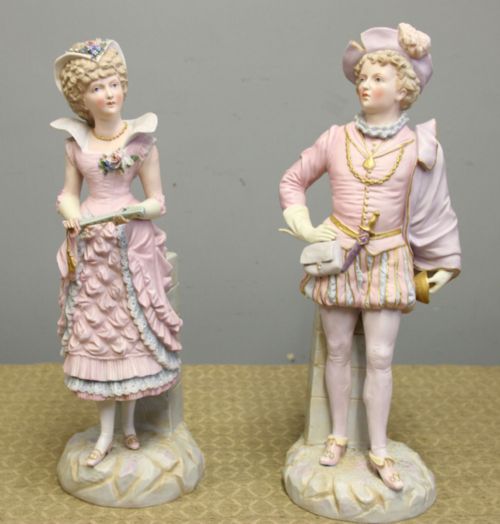
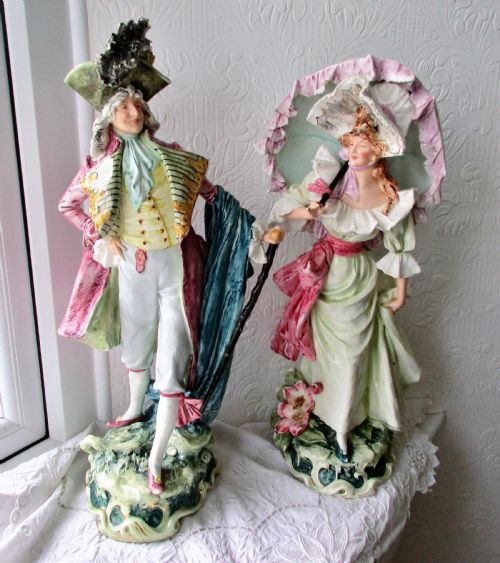
When you search for antique porcelain couple statues, you encounter pairs of decorative figures depicting gallant ladies, gentlemen, musicians, and harvesters. These figural groups draw heavily on eighteenth and nineteenth-century European traditions, particularly French and German workshops.
Most examples found on this page date from the nineteenth century, spanning Victorian interpretations, Rococo Revival styling, and French faience. They range from modest mantelpiece ornaments to large fifty centimetre exhibition pieces.
The subjects typically portray romantic pairings in formal or rustic attire. Collectors find both glazed finishes and unglazed biscuit porcelain among these listings.
Materials and production methods
Makers utilised hard-paste porcelain, soft paste, faience, and unglazed bisque porcelain to shape these figural pairs. Slip casting and mould pressing allowed workshops to achieve intricate drapery and delicate facial expressions.
Enamel colours, glaze, and gold leaf were applied by hand before firing to give depth to costumes and bases. Some specialised pieces incorporated delicate porcelain lace techniques to render realistic textile textures.
Antique Porcelain Couple Statues Retail Price Guide 2026
Typical asking prices for porcelain couple statues among the pieces listed under this phrase on Sellingantiques today, from the lower quarter to the upper quarter. They describe what is for sale here now, not the wider market.
The page showcases regional styles originating from German porcelain works, Bohemian schools, and French regional factories.
Assessing quality in figural groups
The refinement of hand-painted details on faces, hair, and garments dictates the upper tier of quality. Superior modelling shows crisp definition in hands, fingers, and botanical elements without pooling of glaze.
The sophistication of the underlying paste and the precision of the kiln work separate standard production from exceptional factory output. Well-defined factory marks and crisp relief moulding elevate a pair's standing.
Bourdois & Bloch Paris·Letu & Mauger Paris·C. G. Schierholz Plaue·Royal Capodimonte Factory·Sitzendorf·Ludwigsburg Porcelain
The Antique Porcelain Couple Statues Glossary
- Bisque porcelain
- Un-glazed porcelain fired once to produce a matte, marble-like surface texture. This finish highlights fine sculptural detail and facial expressions.
- Faience
- Tin-glazed earthenware or pottery often mimicking porcelain aesthetics. It provides a vibrant surface for hand-painted enamel decoration.
- Hard-paste porcelain
- A dense ceramic composition fired at very high temperatures using kaolin and petuntse. It creates a durable, translucent body resistant to scratching.
- Rococo Revival
- A nineteenth-century design movement resurrecting the ornate, asymmetrical curves of the eighteenth century. It heavily influences the scrollwork bases of these figures.
- Gold leaf
- Extremely thin sheets of gold applied to decorate highlights and bases. It adds a metallic sheen to borders and costume details.
Antique Porcelain Couple Statues: Frequently Asked Questions
How do I clean antique porcelain figures?
Dust the surfaces gently using a soft, dry artist's brush to remove accumulated dirt without abrading delicate enamel or gold leaf details.
Avoid immersing unglazed bisque porcelain in water, as moisture can penetrate the porous body and cause staining.
Where were most of these figures made?
The listings feature significant production centres across France and Germany, including Paris and Thuringia.
Factories like Sitzendorf and various Bohemian schools also contributed extensively to the European market during the nineteenth century.
How can I tell a nineteenth-century pair from a modern copy?
Examine the base for potting characteristics, wear patterns, and authentic underglaze factory marks typical of the period.
Nineteenth-century pieces often display hand-mixed enamel pigments and individual modelling variations rather than uniform modern casting.