

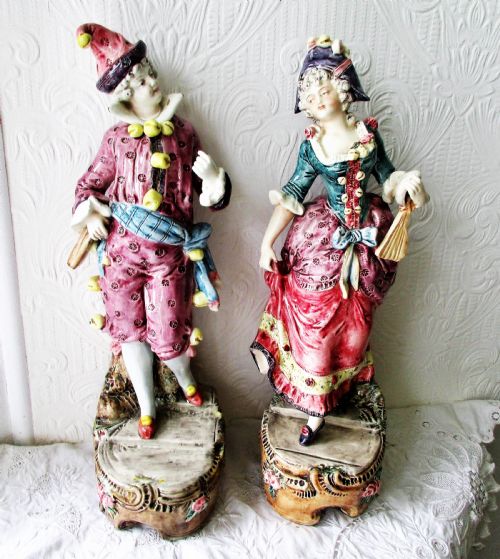


Continental Porcelain Decorative Figures
Continental porcelain decorative figures bring tactile historic character to a room, offering finely modelled ceramic subjects from the nineteenth and early twentieth centuries.
Continental Porcelain Decorative Figures
When you search for continental porcelain decorative figures, you encounter sculptural ceramics produced across European factories and workshops during the nineteenth and early twentieth centuries. These ornamental pieces range from intimate single figurines to large pairs, depicting human subjects, allegorical themes, and putti.
The selections available here lean heavily towards Victorian and Rococo revival tastes, alongside later Art Nouveau and twentieth-century expressions. You will frequently find figures representing harvesters, dancers, children, and allegorical characters modelled in expressive postures.
Forms extend beyond standard figurines to include specialised objects such as bisque porcelain vases and figure groups housed under original glass domes. Origin locations span Germany and France, capturing the diverse aesthetic output of continental kilns.
Materials and manufacture
Makers utilised hard-paste porcelain, earthenware, and ceramic bodies, often shaping them into unglazed bisque porcelain or finishing them with detailed enamel painting and rich gilt accents. The choice of body dictated whether a piece emerged as a crisp, glossy glazed object or a matte, tactile bisque sculpture.
Modelling required skilled hand-forming and moulding to achieve intricate drapery, facial expressions, and botanical details. Pieces were subsequently fired in kilns and hand-decorated with mineral enamels, sometimes incorporating protective glass domes to preserve delicate surface work.
Continental Porcelain Decorative Figures Retail Price Guide 2026
Typical asking prices for continental porcelain decorative figures among the pieces listed under this phrase on Sellingantiques today, from the lower quarter to the upper quarter. They describe what is for sale here now, not the wider market.
Current listings feature pieces spanning the nineteenth and twentieth centuries, utilising both hard-paste porcelain and bisque porcelain.
Distinctions in quality
The physical scale and ambition of the piece also distinguish the range, as large-format figures and paired groupings demand greater technical mastery during the kiln-firing process to prevent distortion. Original accessories, such as matching glass domes, elevate the integrity of surviving specimens.
C. G. Schierholz·Meissen·Vion et Baury
The Continental Porcelain Decorative Figures Glossary
- Bisque Porcelain
- Unglazed fired porcelain that possesses a matte, marble-like texture. This finish highlights fine sculptural detail without the reflective glare of a glossy glaze.
- Hard-Paste Porcelain
- A durable ceramic material composed of kaolin and petuntse fired at very high temperatures. It forms a dense, vitrified body capable of holding sharp modelled lines.
- Enamel
- Vitrified decorative pigment applied to the surface of fired ceramics. These colours are fixed through secondary kiln firings to achieve permanent vibrancy.
- Rococo Revival
- A nineteenth-century design style referencing the asymmetric curves, scrolls, and ornamentation of the eighteenth-century Rococo movement. It appears frequently in the bases and scrollwork of continental figures.
- Allegorical Figurine
- A sculptural representation embodying an abstract idea, season, or virtue through human or mythological form. Common examples depict seasonal themes such as Autumn.
Continental Porcelain Decorative Figures: Frequently Asked Questions
What are continental porcelain figures?
These are sculptural ceramic ornaments produced in European workshops during the nineteenth and early twentieth centuries, depicting human figures, allegorical scenes, and putti.
They encompass various styles including Victorian, Rococo revival, and Art Nouveau, shaped from materials like hard-paste porcelain, bisque, and earthenware.
Where were these figures made?
Production centres were scattered across continental Europe, with notable manufacturing traditions established in Germany and France.
German towns like Plaue and Meissen, alongside French workshops, produced distinctive hard-paste porcelain and earthenware pieces that defined the period's aesthetic.
How do I identify a Victorian continental figure?
Victorian continental figures often display characteristic Revivalist styling, drawing heavily on Rococo scrolls or Neoclassical drapery and poses.
Examining the base, glaze type, and hand-painted enamel palette helps distinguish nineteenth-century European production from later imitations.