






Polychrome Painted Tray
A polychrome painted tray brings bright hand-painted colour to a room, spanning delicate porcelain serving plates and lacquered papier-mâché.
Polychrome Painted Tray
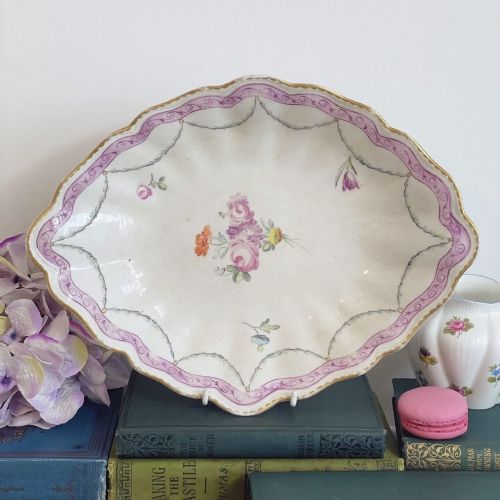
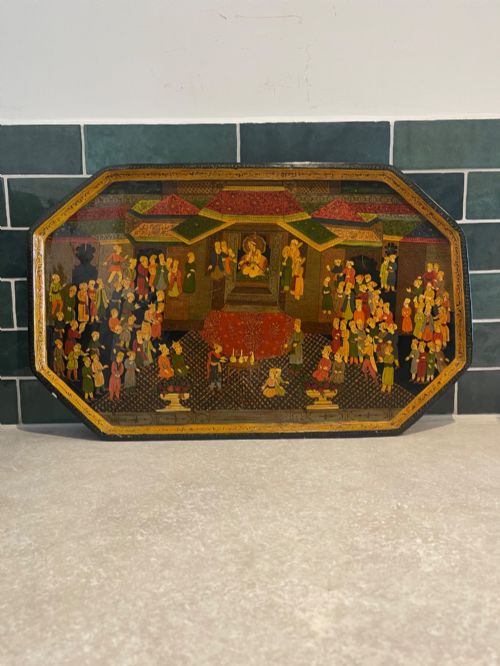
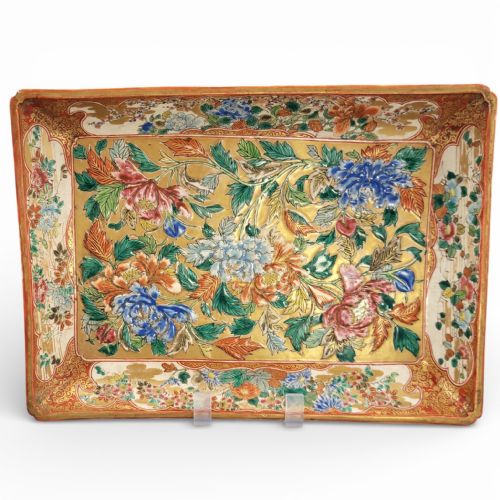
When you search for a polychrome painted tray, you find a diverse group of serving dishes, platters, and occasional tables spanning the eighteenth to the twentieth centuries. The selection encompasses porcelain, papier-mâché, ironstone, and carved wood from English, Chinese, Japanese, and European makers.
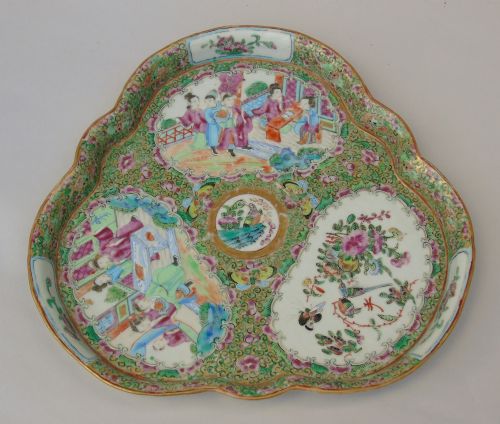
You are most likely to encounter nineteenth-century Chinese Canton porcelain dishes alongside English porcelain serving plates and Kashmiri papier-mâché pieces. These items serve equally well as decorative wall plates, table centrepieces, or functional servingware.
The styles range from Georgian and Regency to Venetian, Chinese Export, and Meiji Japanese, reflecting global trade routes and diverse decorative traditions. Each piece relies on multicoloured painted decoration to create visual impact.
Materials and construction methods
Makers utilised ceramic bodies such as porcelain, ironstone, and faience, applying hand-painted pigments alongside gold leaf and parcel-gilt details. Enamel colours provide the bright hues seen on both Chinese export porcelain and English earthenware.
Papier-mâché construction involved layered paper pulp pressed into moulds, sealed, and finished with smooth painted surfaces. Carved wood and gesso formed the base for sculptural items and occasional tables finished with polychrome paint and gilding.
A monkey races a greyhound across a cold-painted bronze dish.
What separates the fine examples
The crispness of the hand-painted brushwork distinguishes superior examples from standard production pieces. Fine execution shows precise control in floral motifs, figures, and gilt highlights.
The integrity of the material foundation matters greatly, whether dealing with uncompromised porcelain bodies or stable papier-mâché trays without extensive paint flaking.
The Polychrome Painted Tray Glossary
- Polychrome
- Decorated in several colours. This term describes ceramics, lacquer, and woodwork featuring varied pigment palettes.
- Famille Rose
- A major palette of Chinese ceramic glazes introduced in the Qing dynasty, distinguished by opaque pink enamel. It dominates many nineteenth-century export dishes.
- Famille Verte
- A Chinese porcelain palette centred on green enamel tones, often combined with iron red and blue. It appears frequently on Canton export ware.
- Ironstone
- A type of durable earthenware patented in the nineteenth century. It serves as a heavy, robust body for meat platters and serving dishes.
- Papier-mâché
- A composite material made of paper pulp or reinforced paper layers mixed with glue. It forms lightweight trays finished with lacquer and paint.
Polychrome Painted Tray: Frequently Asked Questions
How do I clean a painted tray?
Dust papier-mâché and wood surfaces gently with a dry microfibre cloth, avoiding water entirely to protect the paint layer.
Porcelain and ironstone dishes tolerate careful hand washing in lukewarm water with mild soap, avoiding abrasive pads on the painted areas.
Can I use these trays for food?
Historic porcelain and ironstone platters can generally hold dry foods, though crazing in older glazes absorbs liquids and stains over time.
Papier-mâché and bronze trays serve best for display or holding small decorative items rather than serving direct food.
How do I hang a tray on the wall?
Use coated spring-wire plate hangers that distribute pressure evenly across the rim without scratching the glaze or paint.
Ensure the wall fixing is secure, particularly for heavier ironstone platters or framed papier-mâché pieces.
How do I tell Chinese export from English porcelain?
Chinese export porcelain often displays distinctive blue-white foot rims and Canton or Famille patterns characteristic of Qing dynasty production.
English factories like Derby and Swansea exhibit different paste compositions, factory marks, and European neoclassical or Chinoiserie interpretations.