




Polychrome Japanese Ceramic Vessel
These pieces of polychrome japanese ceramic vessel combine vibrant enamels with historic forms to anchor a room.
Polychrome Japanese Ceramic Vessel
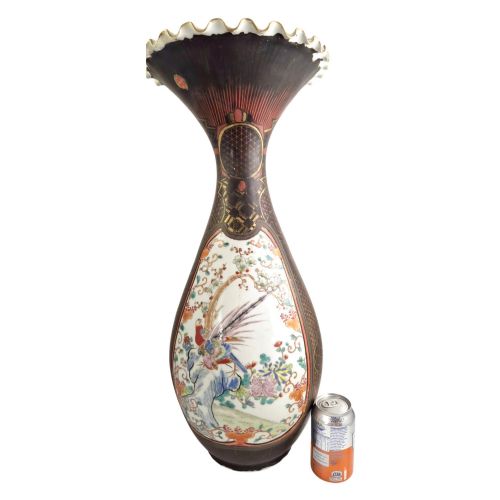
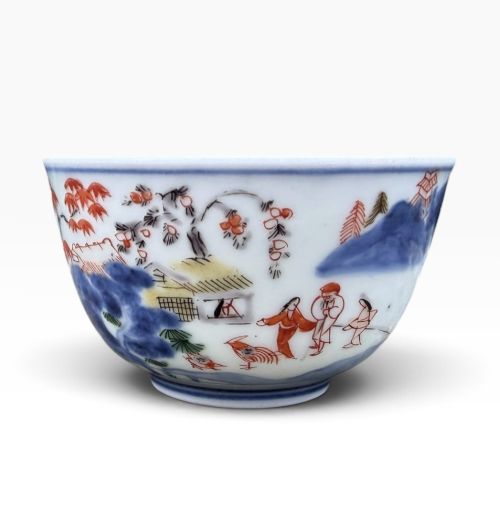
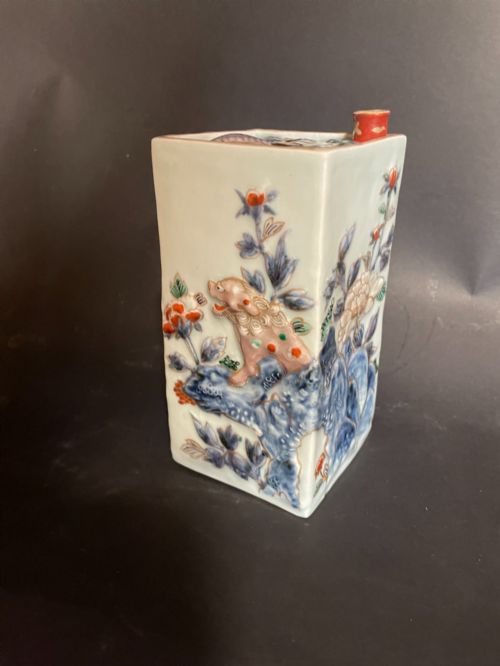
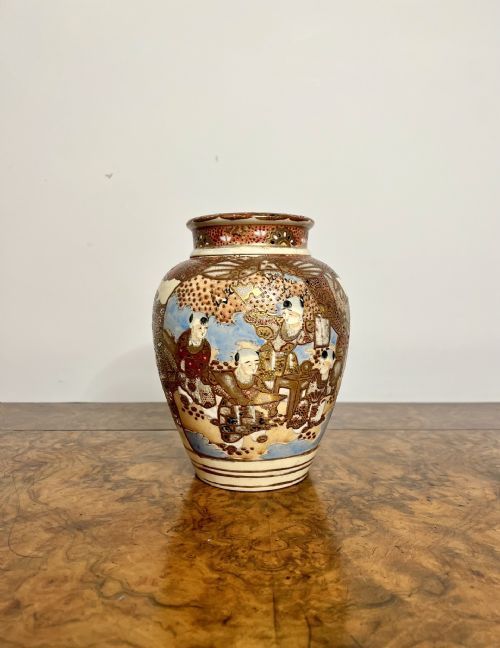
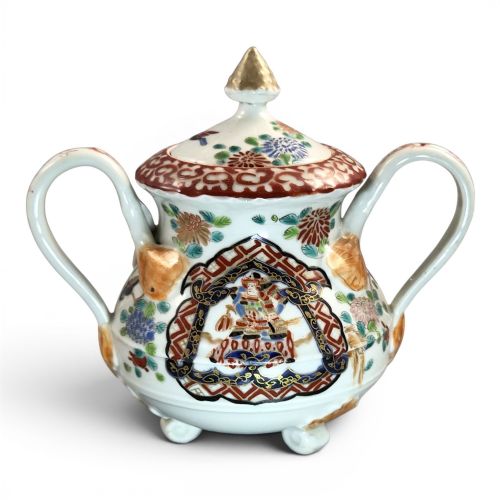
A polychrome japanese ceramic vessel encompasses forms such as vases, incense burners, teabowls, decorative bowls, tea caddies, sake flasks, and sugar bowls. The pieces span centuries, originating across the Edo and Meiji periods.
Most examples found on this page date from the nineteenth century and the early twentieth century. Makers fashioned these utilitarian and decorative objects in Arita, Kyoto, and Satsuma using porcelain and earthenware.
How they were made
Potters shaped clay into diverse bodies before applying glazes, enamel pigments, and gold leaf. Many surfaces received detailed hand-painted designs incorporating pictorial scenes and intricate motifs.
Specialised workshops combined moulded porcelain or earthenware with gilt ceramic elements, lacquer, and metal details. Firing techniques fixed the polychrome enamels and gold gilt to the hardened clay.
Polychrome Japanese Ceramic Vessel Retail Price Guide 2026
Typical asking prices for polychrome japanese ceramic vessel among the pieces listed under this phrase on Sellingantiques today, from the lower quarter to the upper quarter. They describe what is for sale here now, not the wider market.
One incense burner takes the shape of a treasure ship, ready to sail across the room.
What varies in quality
Skill in the brushwork and precision in the enamel placement separate standard production pieces from masterworks. The density of the painted patterns, such as dense flowerhead motifs or figural scenes, dictates visual depth.
Scale and ambition define the upper tier, seen in monumental forms, complex moulded shapes, and integrated lacquer or metal additions. Finer bodies show superior control during the firing and glazing stages.
Yamaka and Tomomae·Kizan·Fukagawa·Kinkozan
The Polychrome Japanese Ceramic Vessel Glossary
- Imari
- A style of Japanese porcelain decorated in underglaze blue and overglaze polychrome enamels, often including iron red and gold. These wares originated from the port of Imari for export to Europe.
- Satsuma
- Earthenware pottery originating from Satsuma Province, typically featuring a finely cracked cream glaze decorated with polychrome enamels and gilt. The style gained immense popularity during the Meiji period.
- Kutani
- Japanese porcelain known for its bold polychrome enamel designs, frequently utilising greens, blues, yellows, and purples. Pieces often depict figurative scenes or nature motifs.
- Koro
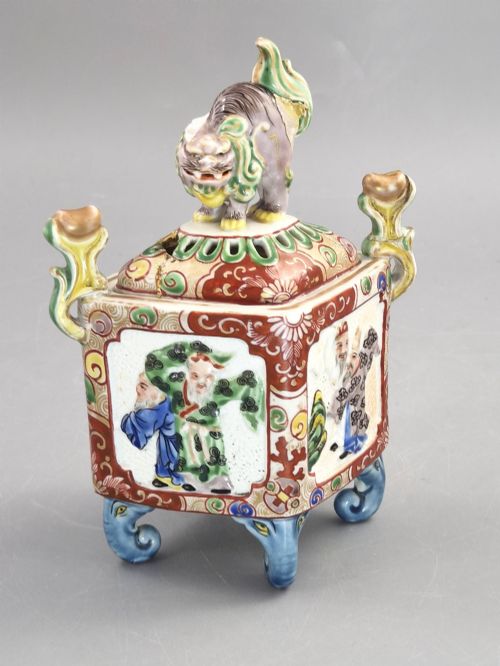
- A traditional incense burner featuring a perforated cover to release aromatic smoke. Potters shaped these vessels in porcelain and earthenware, sometimes adding guardian lion finials or animal-head feet.
- Tokuri
- A traditional Japanese flask used for serving sake. These vessels typically feature a narrow neck and a bulbous body.
Polychrome Japanese Ceramic Vessel: Frequently Asked Questions
What is a Satsuma vase?
Satsuma wares are earthenware vessels characterised by an ivory-coloured, crackled glaze. Artisans decorated these surfaces with detailed polychrome enamels and gold leaf.
These pieces range from small tea caddies to large lidded jars and jardinières produced during the nineteenth century.
How do I date a Meiji period piece?
The Meiji period spans from eighteen sixty-eight to nineteen twelve, coinciding with rapid artistic output and international trade. Objects from this era often bear marks or stylistic traits associated with Satsuma, Kutani, and Arita production.
Examination of the paste, enamel palette, and signature helps place a vessel within this distinct imperial timeframe.
What is an Imari bowl?
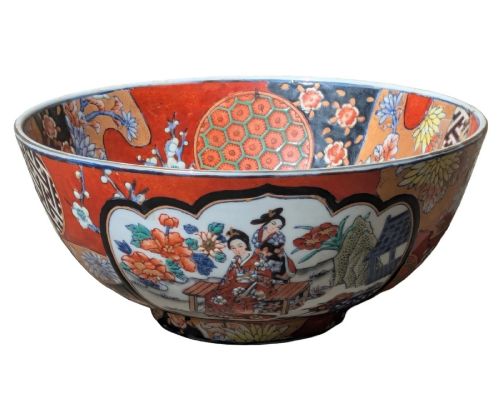
Imari pieces are porcelain vessels decorated with a palette centred on underglaze blue, iron red, and gold gilt. The style developed in Arita and became a staple of international trade.
These decorative bowls and sugar basins display geometric borders alongside floral and figural compositions.
How were incense burners used?
Known as koro, these ceramic vessels held burning incense for domestic and ceremonial spaces. The pierced covers allowed fragrant smoke to filter through the room.
Makers often embellished them with sculpted handles, animal-head feet, and mythical beast finials.
Can I use these vessels for flowers?
Vases and jars function well for holding cut stems, provided the glazed interior remains watertight. Many historical pieces were created purely for display rather than utility.
Careful handling protects the delicate enamel and gold leaf surfaces during arrangement and cleaning.