



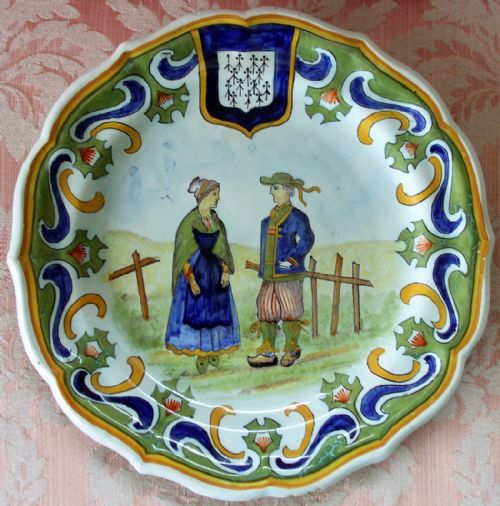
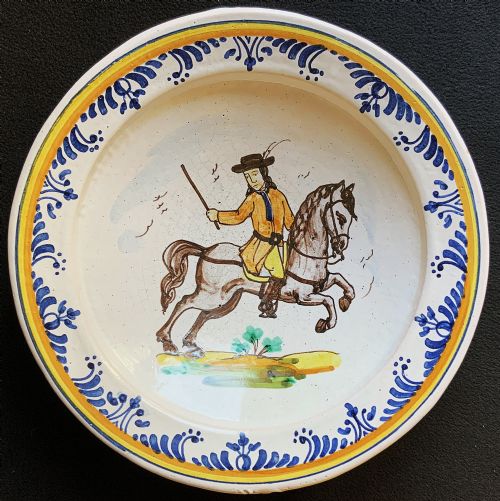


Polychrome Earthenware Charger
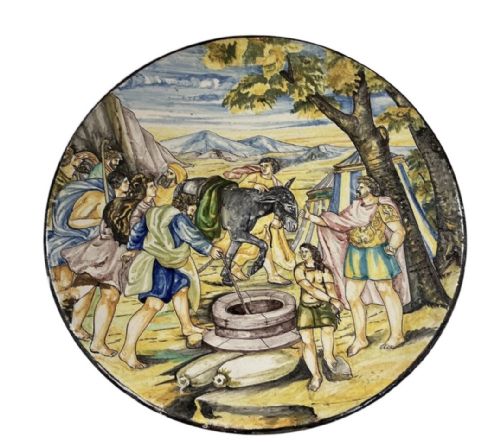
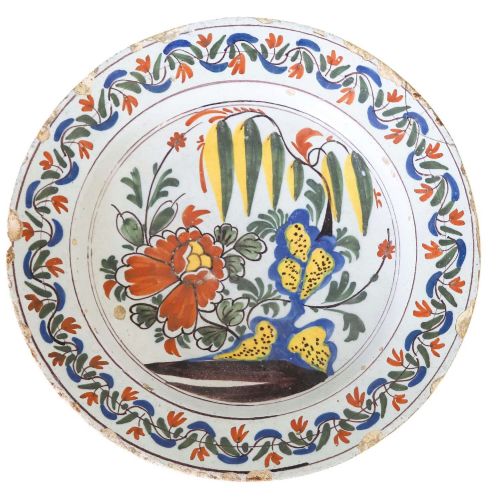
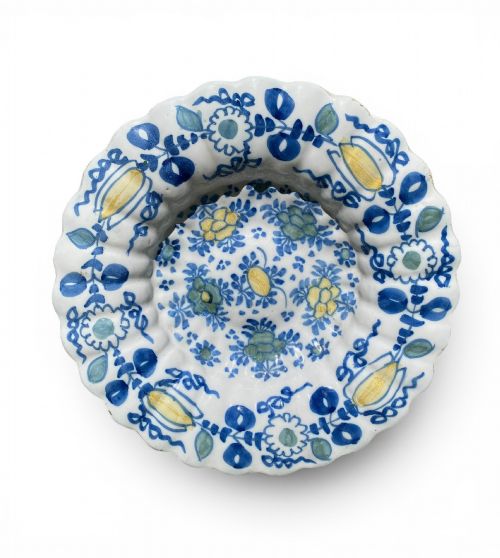
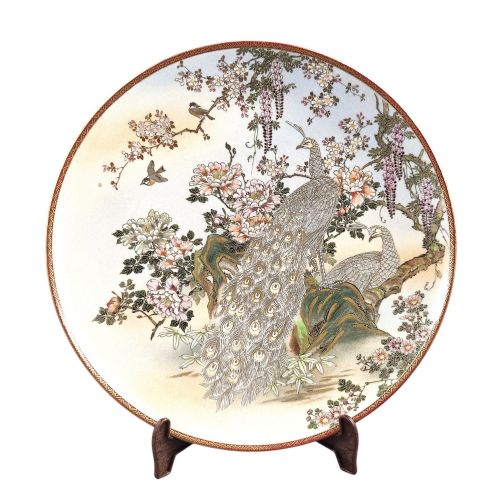
These polychrome earthenware chargers are large, painted display vessels spanning centuries of European and Japanese ceramic traditions, prized for rich colour and wall-hanging presence.
Polychrome Earthenware Charger
A polychrome earthenware charger is a wide decorative plate or wall plaque designed primarily for display rather than dining. When searching for this phrase, collectors encounter substantial earthenware bodies decorated in multiple colours, ranging from seventeenth-century European tin-glazed wares to later Japanese Satsuma productions.
The pieces on this page draw from seventeenth, eighteenth, and nineteenth-century traditions, including English, Dutch, French, Spanish, and Italian workshops alongside Meiji period Japanese examples. Forms vary from simple circular plates to lobed dishes and broad wall plaques.
Most examples represent tin-glazed earthenware such as Delft and faience, alongside maiolica and Satsuma ceramic bodies. Buyers find both floral Chinoiserie patterns and complex multi-figure narrative scenes.
Materials and technique
Makers shaped earthenware clay into broad circular bases before applying tin glazes or specialist enamels to create an opaque white or coloured surface for painting. Potters then hand-painted pigments directly onto the prepared surface, utilising grand feu techniques or subsequent firings to fix the colours.
Decoration relied on mineral pigments applied by hand, sometimes enhanced with raised moriage details or touches of gold leaf. The interaction between the porous earthenware body, the tin glaze, and the hand-applied pigments defines the physical character of each charger.
Polychrome Earthenware Charger Retail Price Guide 2026
Typical asking prices for polychrome earthenware charger among the pieces listed under this phrase on Sellingantiques today, from the lower quarter to the upper quarter. They describe what is for sale here now, not the wider market.
Assessing quality in chargers
Quality rests in the precision and fluidity of the hand-painted brushwork, distinguishing master workshops from standard production output. Crisp detail in floral motifs, geometric borders, and figurative scenes elevates a piece significantly.
The stability of the glaze, the depth of the colour palette, and the preservation of the earthenware body over centuries determine the enduring visual impact of the charger. Greater ambition in scale and complexity of design separates standard regional output from exceptional survivals.
C.J. Mason·Meizan
The Polychrome Earthenware Charger Glossary
- Charger
- A large decorative plate or dish intended for display on a wall or dresser rather than everyday table use. These vessels provide a wide canvas for painted decoration.
- Tin-Glaze
- An earthenware glaze rendered opaque by the addition of tin oxide, providing a smooth white background for painted pigments. This technique unites many European examples from the seventeenth and eighteenth centuries.
- Faience
- European tin-glazed earthenware, particularly associated with French, Spanish, and Italian traditions. It offers a porous ceramic body beneath an opaque white glaze.
- Maiolica
- Italian tin-glazed earthenware typically painted with vibrant colours and historical or mythological scenes. The technique spread across European pottery centres over successive centuries.
- Moriage
- A Japanese ceramic technique using raised slip or enamel to create textured, dimensional decorative patterns on the surface. It appears frequently on Satsuma wares from the Meiji period.
- Grand Feu
- A ceramic firing method conducted at high temperatures that allows cobalt blue and other metallic oxides to fuse directly into the raw glaze. This technique produces deep, permanent tones.
Polychrome Earthenware Charger: Frequently Asked Questions
How were polychrome earthenware chargers used?
These large vessels served primarily as decorative wall plaques or centrepieces on sideboards rather than functional tableware. Wealthy households displayed them to demonstrate taste and access to imported or refined domestic crafts.
Over time, collectors shifted these pieces entirely to wall hanging, utilising pierced foot rings or custom wire hangers designed to support their substantial weight safely.
What is the difference between Delft and faience?
Delft specifically describes tin-glazed earthenware produced in England and the Netherlands, famous for its blue and polychrome palette inspired by imported Chinese porcelain. Faience is the broader continental term covering similar tin-glazed ceramics made in France, Spain, and Italy.
While the underlying chemical recipe of clay and tin glaze remains closely related, the regional painting styles, colour choices, and clay bodies distinguish English and Dutch Delft from southern European faience.
How do I hang a heavy antique charger?
Displaying a large earthenware charger requires a specialised, rubber-coated spring wire hanger that distributes the weight evenly across the rim without pinching or stressing the ceramic body. Ensure the wall fixing is secured directly into a stud or uses an appropriate heavy-duty wall anchor.
Avoid using adhesive disk hangers attached to the base, as the historical glaze and porous earthenware body can fail under sustained tension over time.
How do I distinguish eighteenth-century pieces from nineteenth-century revivals?
Eighteenth-century chargers typically exhibit softer tin glazes, subtle variations in hand-mixed mineral pigments, and natural manufacturing imperfections such as kiln stilt marks on the reverse. The brushwork tends to show spontaneous fluidity characteristic of working ceramic painters.
Nineteenth-century revival pieces often display harder, more uniform modern glazes, brighter synthetic enamel tones, and occasionally stamped factory marks that reflect industrial standardisation.