



Polychrome Delft Dishes
Polychrome delft dishes bring vibrant hand-painted colour to tables and walls, offering the collector a rich slice of tin-glazed earthenware history.
Polychrome Delft Dishes
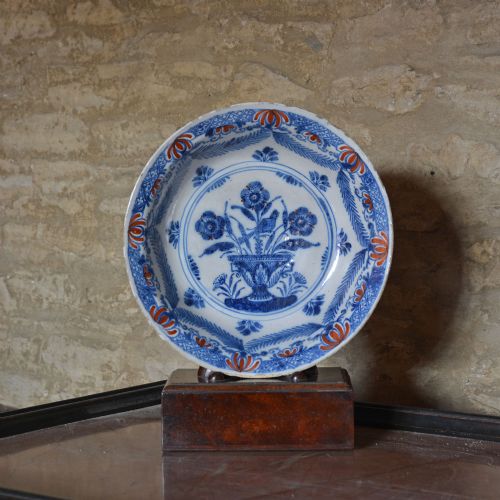
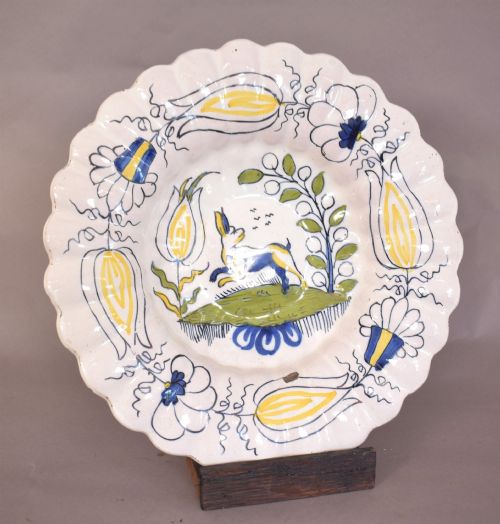
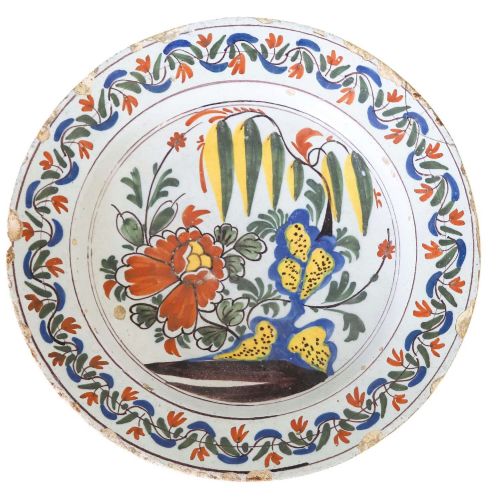
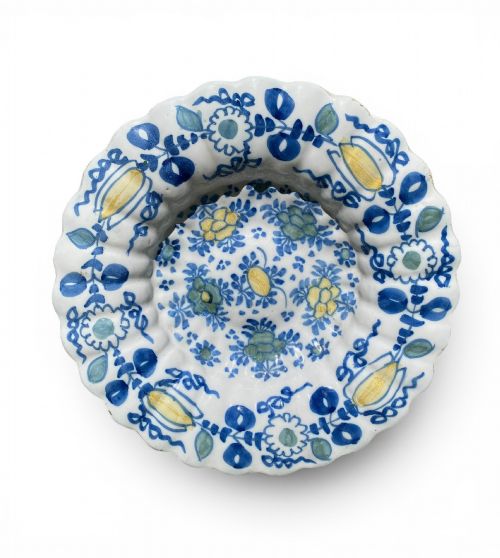
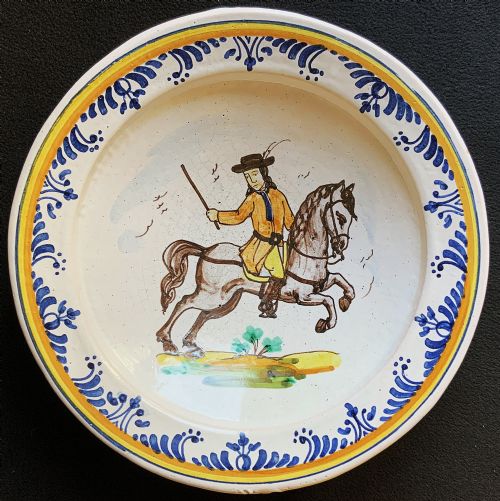
Polychrome delft dishes encompass a variety of decorative plates, chargers, bowls, and sweetmeat presentiers originating from seventeenth and eighteenth-century European workshops. Buyers exploring polychrome delft dishes will encounter large chargers and smaller plates displaying spirited floral, geometric, and Chinoiserie motifs.
The objects span English, Dutch, and Spanish production centres, with Georgian and Dutch Baroque styling frequently appearing across the selection. Domestic forms range from lobbed dishes to expansive charger plates intended for display rather than heavy daily use.
How they were made
Potters shaped local clay bodies into earthenware bases before applying an opaque white tin glaze that created a smooth canvas for subsequent painting. Artisans then brushed mineral pigments directly onto this absorbent unfired or once-fired glaze surface.
The application of pigments such as cobalt blue, iron red, and yellow allowed workshops to produce complex polychrome schemes before final kiln firing. This technique produced the characteristic bright surfaces seen on seventeenth and eighteenth-century earthenware dishes.
Polychrome Delft Dishes Retail Price Guide 2026
Typical asking prices for polychrome delft dishes among the pieces listed under this phrase on Sellingantiques today, from the lower quarter to the upper quarter. They describe what is for sale here now, not the wider market.
Some eighteenth-century sweetmeat presentiers were cleverly divided into compartments, ready to serve tiny sugary treats to Georgian guests.
What varies in quality
Quality in these earthenware pieces rests upon the crispness of the hand-painted brushwork and the stability of the tin glaze across the surface. Superior examples display confident floral or geometric compositions with minimal running of the mineral pigments during the firing process.
The scale and ambition of the piece also distinguish the range, as expansive chargers with intricate Chinoiserie or lobbed profiles demand greater technical skill from the potter. Condition and the preservation of the original glaze brightness separate everyday domestic wares from superior decorative specimens.
The Polychrome Delft Dishes Glossary
- Tin-Glazed Earthenware
- Pottery covered with a lead glaze made opaque by the addition of tin oxide, providing a white background for painting. This surface defines the technical foundation of all delftware.
- Charger
- A large decorative plate traditionally used for ceremonial service or displayed upright on sideboard walls. These substantial dishes form the centrepiece of many historical ceramic collections.
- Chinoiserie
- European artistic style reflecting Chinese decorative motifs, popular on eighteenth-century ceramics and chargers. Artisans interpreted Asian imagery through local painting traditions.
- Polychrome
- Decoration utilising multiple colours rather than a single pigment like blue or manganese. This multi-coloured approach gives these earthenware dishes their characteristic visual energy.
- Lobbed
- Formed with scalloped or indented edges that create a curved, petal-like profile around the rim. This shaping technique appears on select seventeenth-century dishes.
Polychrome Delft Dishes: Frequently Asked Questions
How were polychrome delft dishes used?
These dishes served primarily as decorative chargers and display plates on walls or sideboards during the seventeenth and eighteenth centuries. Certain specialised forms like sweetmeat presentiers also held confectionery during formal dining.
While constructed from earthenware, their ornamental value meant they functioned more as status objects than heavy-duty kitchenware. Owners displayed them in reception rooms to showcase colourful tin-glazed artistry.
How do I tell English and Dutch delft apart?
English and Dutch delft dishes often share similar tin-glaze and pigment techniques, making visual distinction a matter of subtle stylistic cues. English pieces, such as those from Lambeth, frequently exhibit specific floral or Chinoiserie palettes.
Dutch workshops from the Golden Age tended towards distinct geometric borders and specific potting profiles. Examining the clay body and the tone of the white glaze helps clarify the likely origin.
Can I hang these antique chargers on the wall?
Many collectors display large chargers on walls using secure, padded wire hangers designed specifically for heavy earthenware. The vibrant pigments and expansive floral designs make them well-suited for vertical display.
Care must be taken to ensure the wall fixings can support the substantial weight of seventeenth and eighteenth-century ceramic bodies.
What does polychrome mean on delftware?
Polychrome means the decoration incorporates multiple coloured pigments rather than relying solely on traditional blue and white cobalt painting. Artisans used red, yellow, green, and manganese to build up lively floral and geometric scenes.
This multi-coloured palette required careful kiln management to prevent the various mineral paints from bleeding into the white tin glaze.