
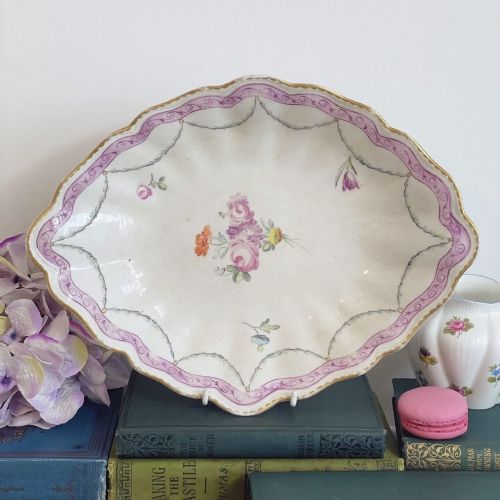


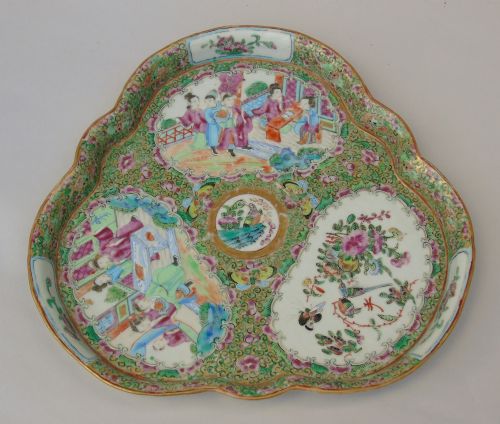


Polychrome China Serving Platter
A polychrome china serving platter brings vivid handpainted enamels to the dining table, offering both decorative presence and historic utility.
Polychrome China Serving Platter
When you search for a polychrome china serving platter, you encounter large serving dishes designed for presenting food at the table during the eighteenth and nineteenth centuries. These boards and trays range from generous meat dishes to specialised platters and decorative trays.
The versions most frequently met on this page span the Georgian, Victorian, and Qing Dynasty periods. They originate from English factories such as Derby and Minton, alongside Chinese export workshops.
Forms include rectangular platters, trefoil trays, and large meat dishes in porcelain, earthenware, and ironstone. These pieces showcase diverse stylistic influences, notably Chinoiserie and Chinese Export designs alongside traditional British patterns.
Materials and construction
Potters built these serving pieces using hard-wearing bodies of porcelain, earthenware, and ironstone. Ironstone provided a heavy, durable fabric suitable for large meat platters, while porcelain and earthenware served finer dining and display purposes.
Craftsmen applied vitreous glazes and detailed handpainted enamel colours, often supplemented by gold leaf and gilt highlights. Pigments were fused to the surface through kiln firing, creating the bright multi-coloured palettes characteristic of these wares.
Several Victorian platters proudly bear patterns named after insects, immortalising the grasshopper in bright enamel for eternal dining table duty.
Distinctions in quality
Quality rests upon the precision of the handpainting and the complexity of the polychrome palette. Finer examples display meticulously brushed floral motifs, botanical studies, or intricate Chinoiserie scenes executed with steady control.
The crispness of the moulding and the weight of the ceramic body also determine merit. Substantial ironstone pieces and delicate early porcelain plates demonstrate the technical capability of the respective English and Chinese potteries.
Derby·Minton·Mason
The Polychrome China Serving Platter Glossary
- Polychrome
- Decoration employing multiple distinct colours, typically applied by hand in enamel over or under the glaze. This technique allowed makers to achieve vibrant pictorial effects on white ceramic grounds.
- Ironstone
- A patented heavy earthenware developed in the nineteenth century for its exceptional durability. It provided an affordable and robust alternative to true porcelain for large domestic serving vessels.
- Chinoiserie
- European artistic style reflecting Chinese motifs and decorative schemes, popular during the Georgian and Victorian eras. Artisans reinterpreted Eastern aesthetic traditions on British ceramics.
- Famille Rose
- Chinese ceramic palette distinguished by an opaque pink enamel introduced during the Qing Dynasty. The term covers a major grouping of export porcelain decorated with soft floral and figural designs.
- Trefoil
- Three-lobed decorative shape often utilised for specialised serving trays and dishes. The form creates distinct compartments or a curved triangular outline for presentation.
Polychrome China Serving Platter: Frequently Asked Questions
How were these platters originally used?
These large dishes served roasted meats, vegetables, and courses at formal dining tables throughout the Georgian and Victorian periods.
Following the meal, many were displayed on sideboards or walls to showcase their decorative polychrome enamels and patterns.
Can I use these antique platters for serving food?
While structurally sound, antique ceramics often feature crazing and delicate enamel decorations that can be affected by modern dishwashers and cutlery.
Hand washing in warm water preserves the historic glazes and gold leaf highlights for display and occasional light use.
How do I identify the period of a platter?
Dating relies upon stylistic markers, ceramic bodies, and factory backstamps visible on the reverse of the piece. Georgian and early nineteenth-century wares often exhibit heavier potting and handpainted motifs distinct from later Victorian production.