
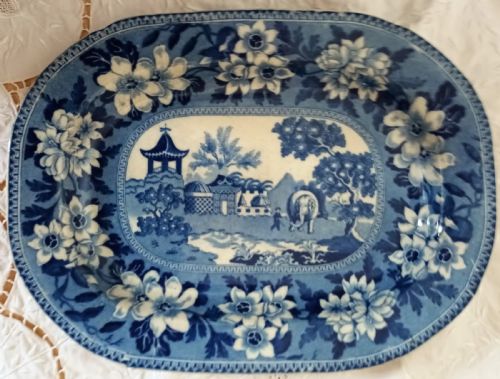


Floral Ceramic Meat Plate
These floral ceramic meat plate pieces are large, decorative serving dishes designed for the dining table, offering robust utility and characterful period patterns.
Floral Ceramic Meat Plate
A floral ceramic meat plate serves as a substantial centrepiece for presenting joints of meat and poultry at the dining table. These heavy platters span the Georgian, Victorian, and eighteenth century periods, reflecting centuries of changing British and continental dining habits.
Most examples found here are earthenware, ironstone, or porcelain serving platters, often decorated with blue and white transfer prints or hand-painted floral motifs. Makers like John Rogers and Son, Minton, and Mason's Ironstone produced these functional domestic items in various rectangular and shaped forms.
Buyers will encounter everything from large nineteenth century utilitarian ironstone dishes fitted with drainer inserts to delicate eighteenth century Chinese porcelain pieces and Victorian Chinoiserie platters. The selection ranges from plain blue and white domestic wares to colourful Imari and Famille Rose enamel designs.
How They Were Made
Potters shaped these pieces from dense earthenware, robust ironstone, or refined porcelain before applying intricate blue and white transfer prints or hand-painted enamel colours. Glaze was then applied and fired at high temperatures to seal the ceramic body and create a glossy, impermeable surface suitable for serving food.
Some heavier ironstone dishes incorporated separate ceramic strainers designed to drain meat juices during carving, whilst finer porcelain and earthenware versions relied purely on their decorated flat surfaces and raised borders to contain the roast.
Some heavy ironstone platters arrived with built-in drainers so the roast could bleed in peace while the gravy stayed down below.
What Varies in Quality
Quality rests in the crispness of the transfer print, the richness of any hand-applied enamel or gold leaf details, and the overall weight and integrity of the ceramic body. Early ironstone dishes display a dense, heavy fabric built for kitchen longevity, whereas fine Georgian and Chinese porcelain versions prioritize delicate translucency and refined painting.
The sophistication of the border design and the balance of the central floral or pictorial pattern distinguish standard utilitarian kitchen wares from superior dining room display platters.
John Rogers and Son·Minton·Elkin Knight and Bridgwood
The Floral Ceramic Meat Plate Glossary
- Ironstone
- A dense, highly durable type of semi-vitreous earthenware patented in the nineteenth century to rival true porcelain. It was widely used for heavy-duty kitchen and dining platters.
- Transfer printing
- A decoration technique where an engraved copper plate transfers a printed design onto tissue paper, which is then stamped onto the unglazed ceramic body. This process allowed complex floral and pictorial scenes to be produced efficiently.
- Ashet
- A traditional Scottish term for a large serving plate or platter used at the table for meat. It derives from the French assiette.
- Famille rose
- A palette of Chinese porcelain enamels dominated by opaque pink or purple colours, introduced during the Qing dynasty. These floral and pictorial designs were frequently exported to Europe.
- Imari
- A style of Japanese and later European ceramics featuring a distinctive palette of underglaze blue, iron red, and gilt. It often incorporates dense floral and garden motifs.
Floral Ceramic Meat Plate: Frequently Asked Questions
How were these large plates used?
These platters sat at the centre of the dining table to present roasted meats, poultry, and game during large family meals. Carving took place directly on the ceramic surface.
Some heavier ironstone versions included fitted drainer inserts to collect meat juices beneath the joint during service.
How do I care for antique ceramic platters?
Wash these pieces gently by hand using warm water and mild detergent rather than placing them in a modern dishwasher. Hand washing protects the historical glaze and any delicate hand-painted enamel or gold leaf details from fading.
Avoid sudden temperature changes to prevent thermal shock and hairline cracking in the old earthenware or porcelain body.
How do I tell Georgian pieces from Victorian ones?
Georgian platters generally date from the late eighteenth or early nineteenth century and often feature lighter, hand-painted floral motifs or distinctively crisp blue and white transfer prints. Porcelain examples from this era tend to feel thinner and more translucent.
Victorian and later nineteenth century pieces frequently utilise heavy ironstone bodies, deeper wells for juices, and busier decorative styles like Chinoiserie or Imari patterns.
Can I use these platters for serving food today?
Many sturdy ironstone and earthenware platters remain robust enough for serving cold meats, cheeses, or breads at the table. Owners should inspect the glaze condition and avoid serving highly acidic foods on pieces with worn surfaces.
Finer porcelain or delicate eighteenth century examples are best reserved for display or light decorative use.