





Polychrome Ceramic Candle Holders
These polychrome ceramic candle holders bring vibrant painted palettes and figural charm to any table, combining bright enamels with historic forms.
Polychrome Ceramic Candle Holders
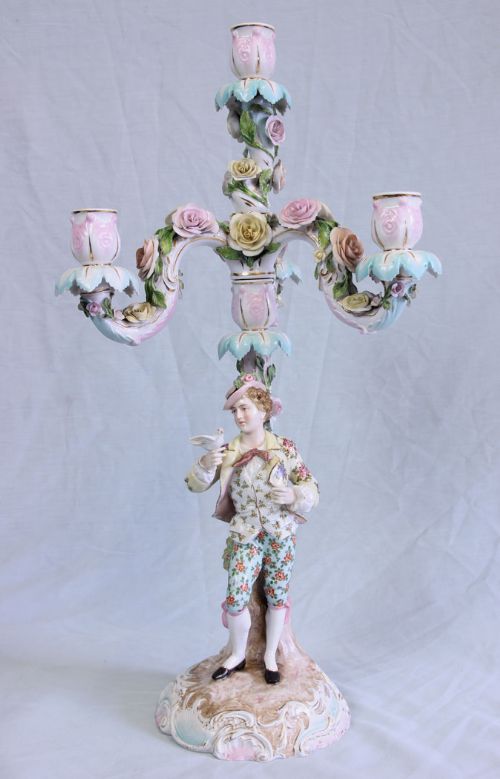
Polychrome ceramic candle holders encompass figural candlesticks and multi-branched candelabra decorated in rich painted palettes. The selection on this page centres primarily on 18th-century and 19th-century European porcelain and tin-glazed earthenware, spanning Georgian, Rococo and later nineteenth-century revival styles.
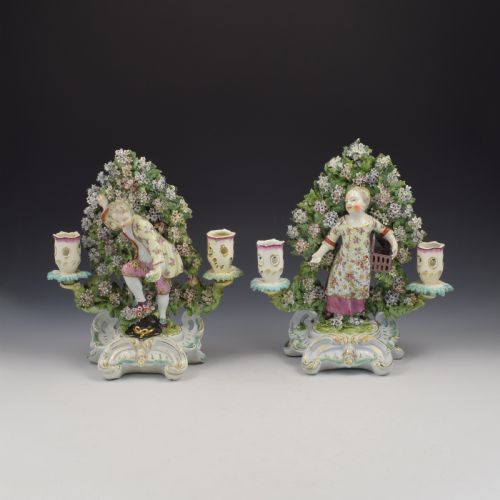
Makers and factories such as Derby, Bow, Minton, Sitzendorf, Dresden and Dutch Delft workshops produced these pieces in forms ranging from naturalistic bocage backgrounds to allegorical figures, musicians, dancers and animals. Buyers encounter pairs and single items spanning soft-paste and hard-paste porcelain bodies.
Materials and Techniques
Potters shaped these objects using soft-paste porcelain, hard-paste porcelain and tin-glazed earthenware, frequently embellishing the surfaces with hand-applied enamel colours and gilding. Many eighteenth-century examples incorporate intricate bocage work, featuring applied foliage and floral elements modelled by hand around the central figures.
Polychrome Ceramic Candle Holders Retail Price Guide 2026
Typical asking prices for polychrome ceramic candle holders among the pieces listed under this phrase on Sellingantiques today, from the lower quarter to the upper quarter. They describe what is for sale here now, not the wider market.
A kneeling bishop in tin-glazed earthenware stands ready to hold a candle.
Judging Quality and Execution
Quality in these items rests upon the crispness of the modelled details and the precision of the hand-painting across the enamel surface. Superior examples retain delicate bocage leaves and gilded accents intact without excessive rubbing or loss.
The sophistication of the modelling distinguishes standard factory output from masterworks, particularly in figural pieces depicting human subjects or animals. Stronger pieces display lively facial expressions, naturalistic posture and careful integration of the candle sconce with the sculptural base.
Derby Porcelain·Bow porcelain·Minton porcelain·Sitzendorf porcelain·Helena Wolfsohn·Dresden porcelain
The Polychrome Ceramic Candle Holders Glossary
- Bocage
- An ornamental background of applied ceramic foliage and leaves surrounding a central figure. This delicate technique is frequently found on eighteenth-century porcelain candlesticks.
- Tin-glazed earthenware
- Pottery coated with a tin-opacified glaze that provides a white, smooth surface for painting. Dutch Delft examples utilise this traditional technique.
- Patch-mark
- A small unglazed blemish on the base of porcelain resulting from support props used during kiln firing. Collectors look for specific patch-marks to help date early Derby pieces.
- Sconce
- The nozzle or cup at the top of a candlestick designed to hold the candle securely. In these listings, sconces often integrate into elaborate figural and rococo designs.
Polychrome Ceramic Candle Holders: Frequently Asked Questions
Were these candlesticks meant for daily use?
Historic households utilised these decorative figural pieces for illumination during evening dining and entertaining, placing them on mantelpieces or tables.
Many surviving examples served as decorative garnitures rather than heavy utilitarian objects, which explains the high survival rate of intricate enamel details.
How can I distinguish English from German porcelain?
English factories like Derby and Bow typically utilised soft-paste porcelain bodies in the eighteenth century, often displaying characteristic patch-marks on the unglazed undersides.
German works from Sitzendorf and Dresden frequently employed hard-paste porcelain formulas and distinct nineteenth-century styling associated with revival aesthetics.
What does bocage mean on a candlestick?
Bocage refers to the sculptural foliage and floral background applied around figurative subjects to mimic a natural woodland bower.
This intricate ceramic element required skilled modelling by hand before firing, adding considerable visual depth to eighteenth-century table wares.