


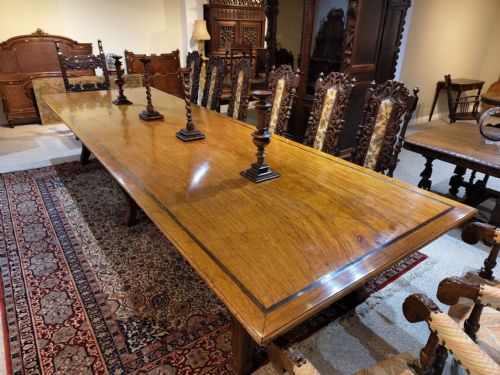
Polished Wood Table
A polished wood table brings warmth and grain to a room, offering a hard surface shaped through centuries of cabinet making.
Polished Wood Table
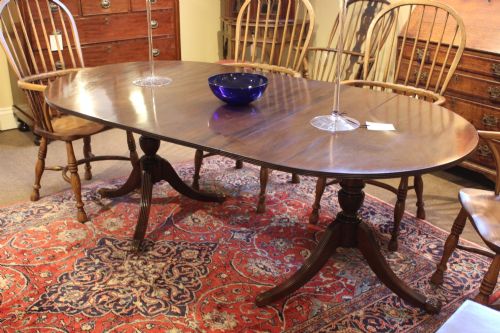
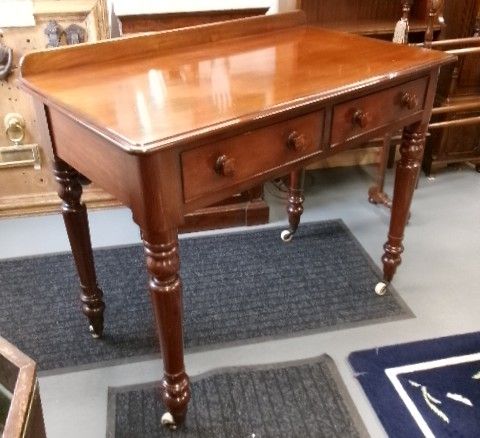
A polished wood table spans domestic forms from large dining pieces and extending models to smaller side, console, tea, coffee, and writing tables. You will encounter mahogany most frequently across these listings, alongside rosewood, teak, satinwood, and hardwood.
The periods represented stretch from the Georgian era through William IV, Victorian, and Edwardian times into the early twentieth century. Styles range from formal Regency and George III designs to later interpretations and occasional pieces.
Form follows function closely in these examples, separating larger dining and serving surfaces from compact occasional tables and writing desks. Each period brings distinct proportions and leg forms, such as cabriole legs or pillar supports.
Evaluating the pieces
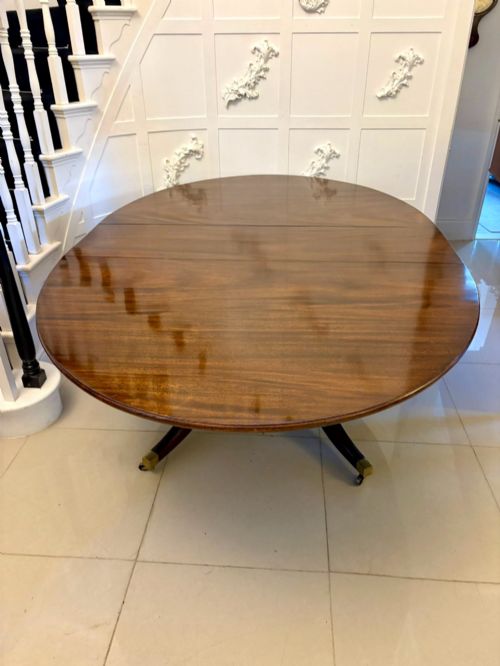
Quality rests on the choice of figured timber and the precision of the cabinet work, particularly in extending dining mechanisms and metamorphic occasional designs. Better examples display carefully matched grain patterns across leaves and tops.
The depth and clarity of the polish reveal the standard of preparation, separating master workshops from standard production. Proportion, crispness of carving, and original brass hardware further distinguish superior pieces.
The inventory spans the Georgian era, Victorian period, Edwardian years, and early twentieth century up to nineteen-thirty.
Gillows
The Polished Wood Table Glossary
- Mahogany
- A durable tropical hardwood valued for its rich reddish-brown colour and stable grain, widely used in furniture from the Georgian period onward.
- Rosewood
- A dense, heavily figured timber with dark streaks, frequently utilised in nineteenth-century decorative tables and tea surfaces.
- Demi-lune
- A half-moon shape characteristic of console and card tables designed to sit flush against a wall.
- Metamorphic
- Furniture engineered to transform its function or size, such as tables that extend or alter height through mechanical action.
- Dumb waiter
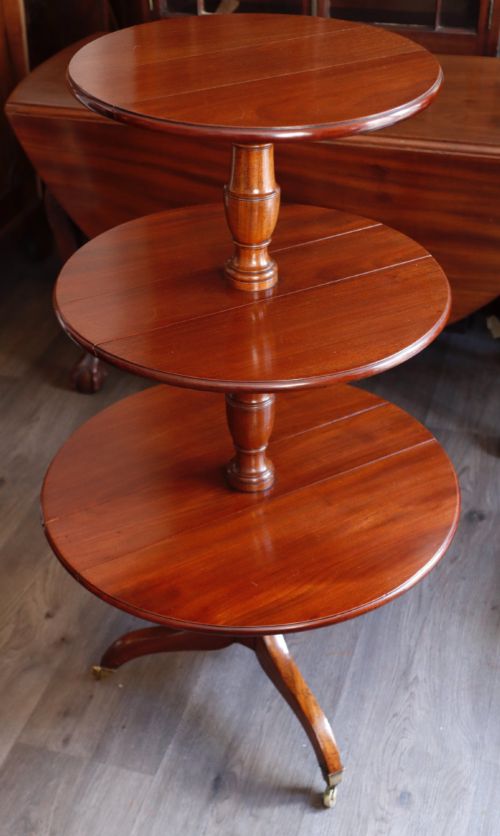
- A tiered serving stand designed to hold dishes or drinks without requiring a servant present at the table.
Polished Wood Table: Frequently Asked Questions
How do I date a mahogany dining table?
Dating relies on examining the timber selection, leg styles, and construction methods characteristic of periods like the Georgian era or the nineteenth century. Extending mechanisms and fixing types also offer clear clues to the decade of manufacture.
Secondary woods used in the interior framing provide further evidence. Comparing these details against known stylistic shifts helps narrow down the age accurately.
What is an extending dining table?
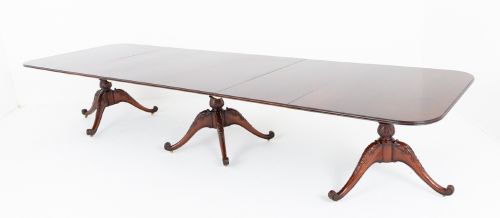
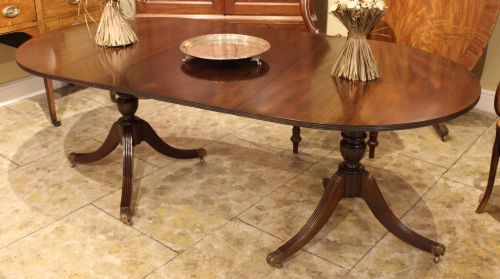
An extending dining table incorporates removable leaves or mechanical runners that allow the surface to lengthen for larger gatherings. These mechanisms range from simple drop-in leaves to complex nineteenth-century winding systems.
They offer flexibility for both daily use and formal entertaining. Well-designed examples maintain stability and alignment across the top even when fully extended.
Where were tea tables used?
Tea tables were placed in reception rooms to support the ritual of serving tea during the Georgian and Victorian periods. Many were built with folding tops to save space when not in use.
They served as social focal points in the home before tea drinking became a widespread domestic routine. Their compact proportions made them versatile additions to drawing rooms.